Robot Vacuums

The Complete Robot Vacuum Maintenance Checklist

Most robot vacuum failures are not electronic โ€” they are mechanical, and preventable. A five-minute weekly routine and a handful of cheap consumables are the difference between a robot that runs for six years and one that starts underperforming after six months. Here is exactly what to check, how often, and what it should cost.

Published 1 August 2026 ยท Cleaning Robots editorial team

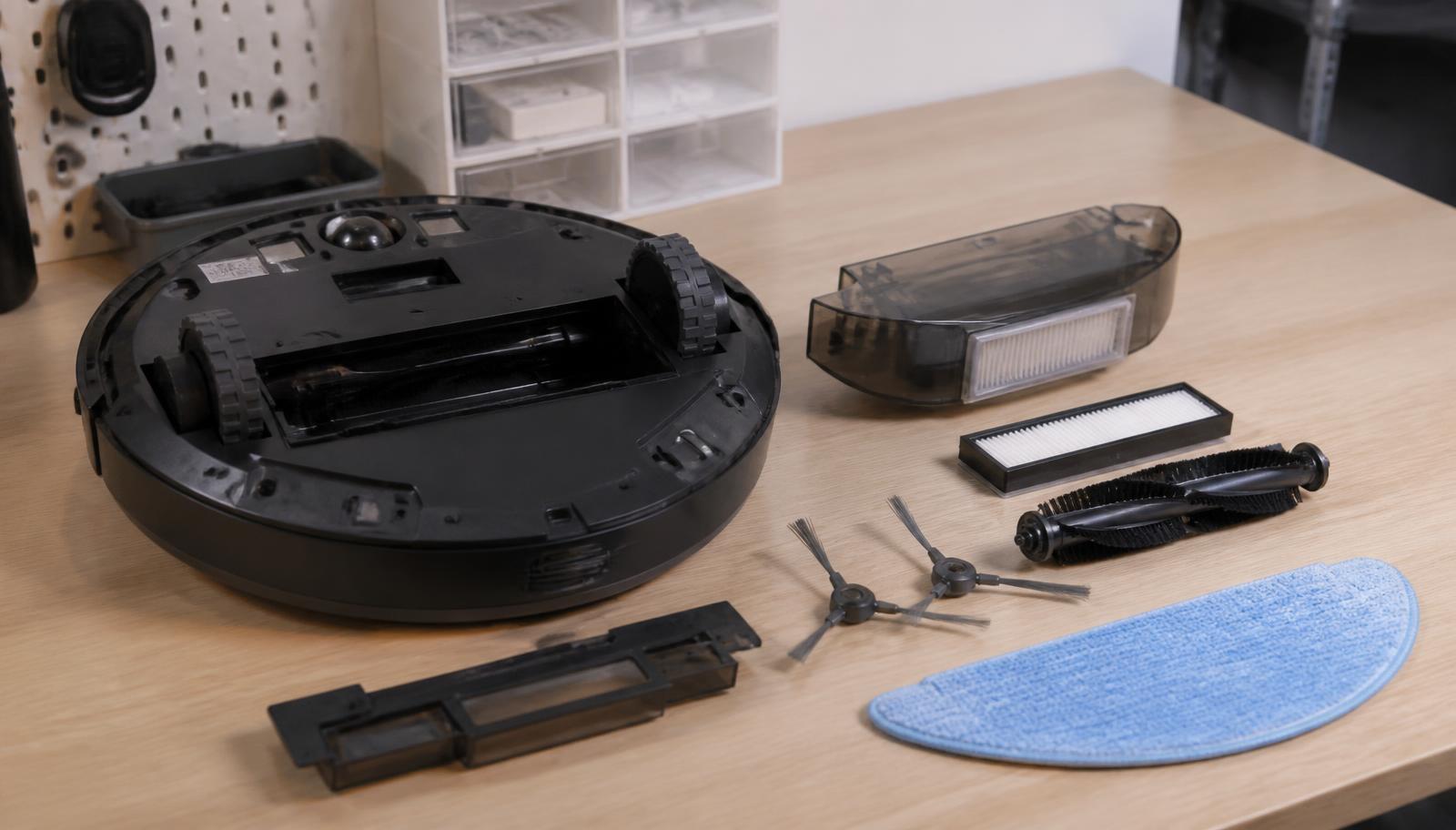
A person kneeling on a living room floor performing maintenance on a robot vacuum cleaner with tools laid out beside it. Image by www.CleaningRobots.Online.
A five-minute weekly check catches most of the problems that shorten a robot vacuum's life.
Advertisement

Why robot vacuum maintenance matters more than the spec sheet

A robot vacuum is a set of consumable wear parts wrapped around a fixed electronic core. The motor, LiDAR or camera navigation module and battery management system rarely fail in the first three years; the brushes, filters and wheels do. Robot vacuum maintenance is therefore mostly about intervening on the cheap, replaceable parts before neglect forces the expensive core to work harder than it should, overheating motors and shortening battery life in the process.

Manufacturers design most mid-range and premium robots for a 5โ€“7 year service life given routine care, yet the average unbranded or neglected robot in the field is retired within two to three years โ€” almost always due to a stalled brush motor, a clogged filter choking suction, or a swollen battery from repeated full-discharge cycles rather than any genuine electronic fault.

Close-up of hands cleaning tangled hair and debris from the main roller brush of a robot vacuum. Image by www.CleaningRobots.Online.
Hair and thread wound around the main brush is the single most common cause of reduced suction.

The weekly checklist

After every two to three cleaning cycles, empty the dustbin even on self-empty models where the base bag has capacity remaining โ€” residual dust left in the onboard bin compacts and reduces airflow. Pull hair from the main roller brush by hand or with the small cutting tool most brands include; a brush that spins under load 20 percent slower than spec is the earliest reliable sign of a maintenance backlog. Wipe the two or three drop-off and cliff sensors on the underside with a dry microfibre cloth โ€” a smudge of dust here causes robots to refuse to cross legitimate step-downs or, worse, fail to detect a real drop.

Check the front caster wheel and side brushes for wound hair and thread. A side brush missing more than a third of its bristles no longer edges along skirting boards effectively and should be replaced โ€” these cost $8โ€“$15 a pair and are the cheapest consumable in the whole system.
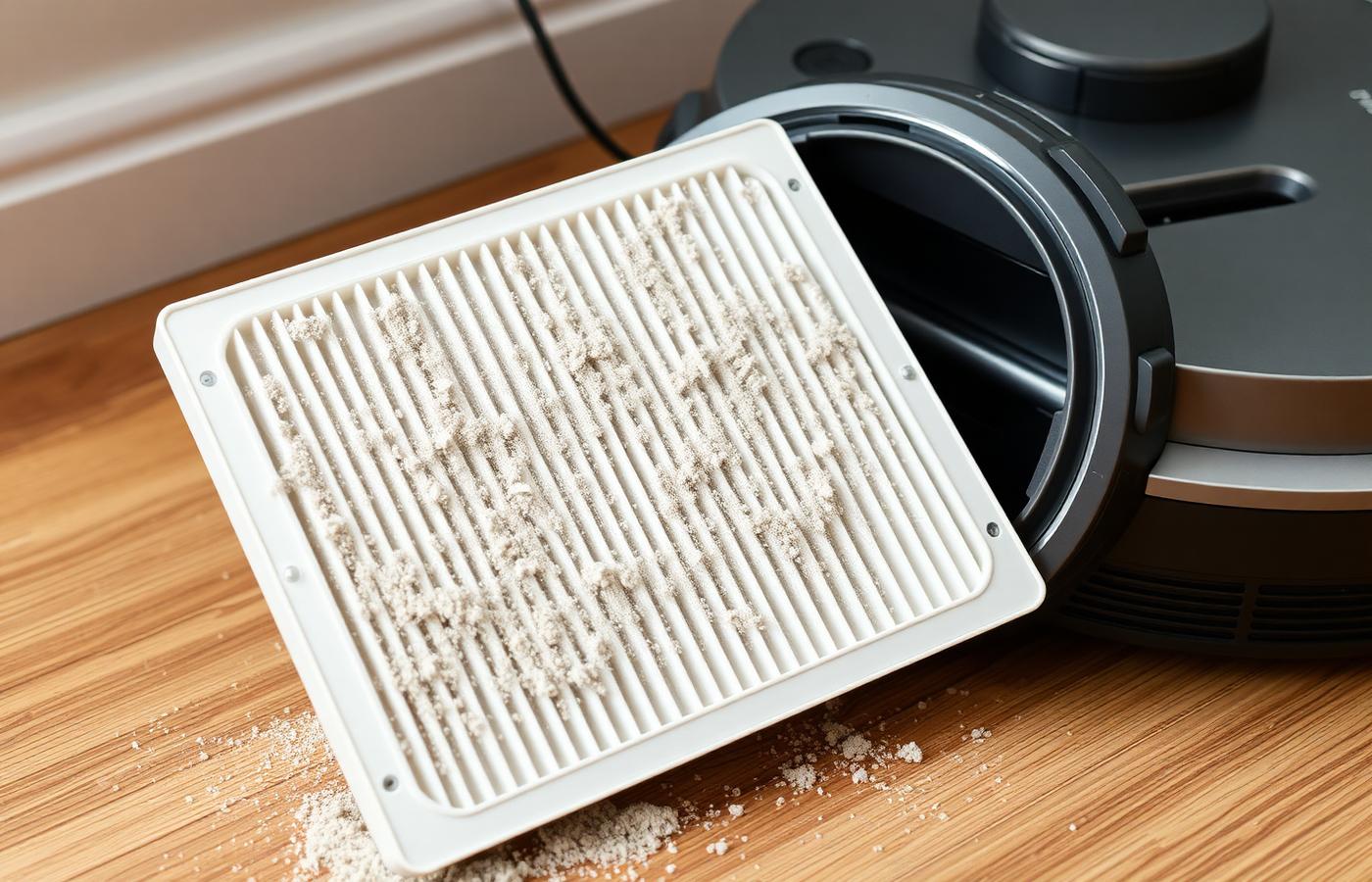
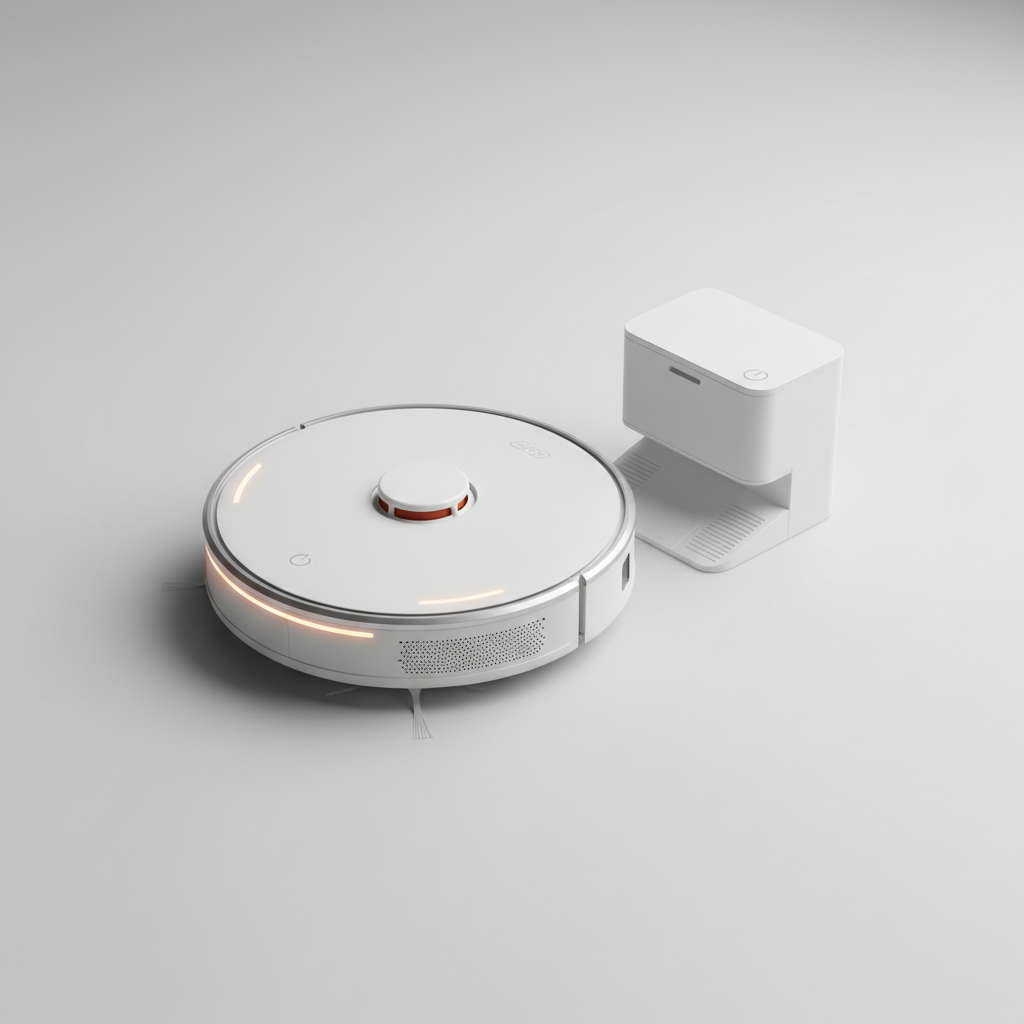
A robot vacuum's charging dock and self-empty base station being wiped down and inspected with replacement filters nearby. Image by www.CleaningRobots.Online.
Dock contacts and the self-empty base need cleaning as often as the robot itself.

Monthly and quarterly tasks

Wash reusable filters under cold running water monthly (never hot, which can warp the pleating) and let them air-dry fully for 24 hours before refitting โ€” a damp filter refitted early is a common cause of a musty smell that owners wrongly blame on the dustbin. HEPA and foam filters typically need full replacement every 2โ€“3 months at $10โ€“$20 per pair depending on brand. Wipe down the charging dock contacts with a dry cloth monthly; corroded or dusty contacts are the leading cause of a robot that reports 'not charging' with no other fault present.

Quarterly, remove and clean the main roller brush bearings and check for play in the wheel axles. On mop-combo units, descale the water tank and pump line with a 1:10 white vinegar solution every three months in hard-water areas to stop mineral build-up from blocking the spray nozzles.
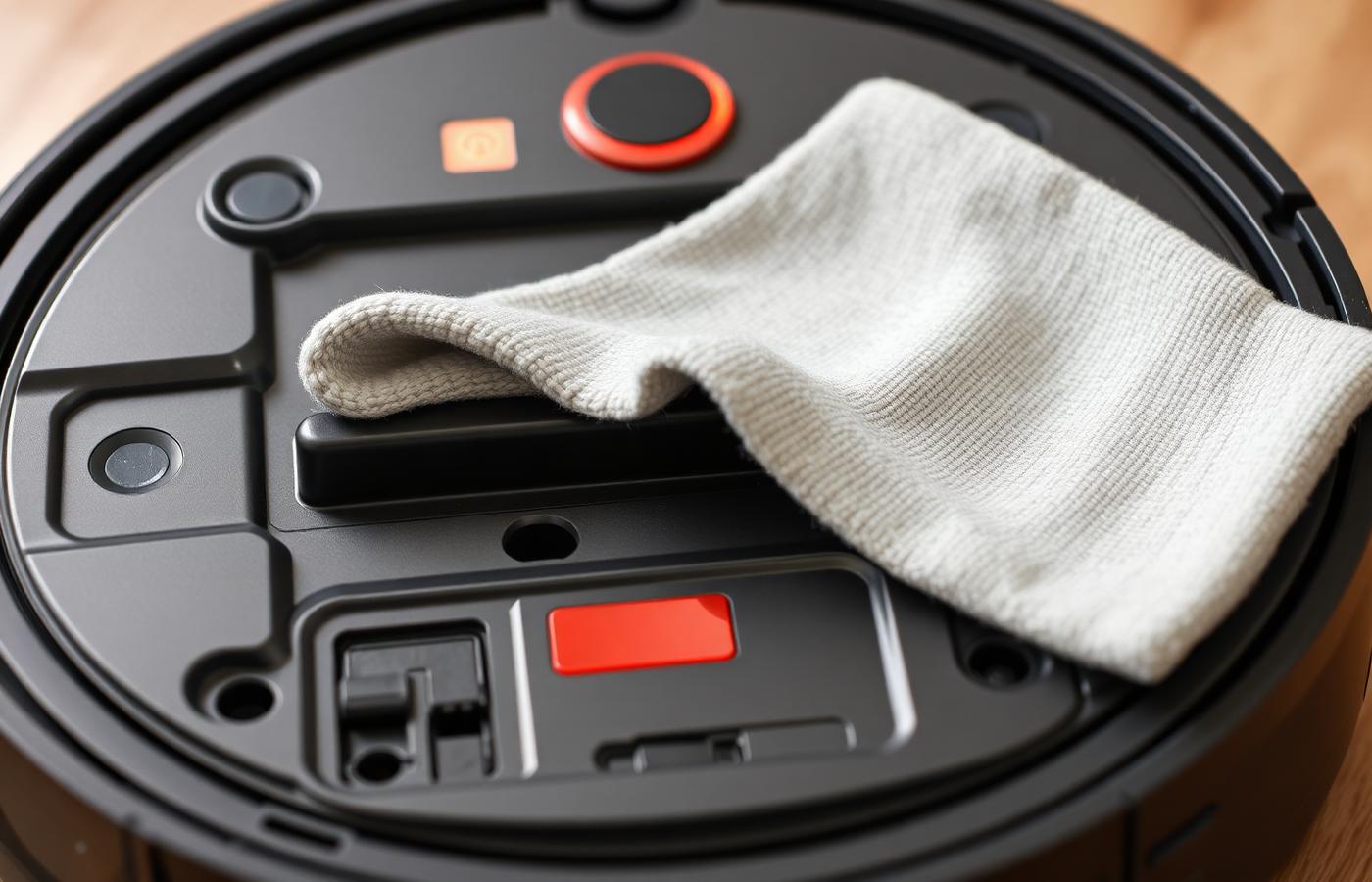
A person washing a robot vacuum's mop pads and filter under a kitchen tap. Image by www.CleaningRobots.Online.
Mop pads and filters should be rinsed after every wet-mopping cycle to stop odour build-up.

What maintenance actually costs per year

Budget realistically for consumables rather than treating a robot vacuum as a one-off purchase. A typical mid-range robot run daily costs $40โ€“$70 a year in filters, side brushes and mop pads; add $15โ€“$25 if the main roller brush needs annual replacement, which is common on pet-hair-heavy households. Self-empty base bags run $15โ€“$25 for a pack of three to four, lasting most households two to three months per bag.

Battery replacement is the largest single line item and the one most owners defer too long. Lithium packs in daily-use robots typically hold usable capacity for 2โ€“4 years; a replacement pack costs $30โ€“$60 for entry-level models and $60โ€“$120 for premium units with larger capacity cells. Replacing a battery before it fails completely โ€” once runtime drops below roughly 60 percent of the original spec โ€” avoids the robot stalling mid-clean and returning confused to a dock it can no longer reach.

Habits that extend service life

Avoid letting the battery sit at zero percent for extended periods; if the robot will be stored for more than a month, charge it to around 50 percent first, since lithium cells degrade faster stored fully empty or fully full. Keep the dock on a hard, level surface with at least 50 cm clearance either side so the robot always docks squarely โ€” a habitually misaligned dock is a slow, silent cause of poor charging contact wear.

Update firmware when prompted; navigation and battery-management improvements are shipped as software updates on most connected models and cost nothing to apply. Finally, keep the original manual or the model number saved somewhere findable โ€” knowing the exact filter and brush part numbers saves buying incompatible third-party consumables that fit poorly and wear the housing.
Frequently asked questions

How often should I replace my robot vacuum's filter?
Wash reusable filters monthly and replace them every two to three months, or every one to two months in high-shedding pet households. A filter that looks grey rather than white after washing has reached the end of its life.
Why does my robot vacuum smell musty?
This is almost always a damp filter, a dustbin left unemptied too long, or a mop pad stored wet. Air-dry all removable parts fully before refitting and empty the bin after every session in humid climates.
How do I know when the battery needs replacing?
If runtime has dropped to roughly 60 percent or less of the original spec, or the robot stops mid-clean and cannot reach the dock, the battery has degraded and a replacement pack is the fix rather than a firmware reset.
Is it worth buying third-party replacement brushes and filters?
Cheaper generic parts often fit loosely and wear the housing faster. For filters and brushes that contact moving parts, genuine or well-reviewed OEM-compatible parts are worth the modest price difference; for simple side brushes, generics are usually fine.
Can I hose down the whole robot to clean it?
No. Only the dustbin, filters, mop pads and brushes are designed to get wet. The main chassis houses electronics and battery cells that are not submersible even on models with an IP rating for the base station only.
Advertisement

All our Robot Vacuums โ€” 10 models reviewed

Every model we cover in this category, ranked with specs, pricing and honest pros and cons.

See the full Robot Vacuums category

Related robot categories

Read our other Full Feature Articles

Outdoor Cleaning RobotsThe Robot Pool Cleaner Buying Guide: What Actually MattersCordless vs Corded Robot Pool Cleaners: Which Suits Your PoolSolar Pool Skimmer Robots: What They Do and Their LimitsLiDAR vs vSLAMRobot Lawn Mowers Without Boundary Wire: How They NavigateSelf-emptying robot vacuum systems explainedRobot mops for hard floorsThe Robot Vacuum Buying Guide: What Actually Matters in 2026Are Vacuum Mop Combo Robots Worth It in 2026?Self Cleaning Litter BoxThe Best Robot Vacuum for Pet Hair in a Shedding HouseholdThe Robot Window Cleaner Guide: How They Work and Who Needs OneThe Grill Cleaning Robot Guide: How They Work and What They CostHome Assistant Robots for Elder Care: A Practical GuideChoosing a Robot Mower for Slopes and Large LawnsSecurity Patrol Robots for Home and Business: What to KnowHow a flying delivery drone actually gets a parcel to your doorDrone Delivery Regulations Worldwide: A Country-by-Country OverviewHow a Food Delivery Robot Gets Your Order to Your DoorCommercial Floor Scrubbing Robots: What They Cost and How They WorkWarehouse Lifting Robots: Cutting Manual Handling Injuries on the FloorWorkplace Safety RobotsSmart Home Cleaning Robot Integration, ExplainedThe Real Cost of Cleaning Robots, Beyond the Sticker PriceGutter Cleaning Robots Explained: How They Work, What They CostThe Best Gutter Cleaning Robot for 2026: A Buyer's ShortlistiRobot Looj Alternatives: What to Use Now for Gutter CleaningOutdoor Sweeper Robots: Keeping Driveways and Paths Clear Automatically

30 full feature articles published ยท browse them all