What a flying delivery drone actually is
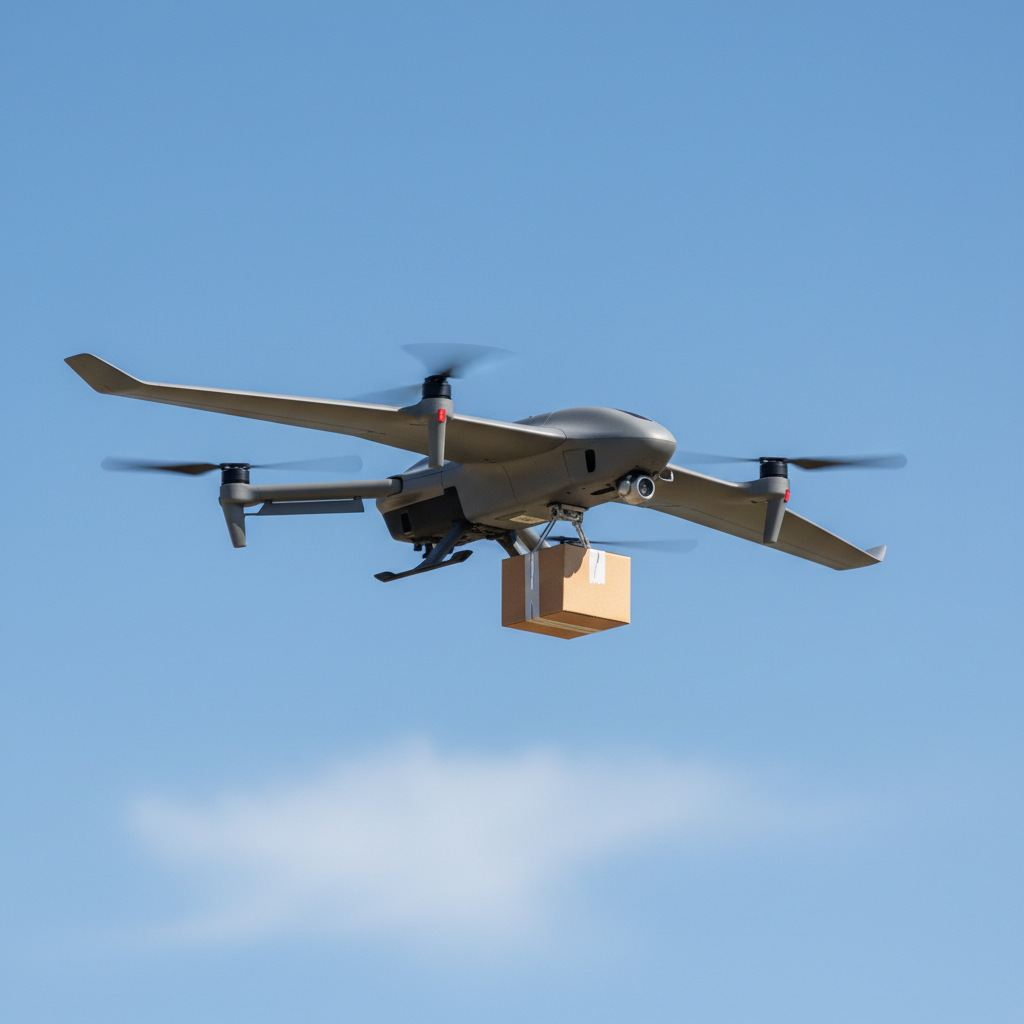
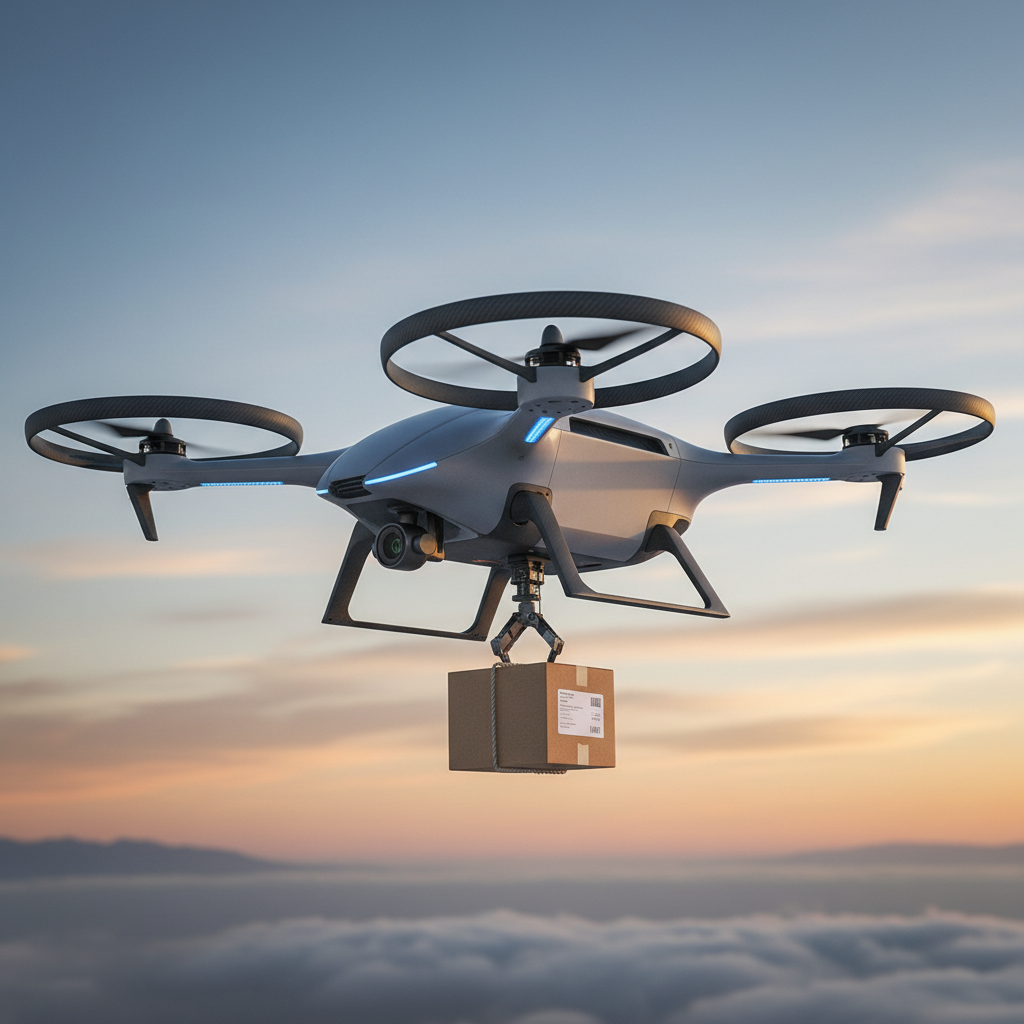
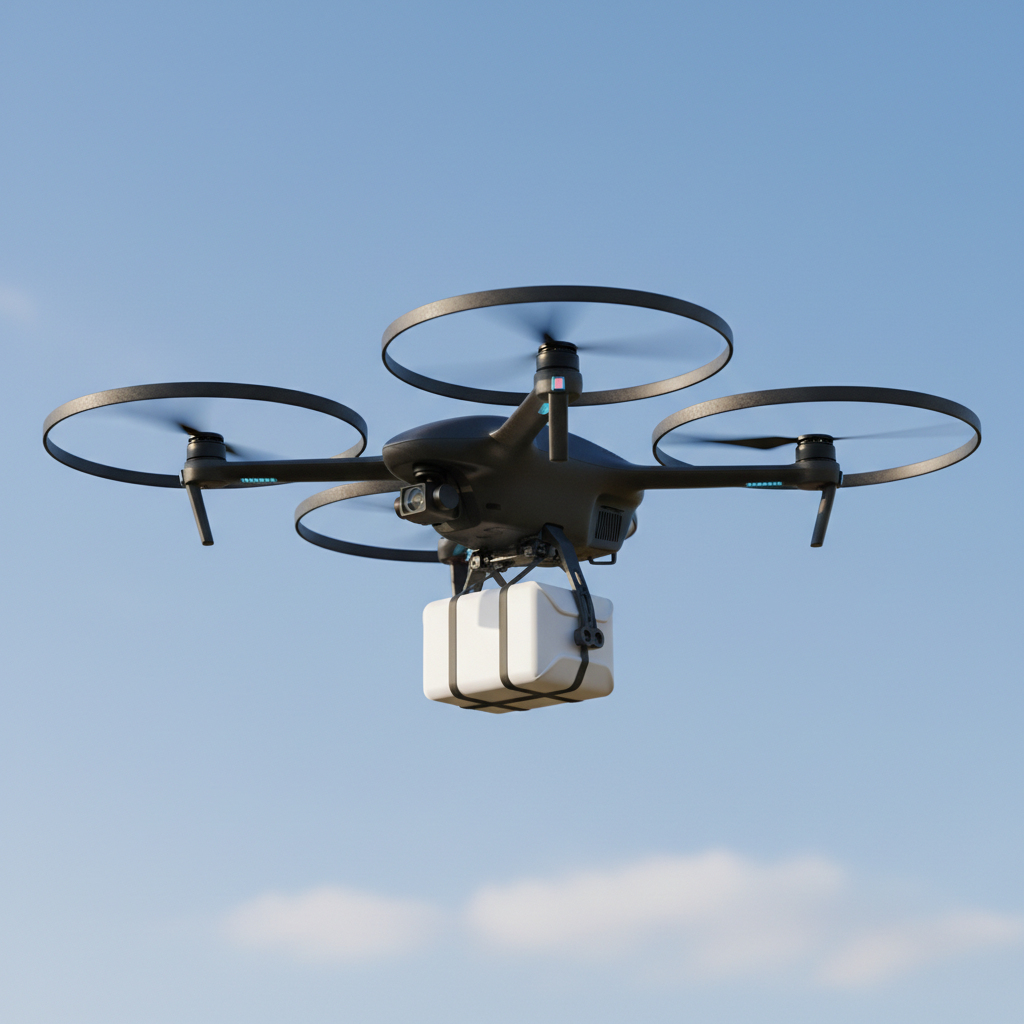
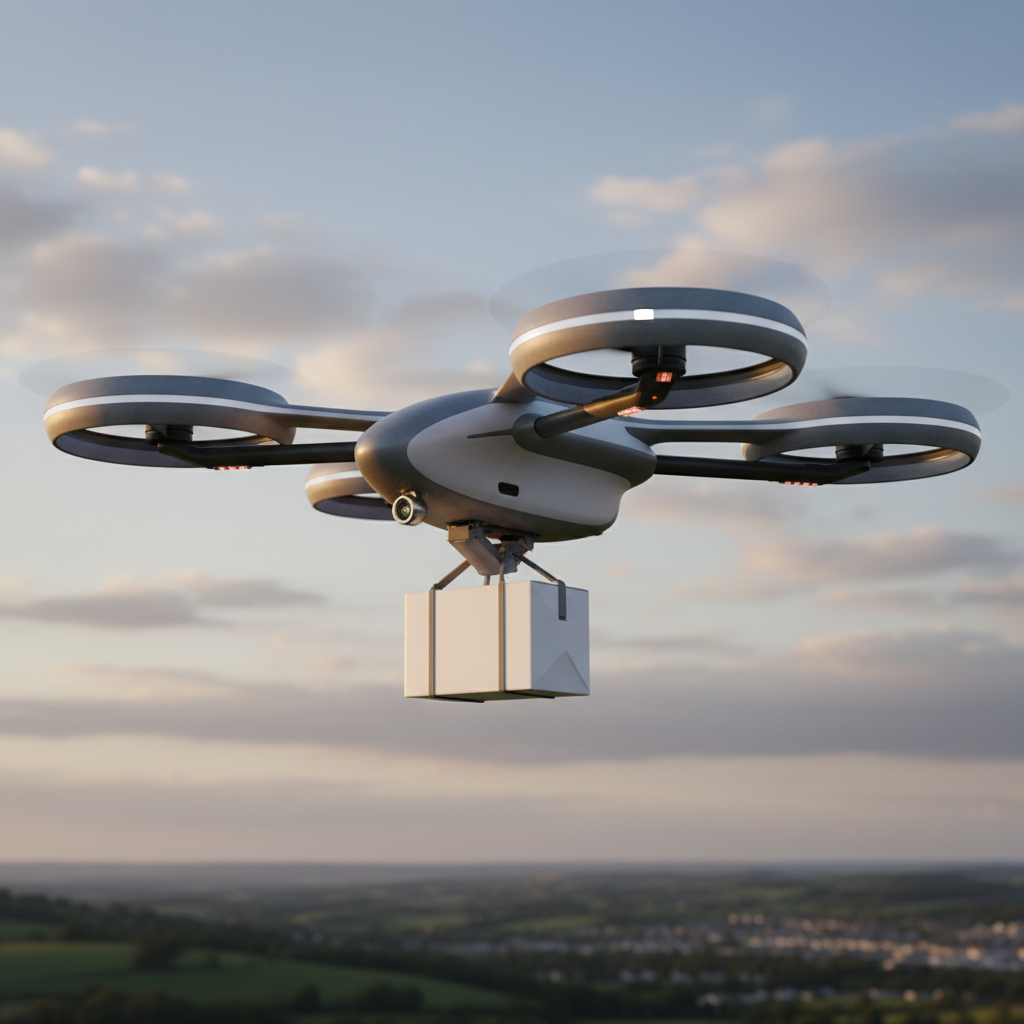
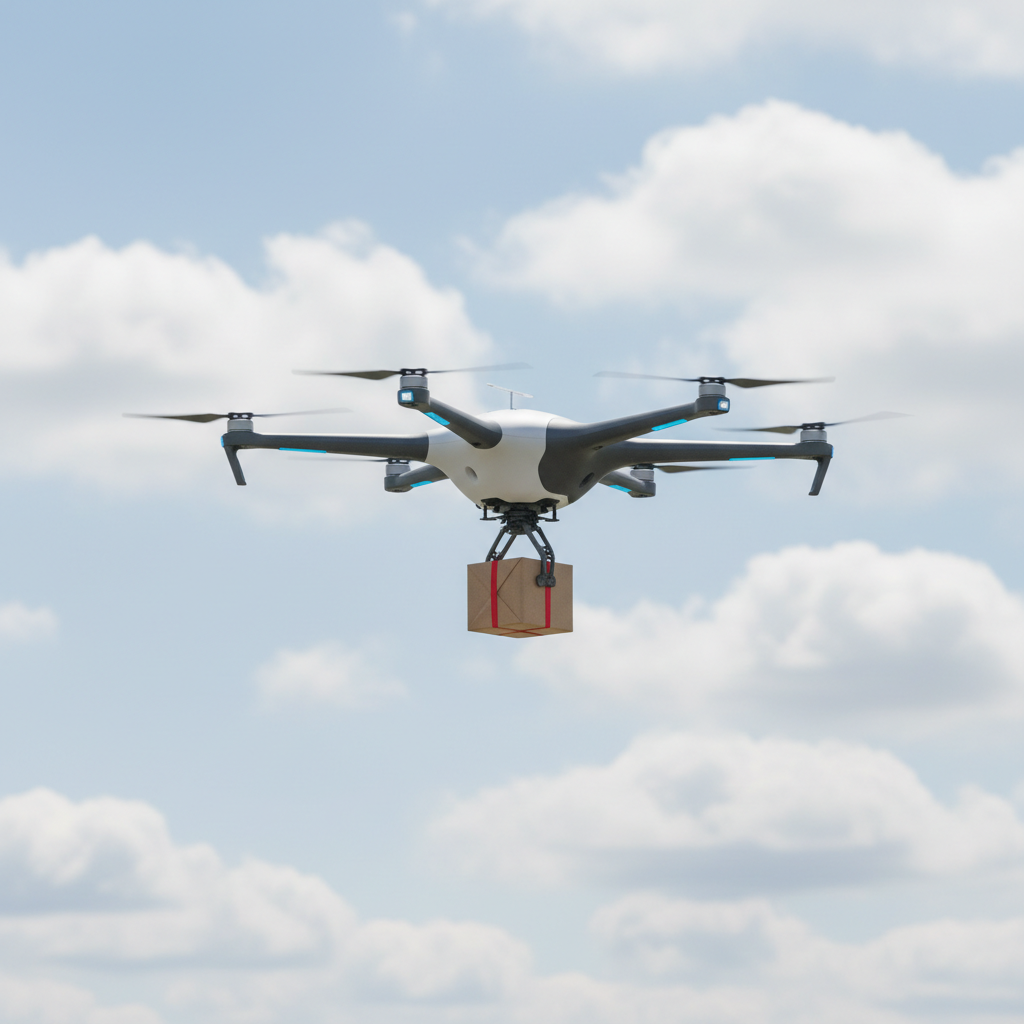
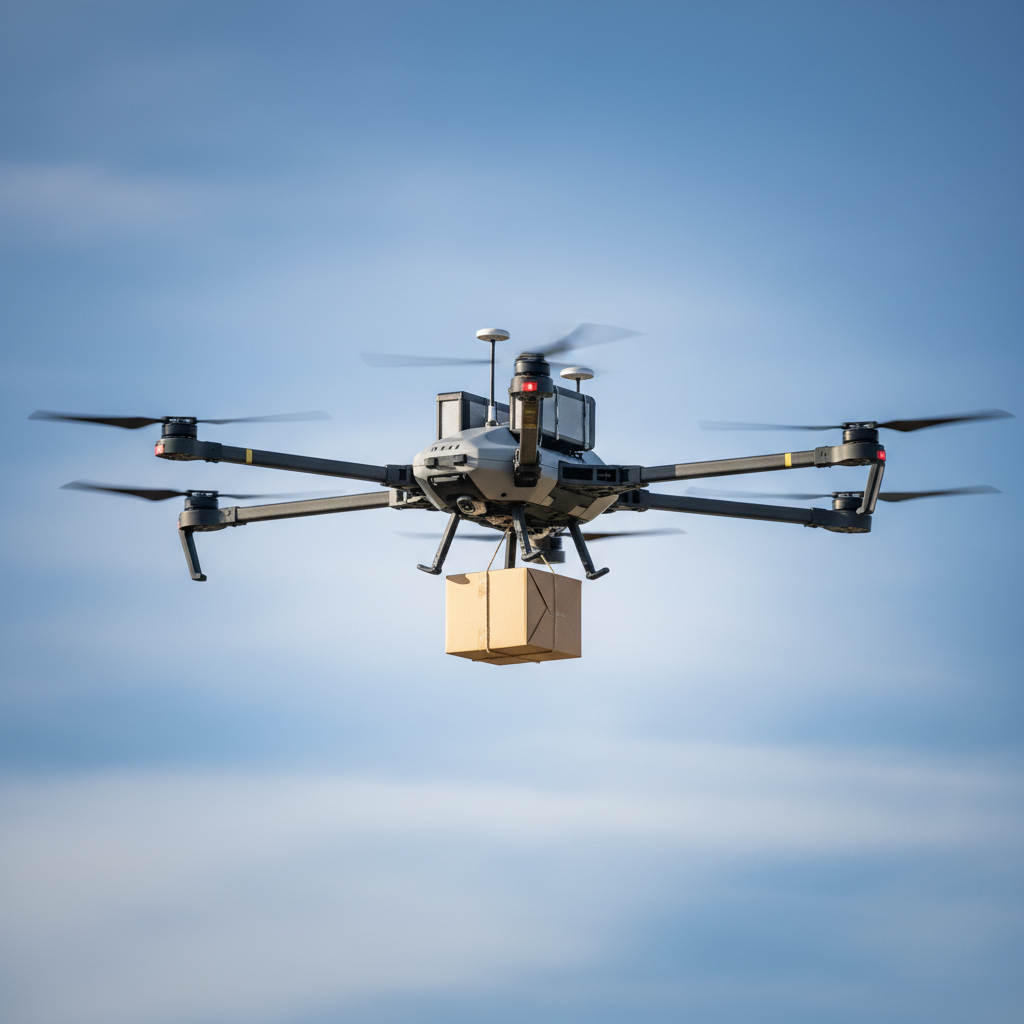
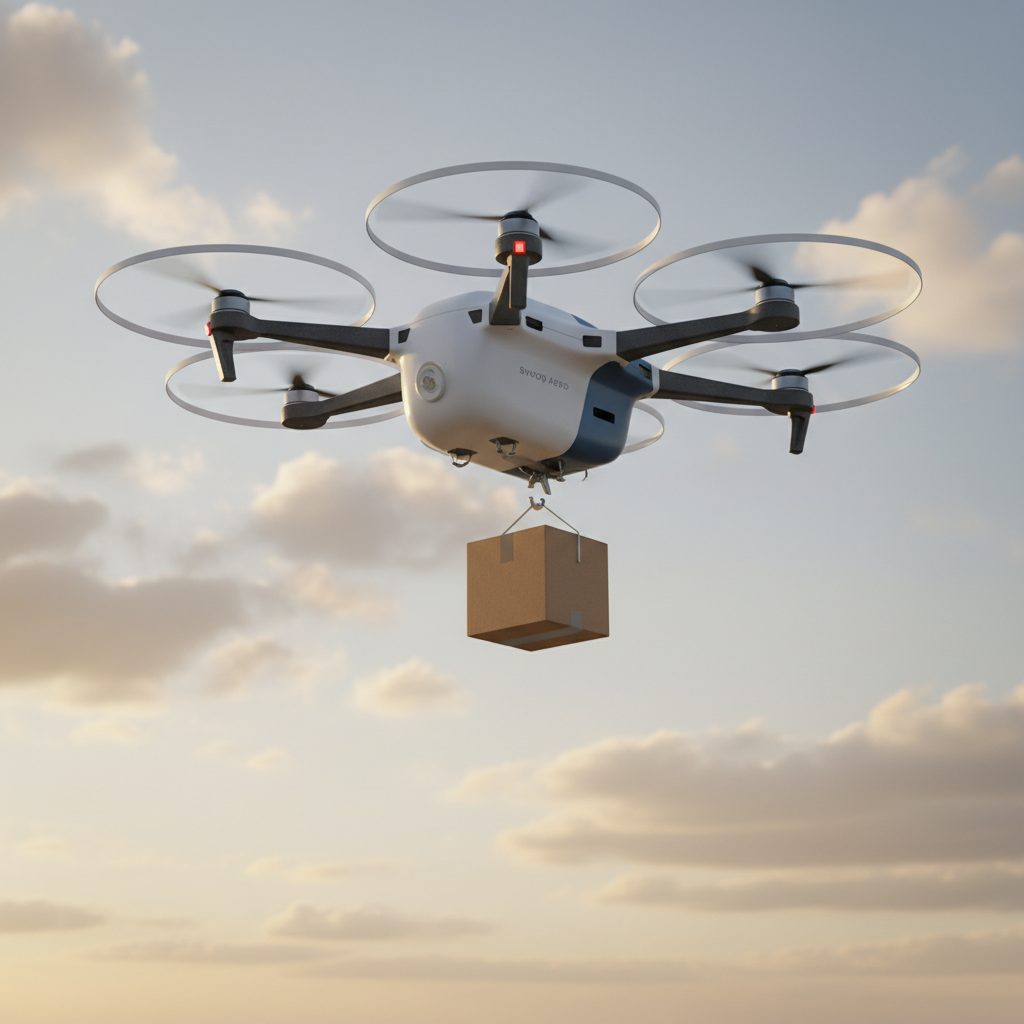
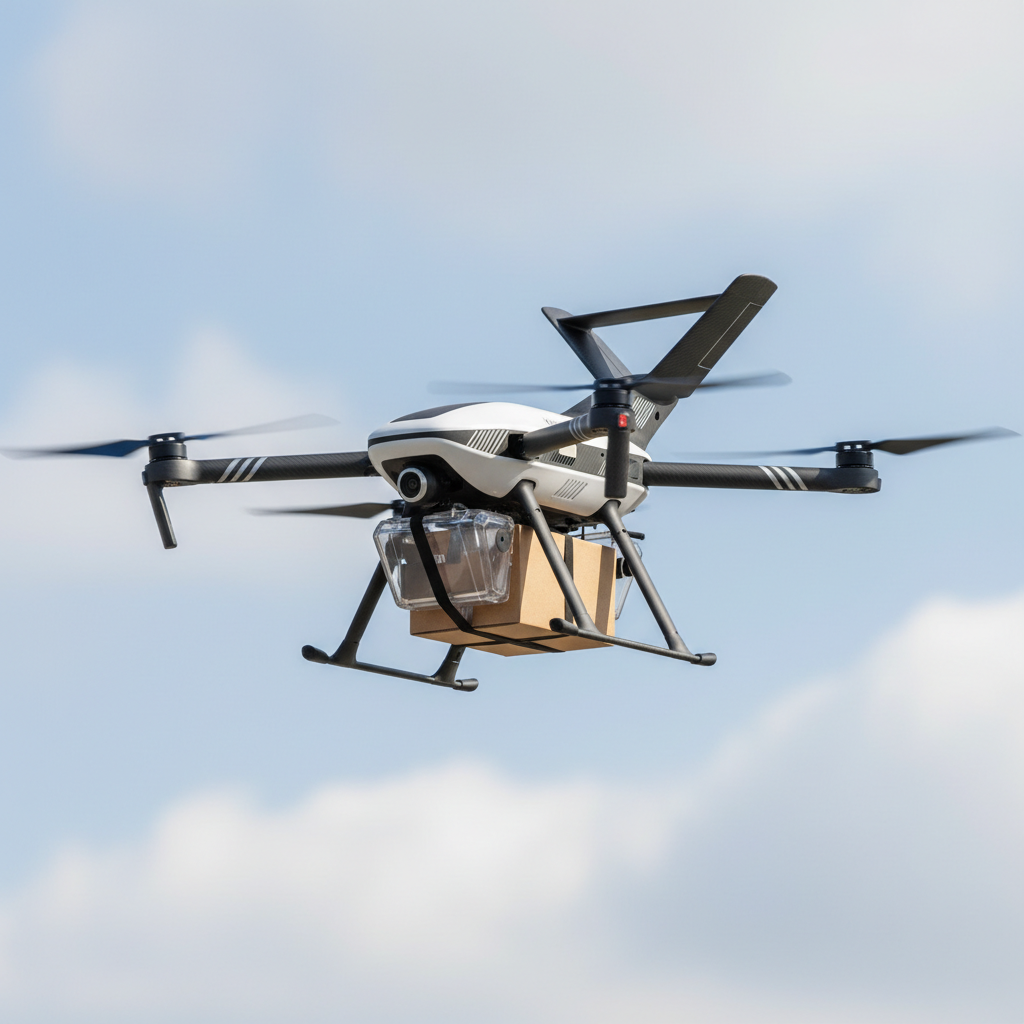
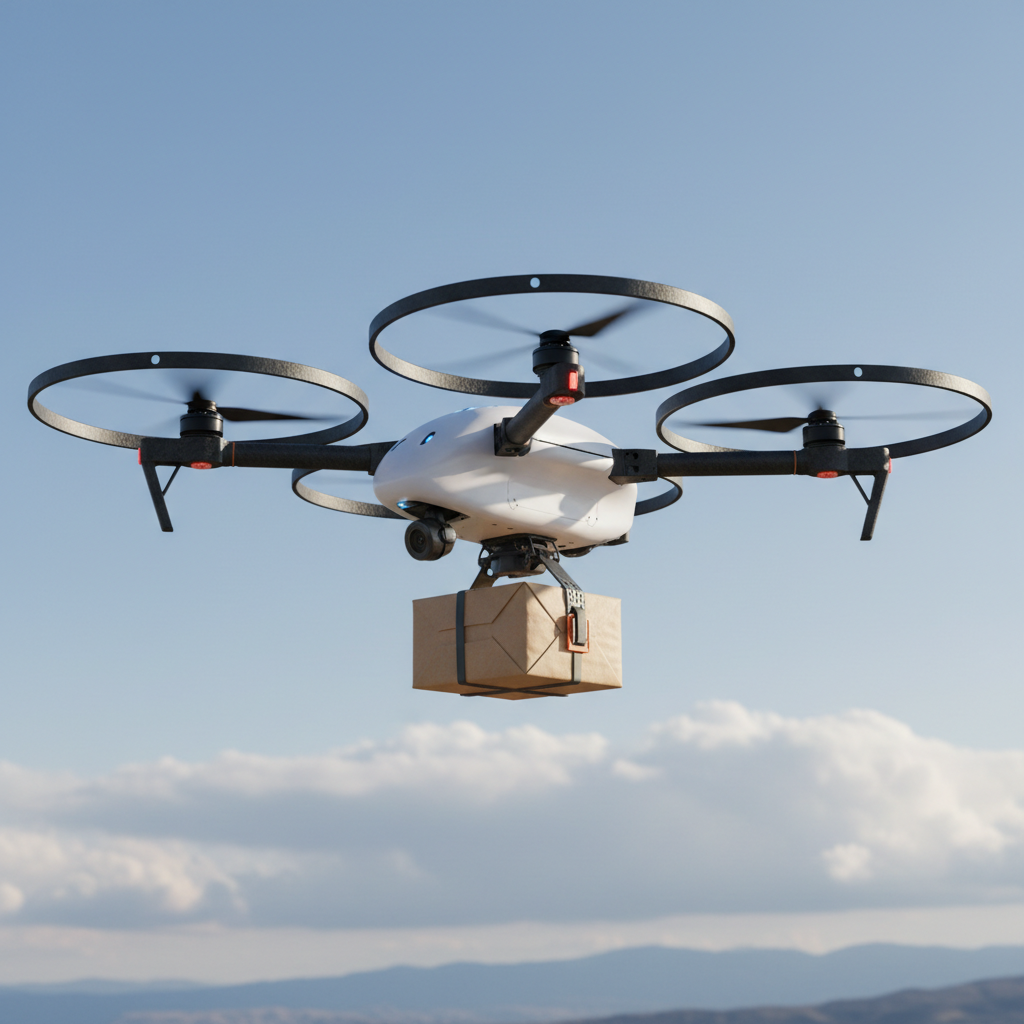
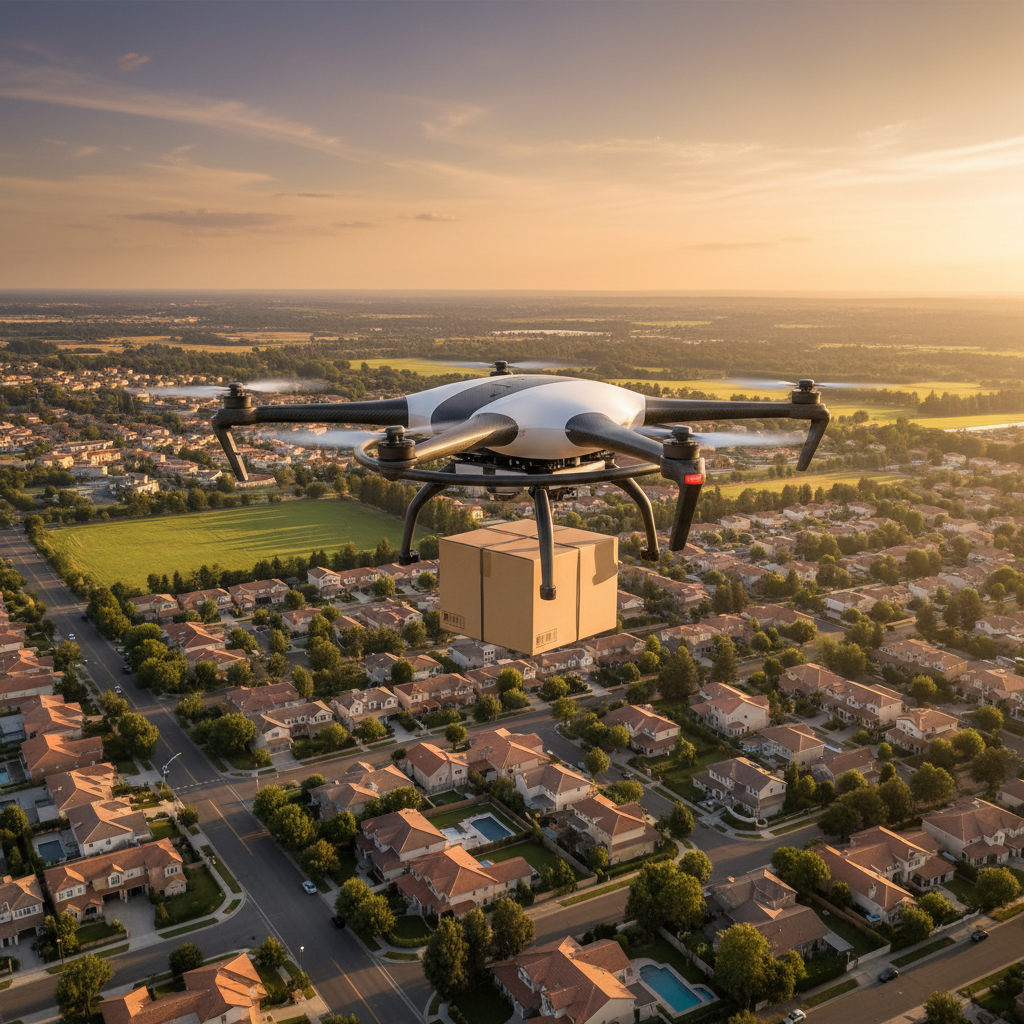
A flying delivery drone is a purpose-built multirotor or hybrid fixed-wing aircraft designed to carry a small payload — typically 1 to 3.5 kg — from a distribution hub to a home or business without a pilot on board. Commercial platforms from operators such as Wing, Zipline, Manna and Amazon Prime Air use between four and twelve rotors for lift and control redundancy, cruise at 50–130 km/h, and fly missions of 5–15 km on a single battery charge. Unlike a hobbyist quadcopter, every subsystem is duplicated: two or more flight computers, independent power rails, and enough spare motors that losing one rotor does not mean losing the aircraft.
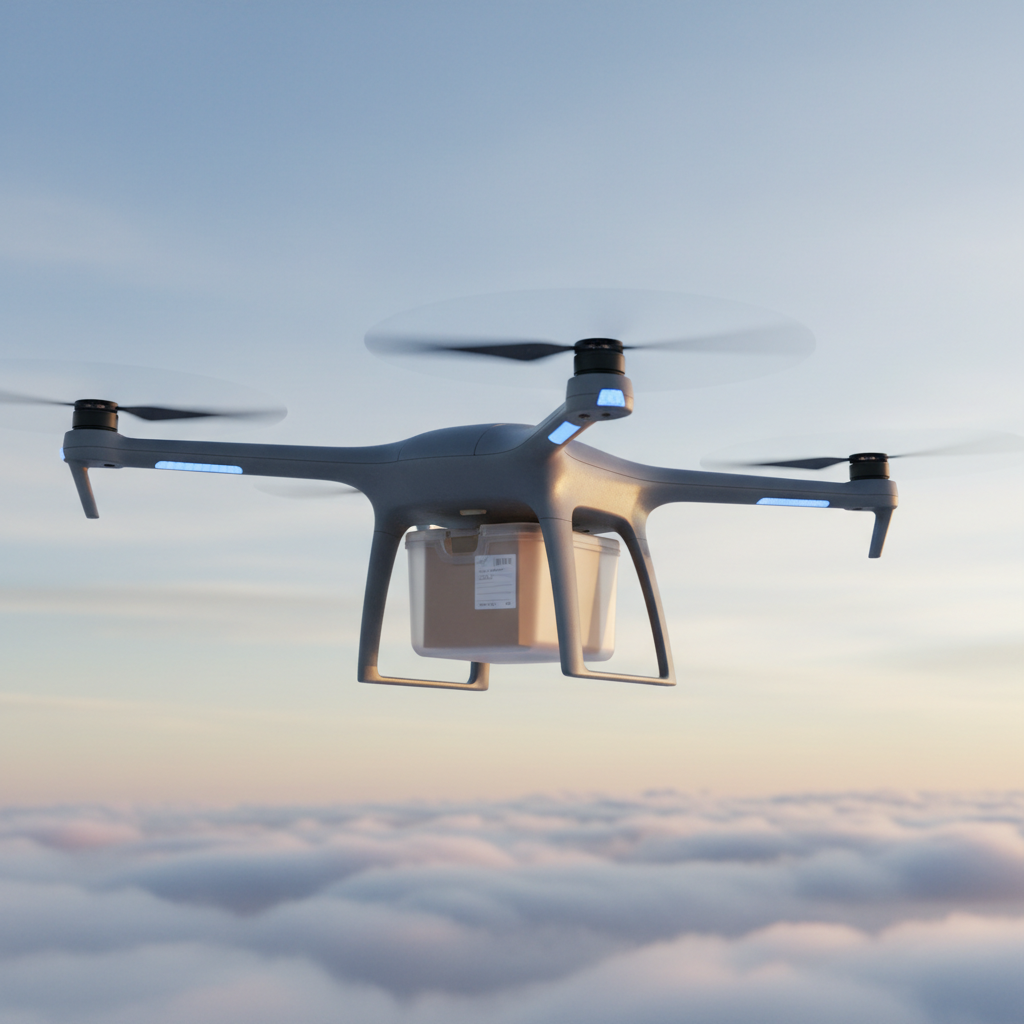
The payload itself usually rides in a purpose-moulded pod or open cradle beneath the fuselage, sized for food, pharmacy items or small retail parcels. Weight and balance matter enormously at this scale — a 200 g shift in payload position can measurably change how the aircraft responds to gusts, so most systems weigh and centre the load automatically before departure.
Navigation: how it finds the address
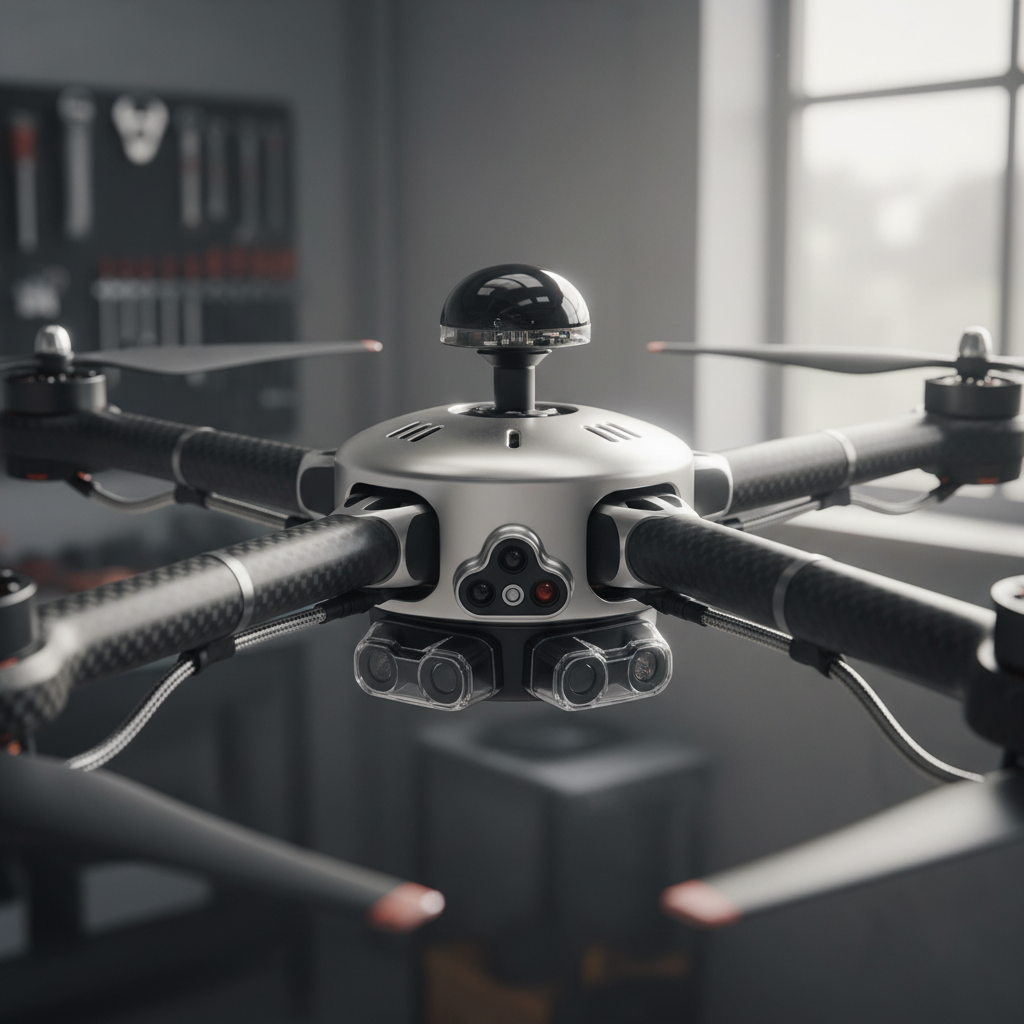
Every flying delivery drone stitches together several positioning sources rather than relying on GPS alone. Dual-band GNSS gives position accurate to a few metres; an inertial measurement unit fills in gaps during signal loss; and increasingly, visual-inertial odometry cross-checks position against known landmarks below. The flight computer flies a pre-approved 3D corridor rather than a straight line, respecting altitude ceilings, no-fly zones around airports and schools, and dynamic restrictions such as temporary bushfire or emergency-response airspace pulled from a live data feed.
Obstacle sensing is layered: forward-facing stereo cameras or small radar units detect other aircraft and tall structures, while downward LiDAR or ultrasonic sensors confirm the drop zone is clear of pets, washing lines and people immediately before descent. If the sensors disagree with the pre-mapped terrain model, the aircraft aborts the drop and returns the parcel to base rather than guessing.
Getting the parcel down safely
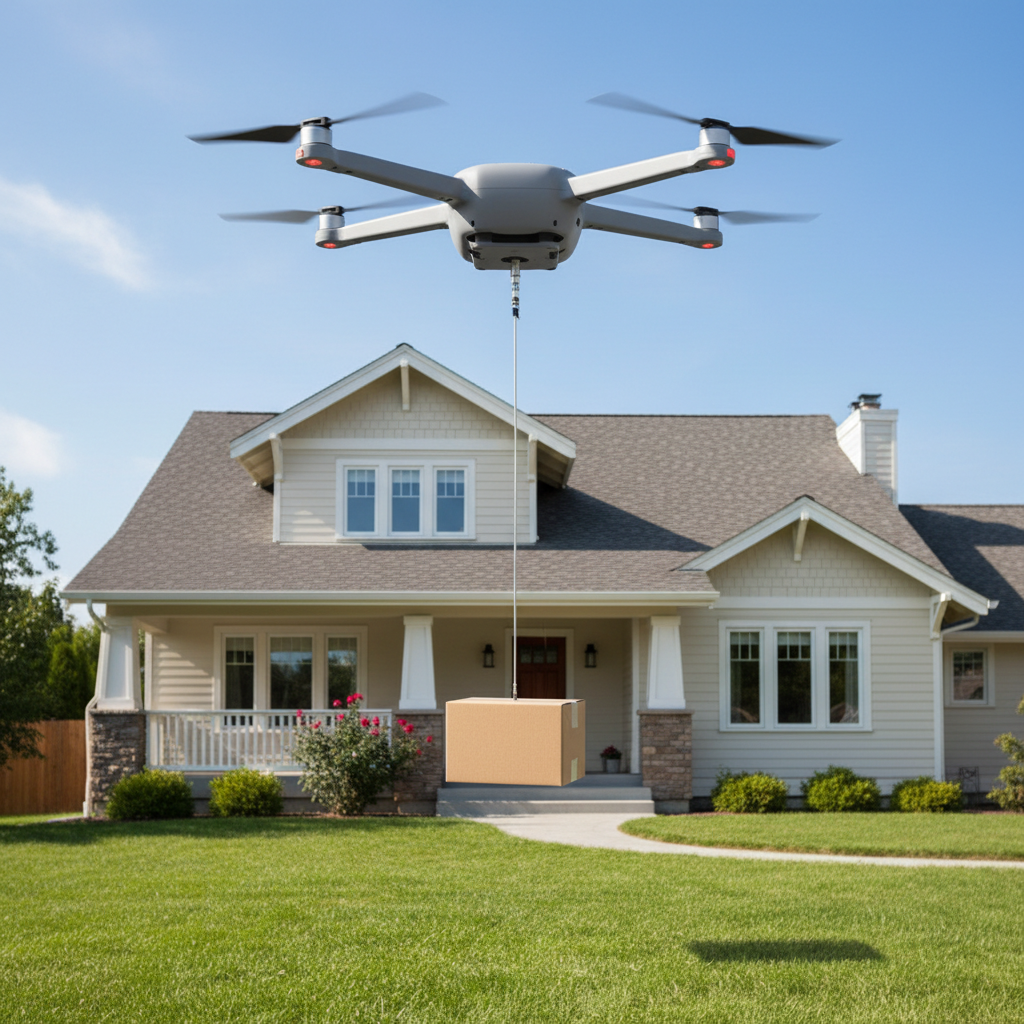
There are three delivery methods in active commercial use. Full touchdown lands the whole aircraft briefly on a driveway or pad — simple, but it exposes rotors to ground hazards and needs a genuinely clear space. Winch or tether drop hovers at 5–10 m and lowers the parcel on a cable that releases automatically on contact, which is now the dominant method because it needs far less clear ground and keeps the aircraft away from trees, fences and pets. Parachute drop, used mainly for humanitarian and medical payloads, releases the package from altitude under a small canopy for a soft, low-precision landing in open areas.
Whichever method is used, the final approach is the most heavily monitored phase of the flight: the aircraft slows, re-scans the landing zone, and will hold position or divert if anything moves into the zone in the last few seconds.
Battery, range and payload trade-offs
Lithium-ion or lithium-polymer packs typically give 20–30 minutes of powered flight, which sets the practical service radius at 8–12 km from a hub once reserve power for a diversion is accounted for. Payload and range trade against each other directly: a drone rated to carry 2.5 kg over 10 km might manage only 1.5 kg over 16 km. Cold weather cuts usable capacity by 15–25%, which is why most networks quietly reduce maximum range on winter mornings rather than risk a low-battery diversion.
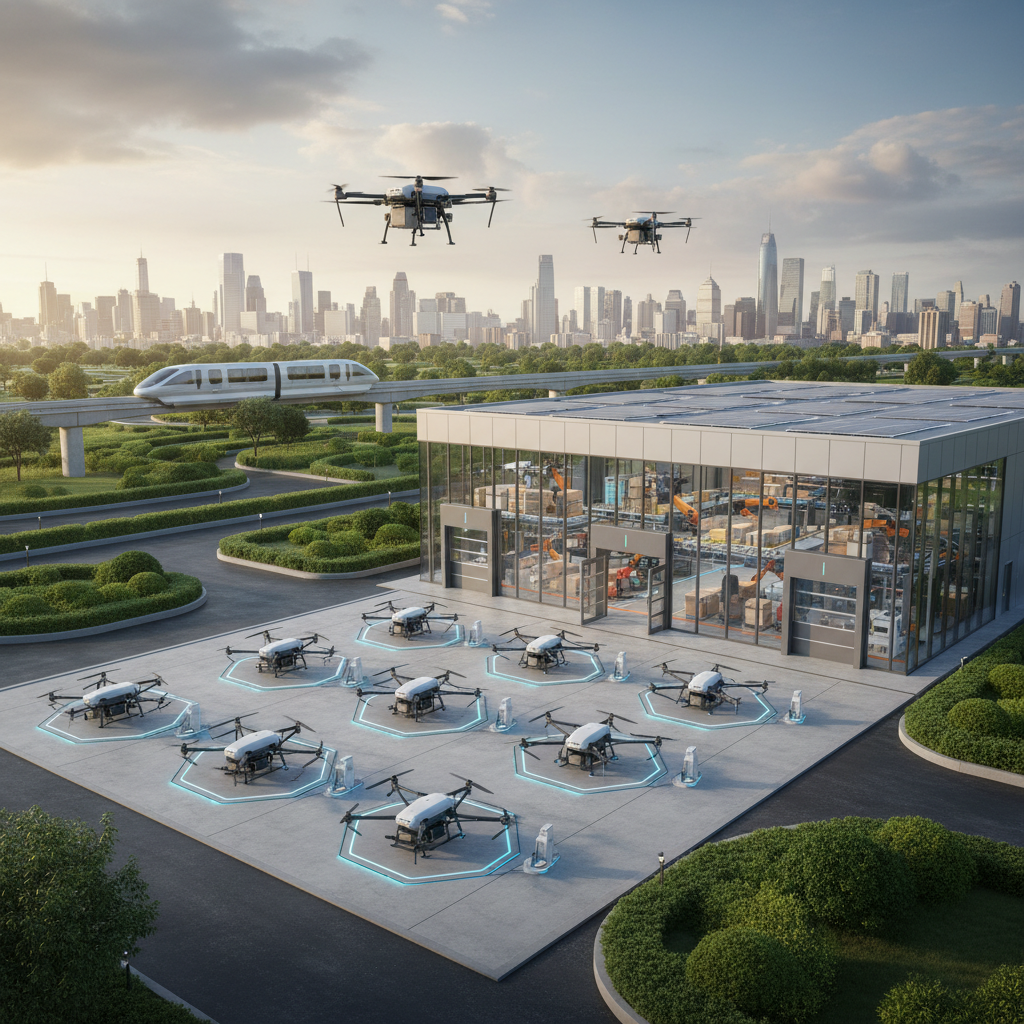
Fleet operators manage this with hub density rather than bigger batteries — Zipline's Rwandan and North Carolina networks, for example, place distribution centres roughly 10–20 km apart specifically so no single flight pushes the battery margin.
Where the technology is heading
The next engineering push is beyond visual line of sight (BVLOS) operation without a dedicated visual observer at every flight, which regulators including the FAA and CASA are now approving on a case-by-case basis under expanding waiver programmes. Combined with automated hub-to-hub charging and swap systems, this is what turns a demonstration flight into genuine daily delivery infrastructure — and it is the single biggest factor separating today's trial services from tomorrow's neighbourhood-wide coverage.