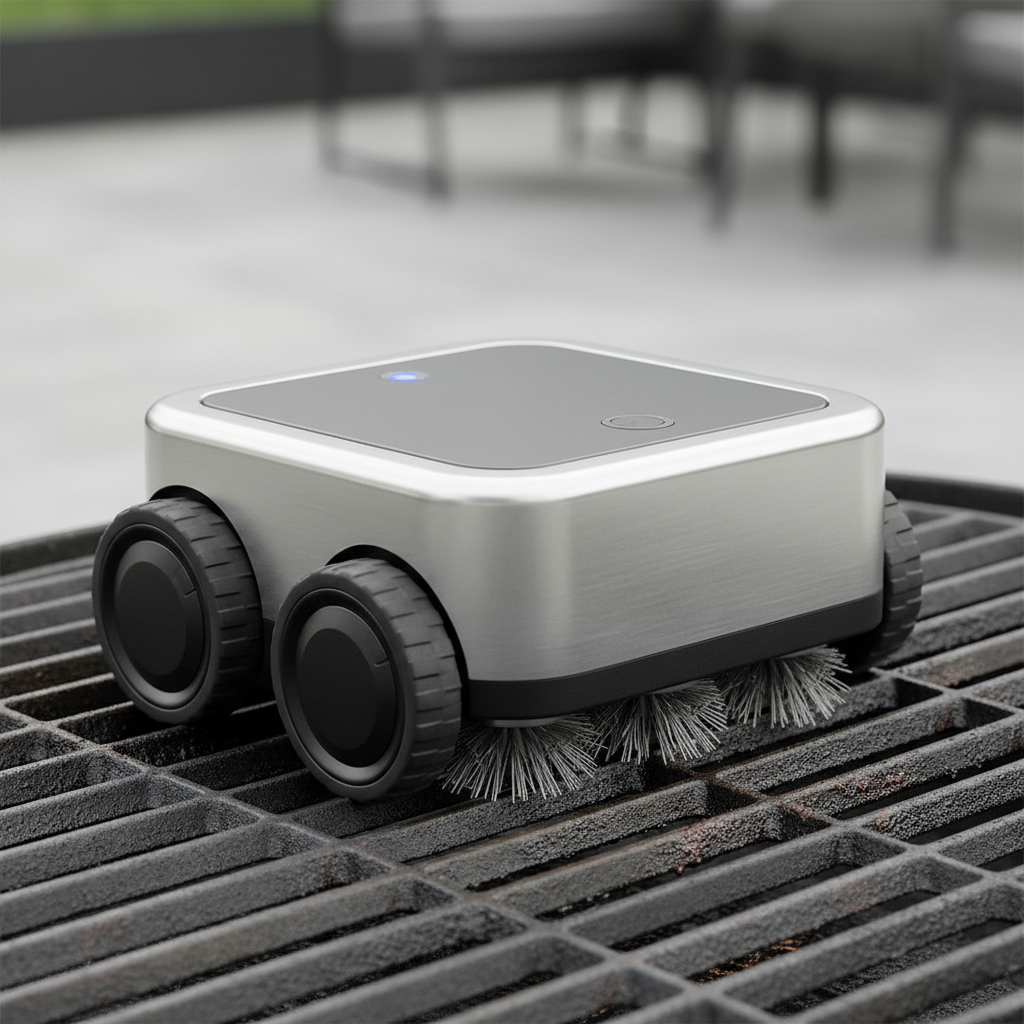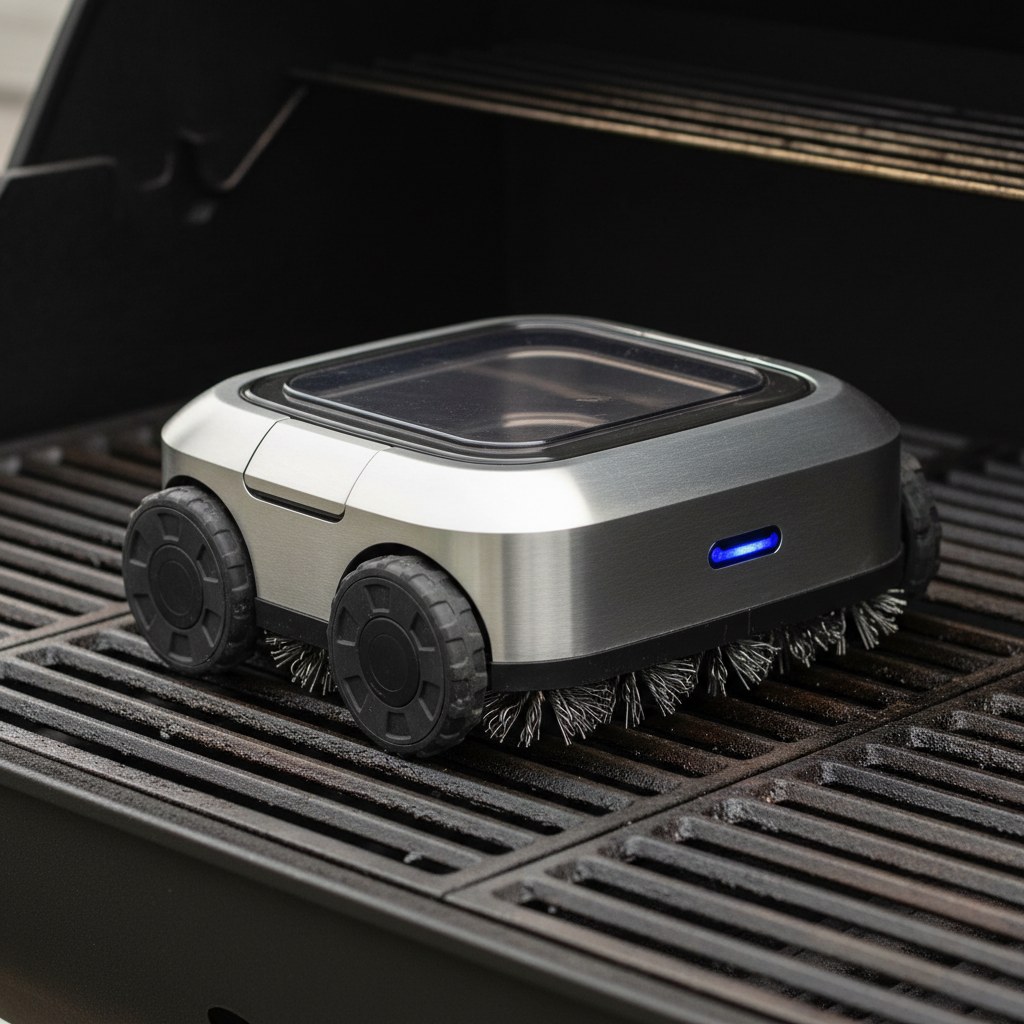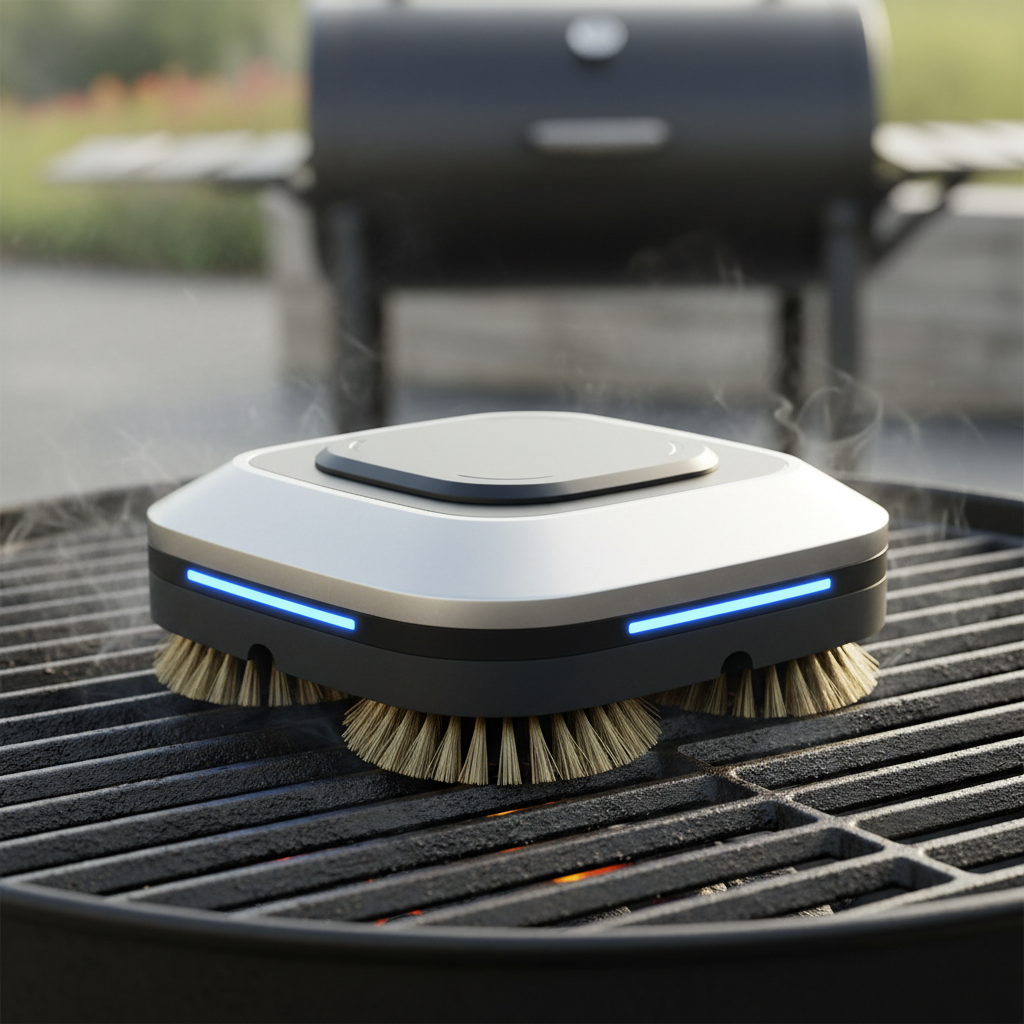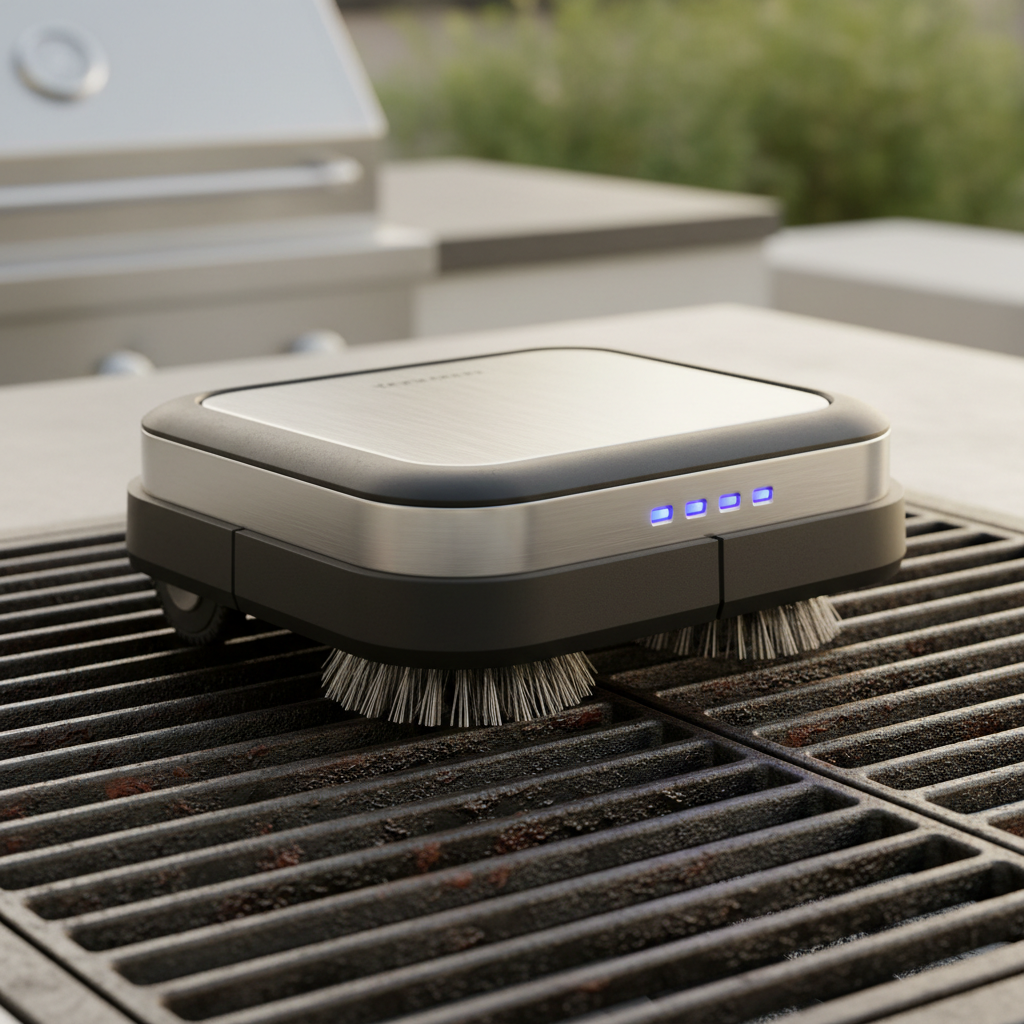
What a grill cleaning robot actually does
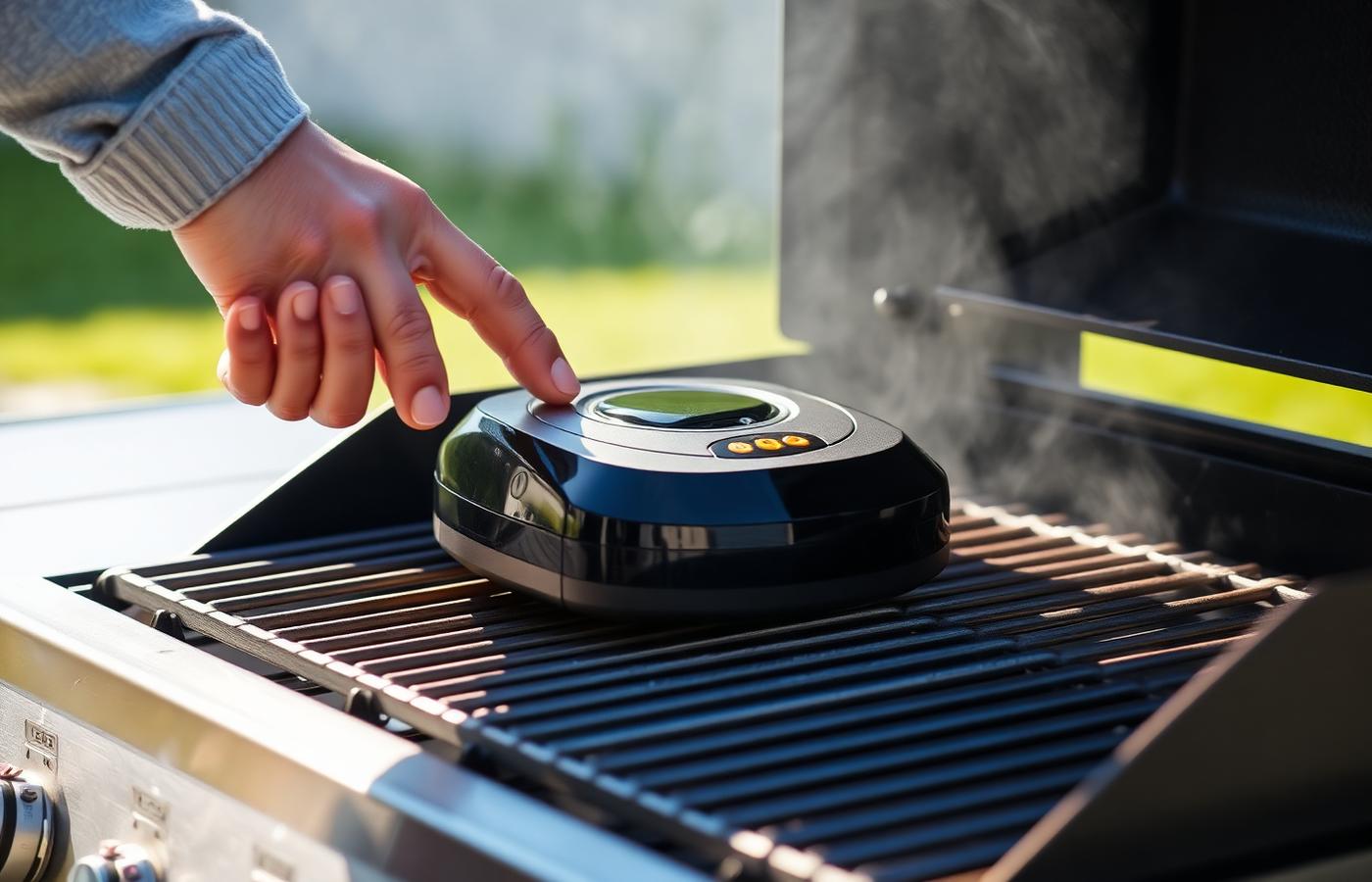
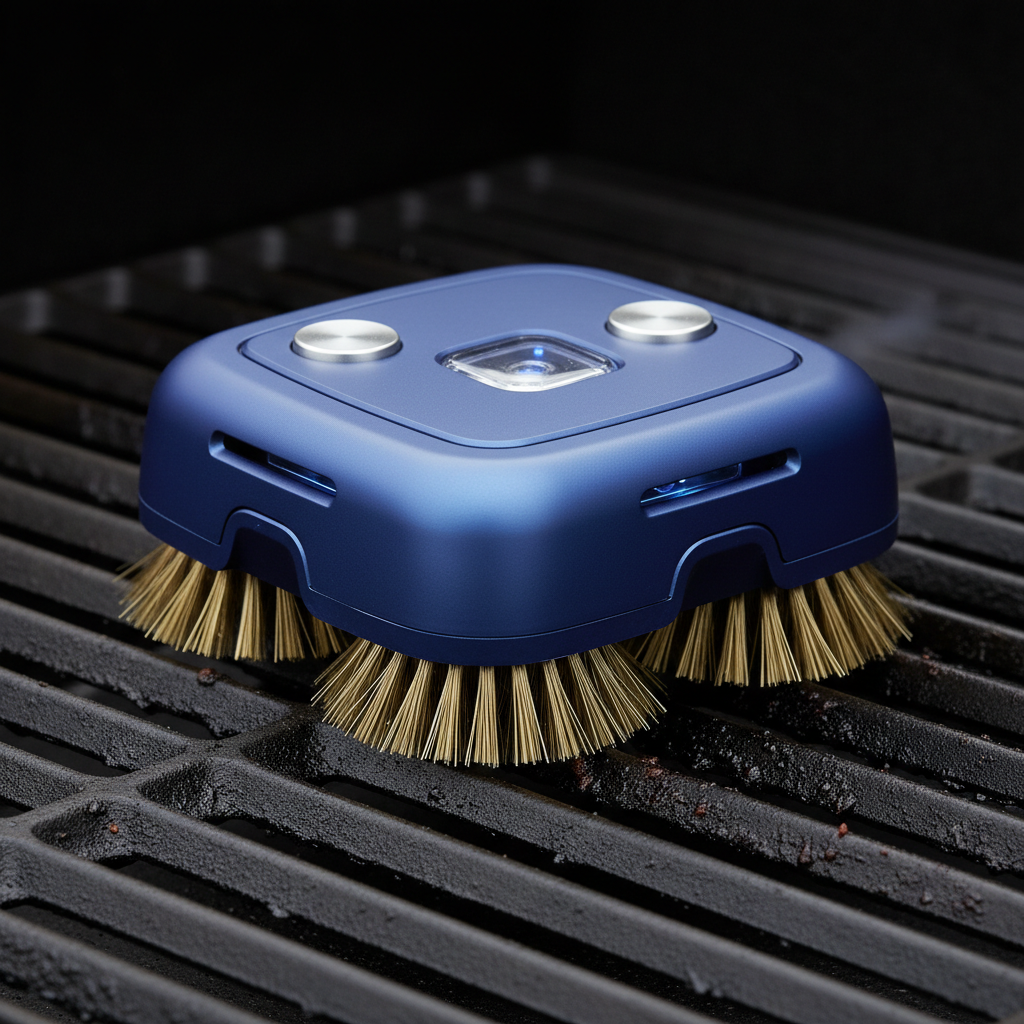
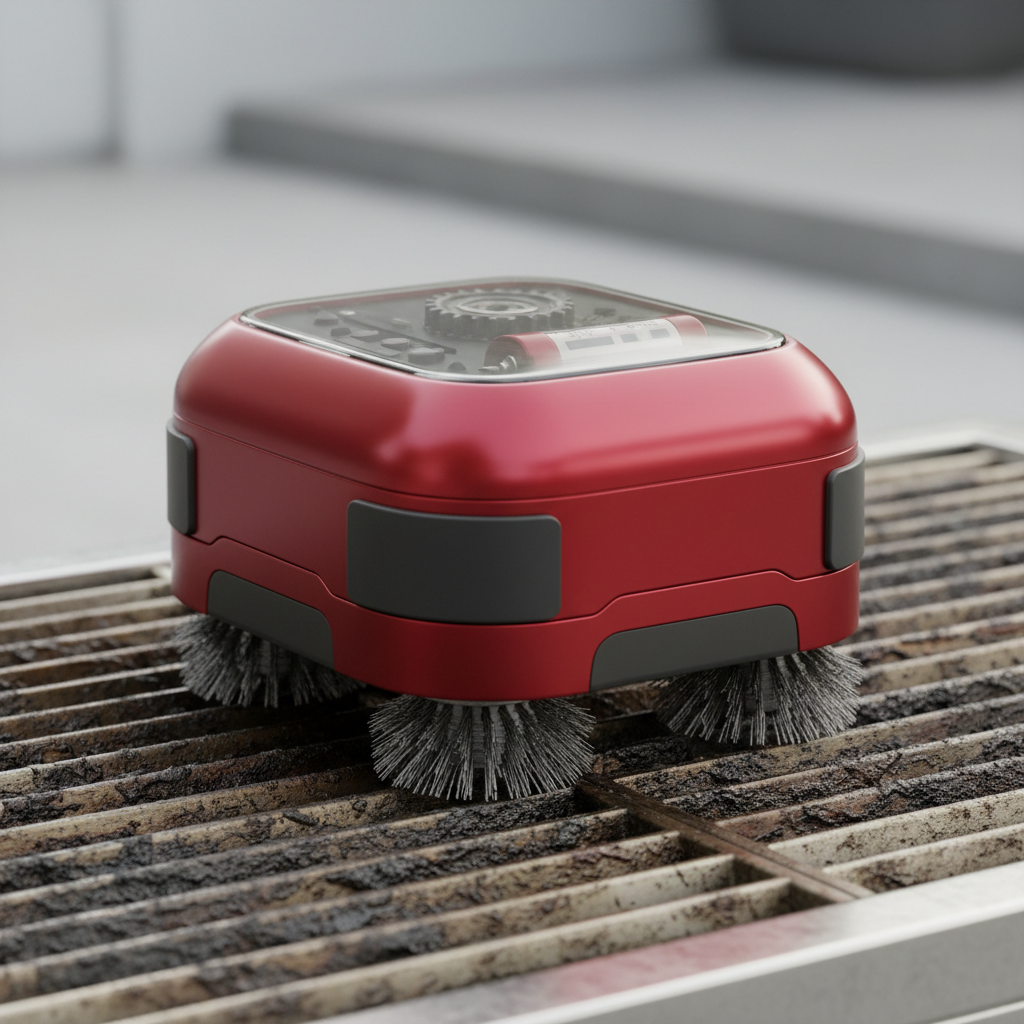
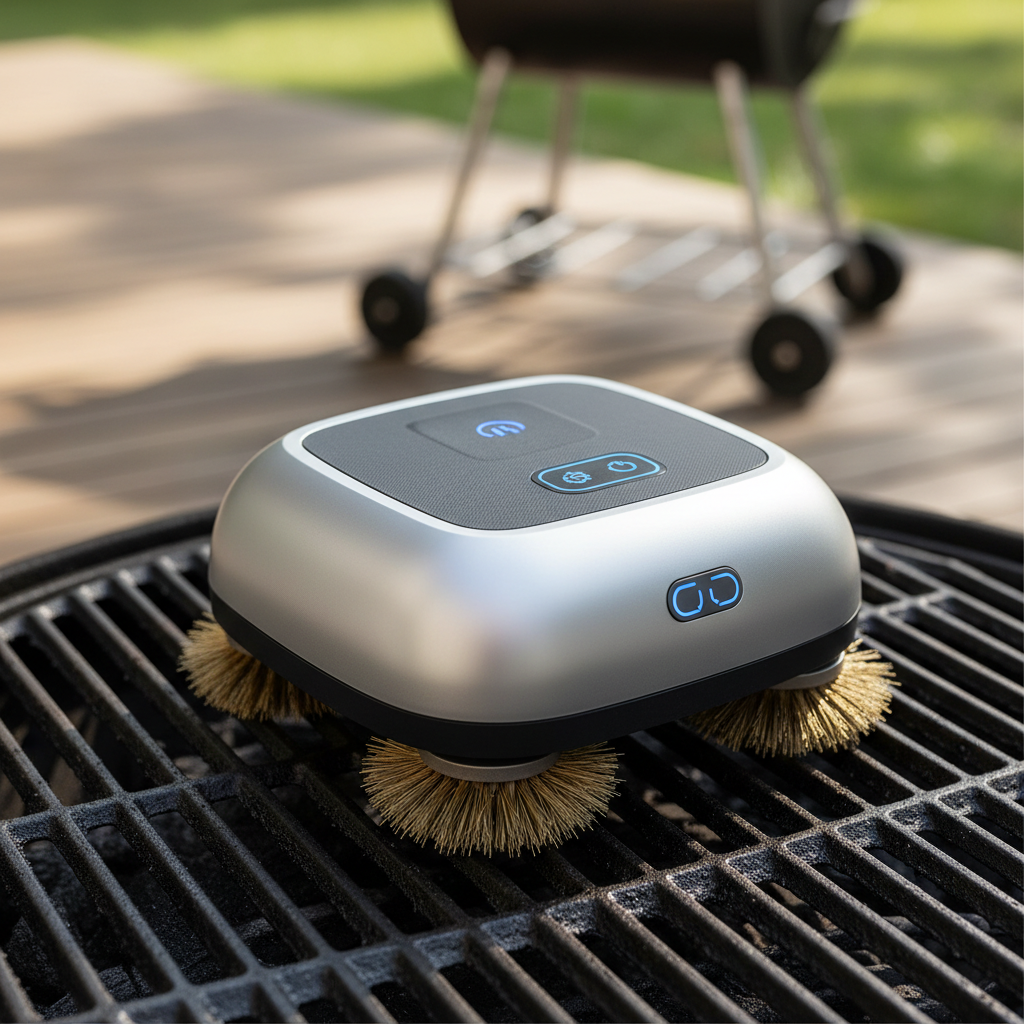
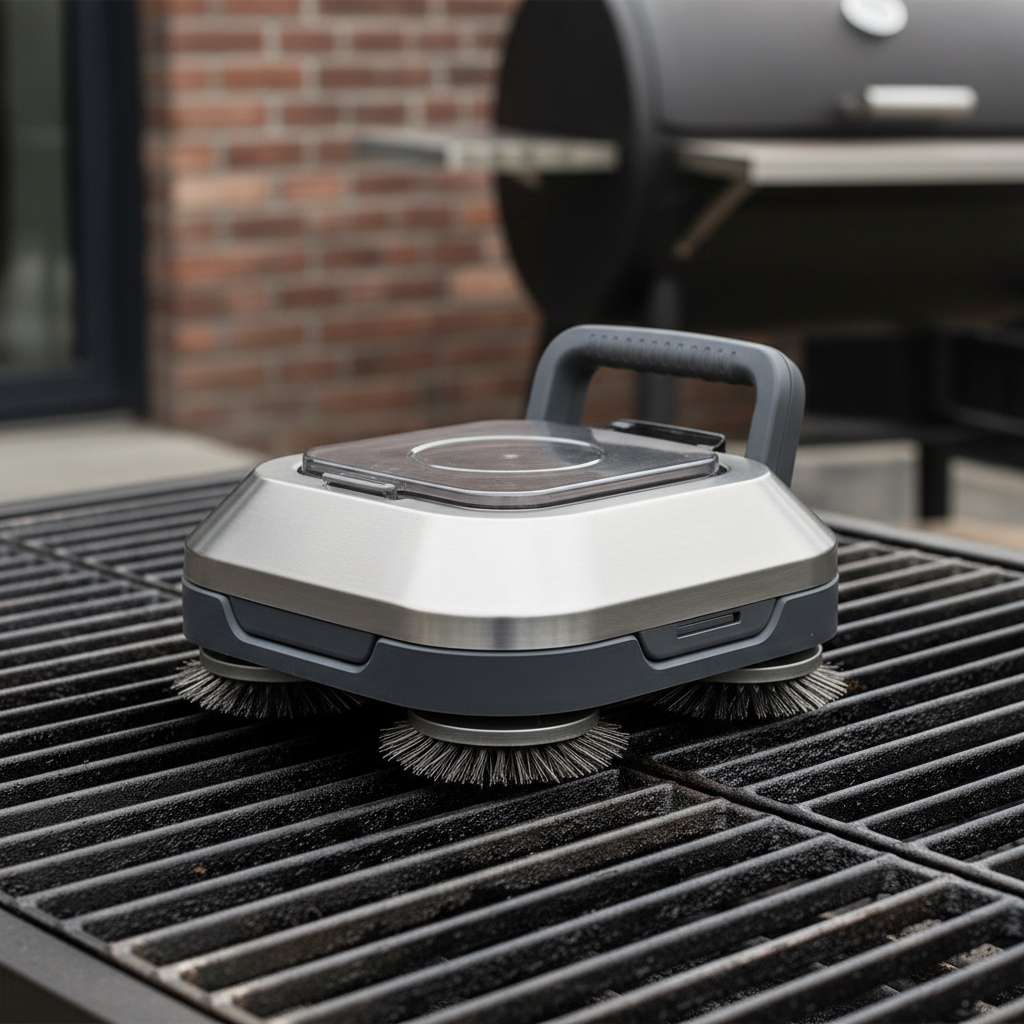
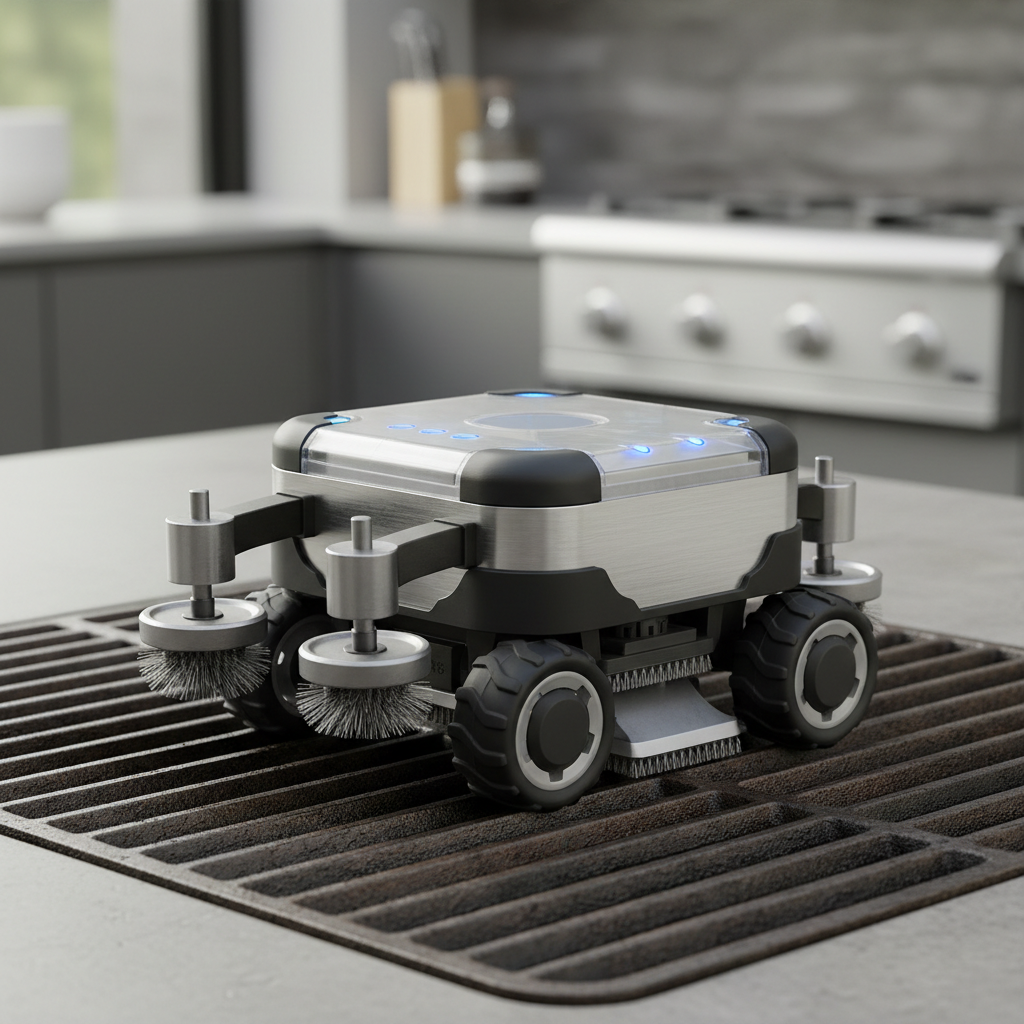
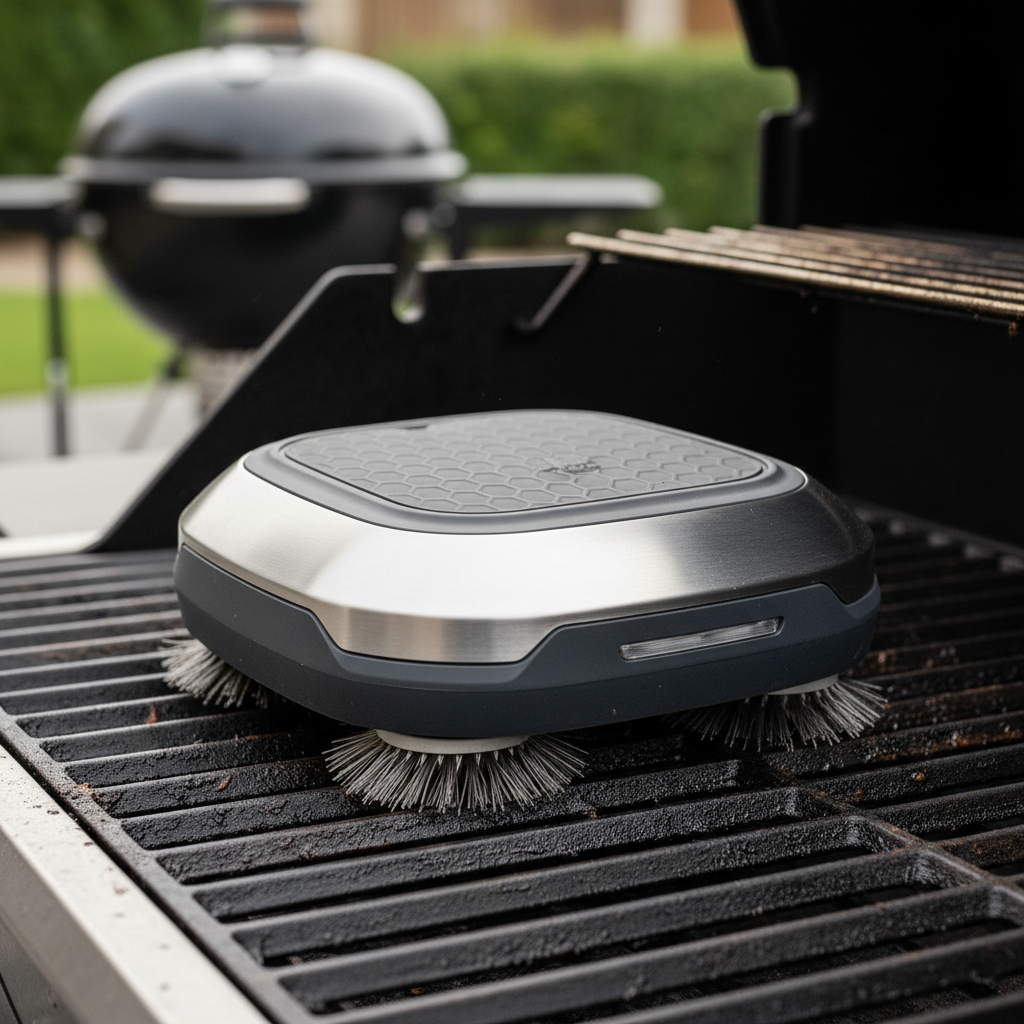
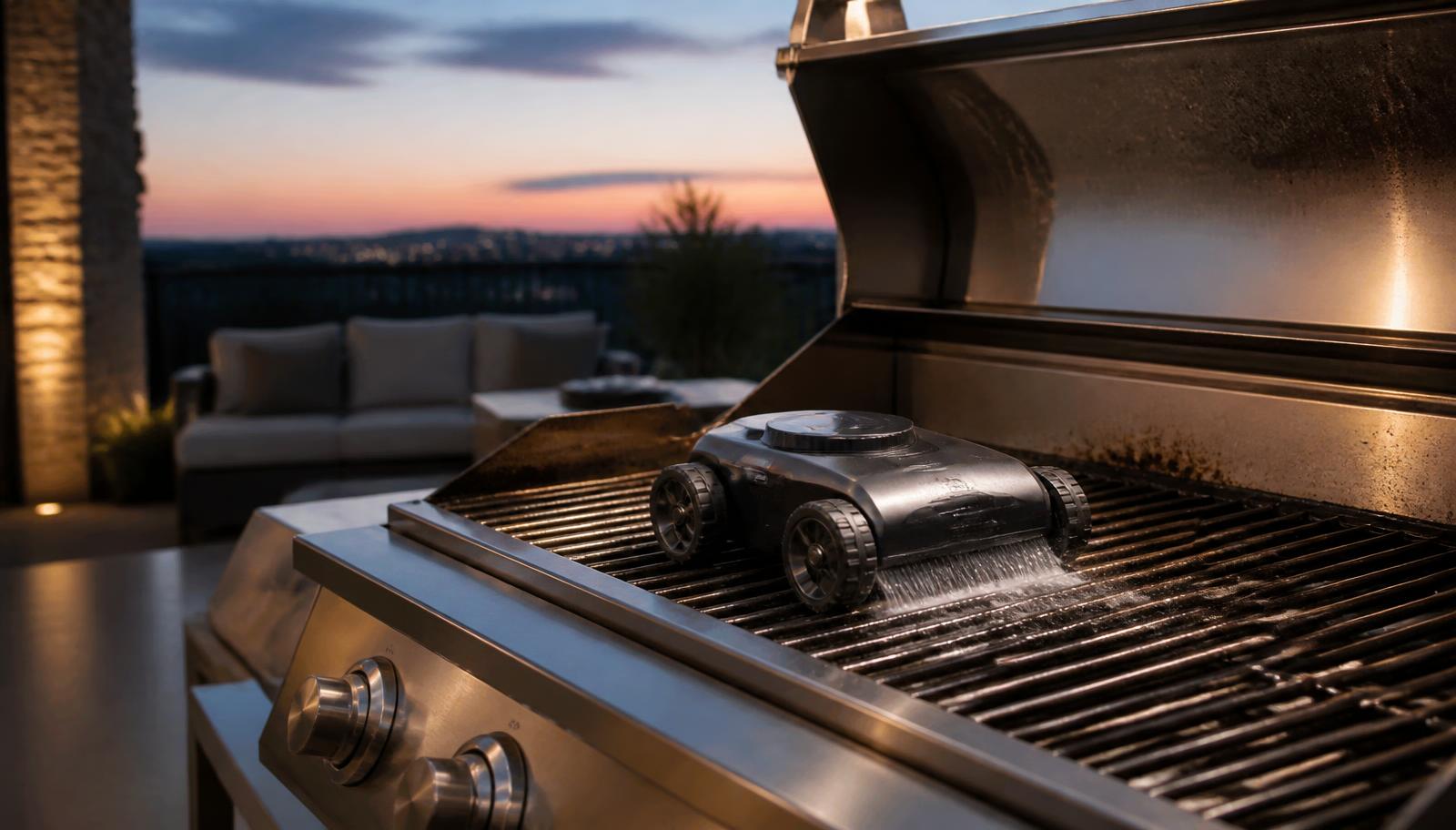
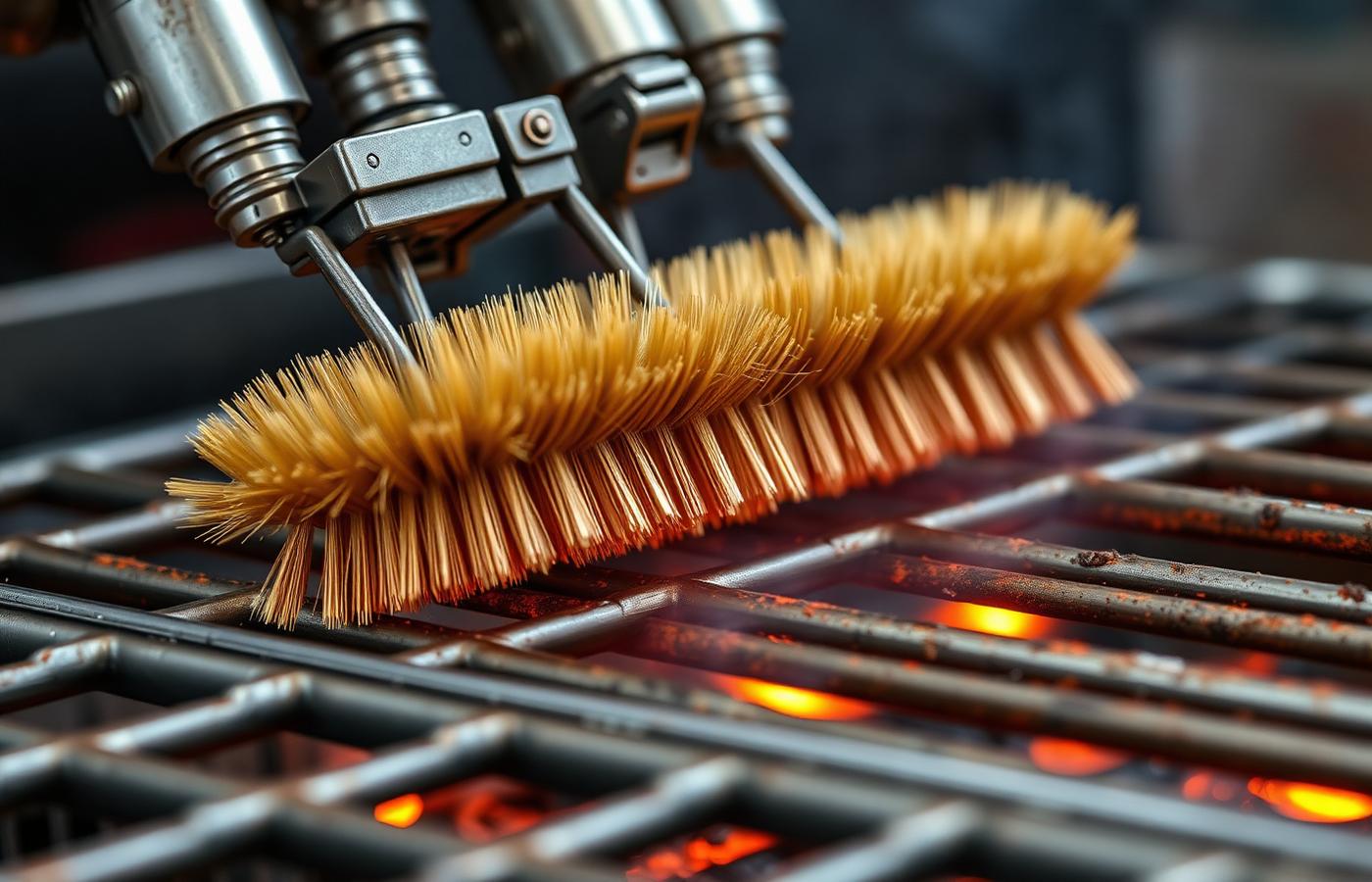
A grill cleaning robot is a small motorised unit that sits directly on a flat grill grate and drives itself back and forth across the bars, using rotating brushes — typically stainless steel, brass or nylon depending on the grate material — to scrape off loose carbon, charred food residue and light grease. Most units are battery powered, run a 10 to 20 minute cycle, and use wheel-mounted sensors or grate-edge detection to reverse direction automatically rather than driving off the grate onto the floor. This is fundamentally a mechanical scrubbing job, not a chemical one: the robot displaces carbon build-up, it does not dissolve grease the way an oven-cleaner spray does.
Crucially, almost every grill cleaning robot on the market is designed for the grate cool or barely warm, removed from the firebox and placed on a flat, stable surface such as a table or the closed grill lid. Very few units are rated to operate on a hot grate inside an active firebox, and doing so with an unrated unit risks melting plastic components or damaging the battery.
Grate compatibility is the first filter
Grill cleaning robots are built around a specific bar spacing and grate profile, usually straight parallel stainless steel or cast-iron bars spaced 8–15 mm apart. Round or diamond-mesh grates, porcelain-coated wire grates, and very tightly spaced grates common on smaller portable barbecues frequently are not compatible, because the wheels cannot track a straight line or the brush height cannot reach into the grooves properly. Always check the manufacturer's stated grate compatibility, including maximum and minimum bar spacing and grate width, before buying — this single spec eliminates more units than any other factor.
Cast-iron grates need a gentler brush, usually nylon or a softer wire, to avoid stripping seasoning; stainless grates tolerate brass or stainless bristles well. Porcelain-coated grates should generally avoid metal bristles entirely, since coating chips are difficult to repair and expose bare metal to rust.
What it will not do
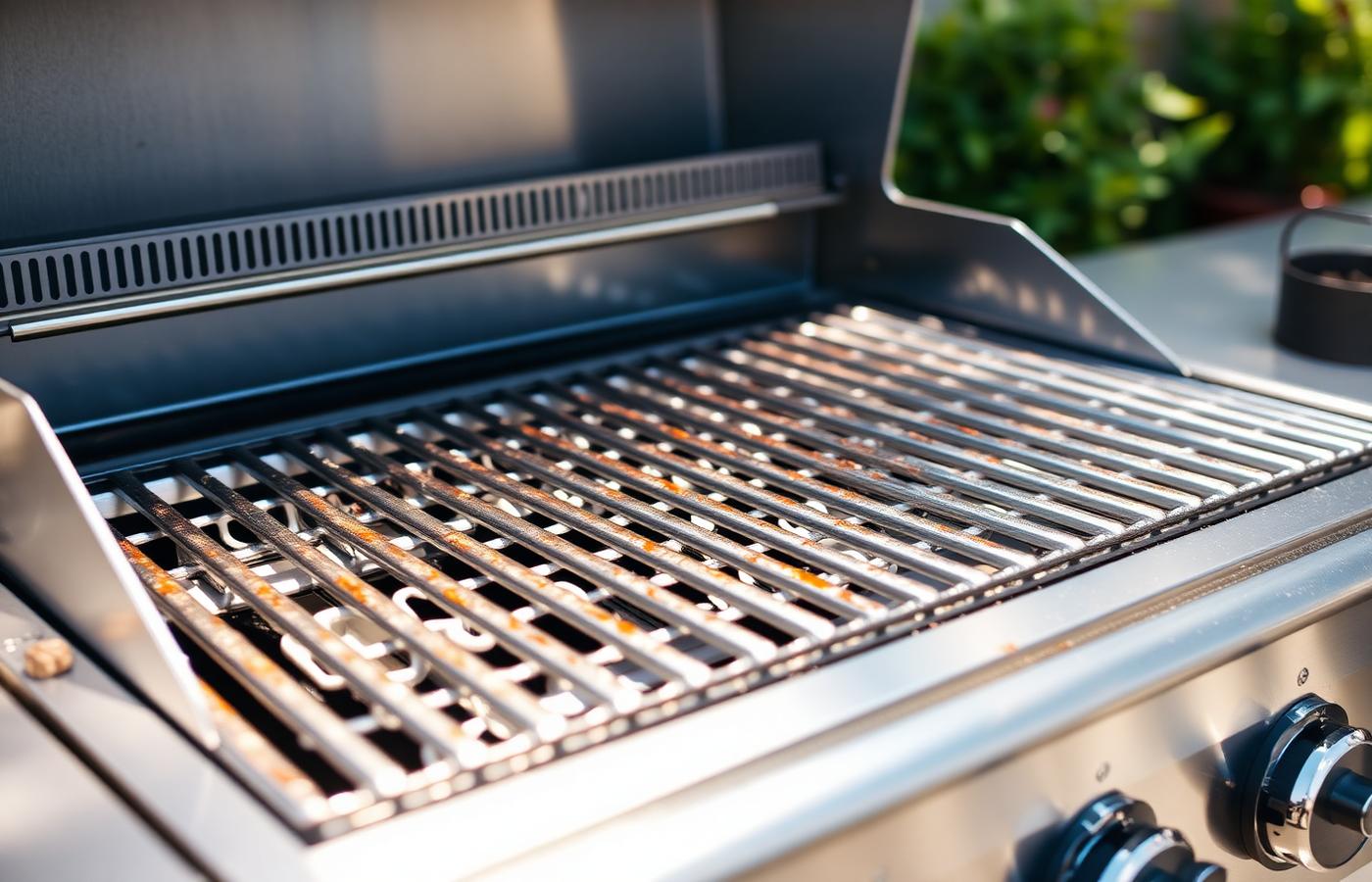
A grill cleaning robot does not replace deep cleaning. It will not descale a grease trap, clean the firebox interior, remove baked-on grease from grill walls, or clean burner tubes and drip trays. Treat it as a maintenance tool that keeps carbon build-up from compounding between the deep cleans most manufacturers still recommend every 4 to 8 weeks of regular use, depending on cooking frequency. Heavily caked, years-old carbon build-up on a neglected grate typically needs one or two manual pre-cleans with a traditional brush before a robot can maintain it going forward.
It also will not clean while food is cooking or while the grate is hot enough to warp a plastic chassis, so it fits into a post-cook or pre-cook routine rather than an active-cooking one.