What an outdoor sweeper robot does
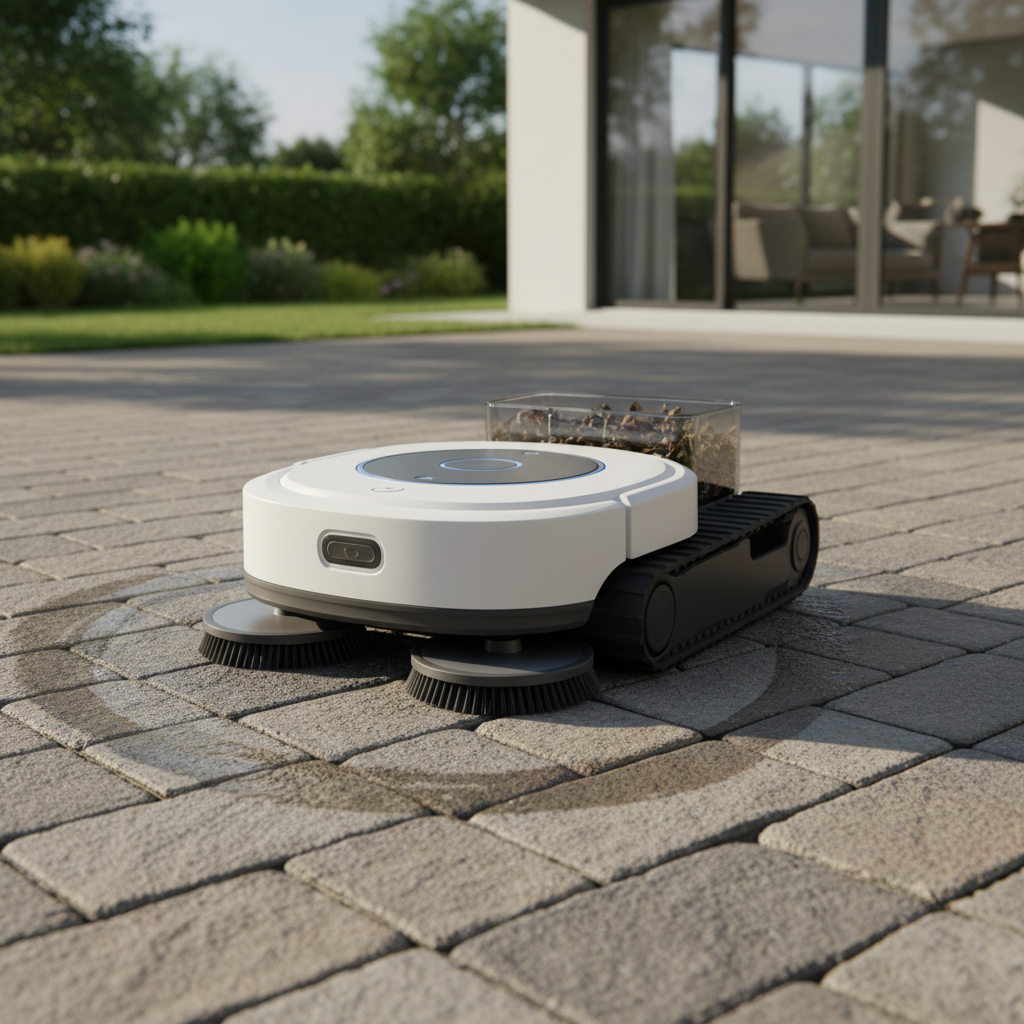
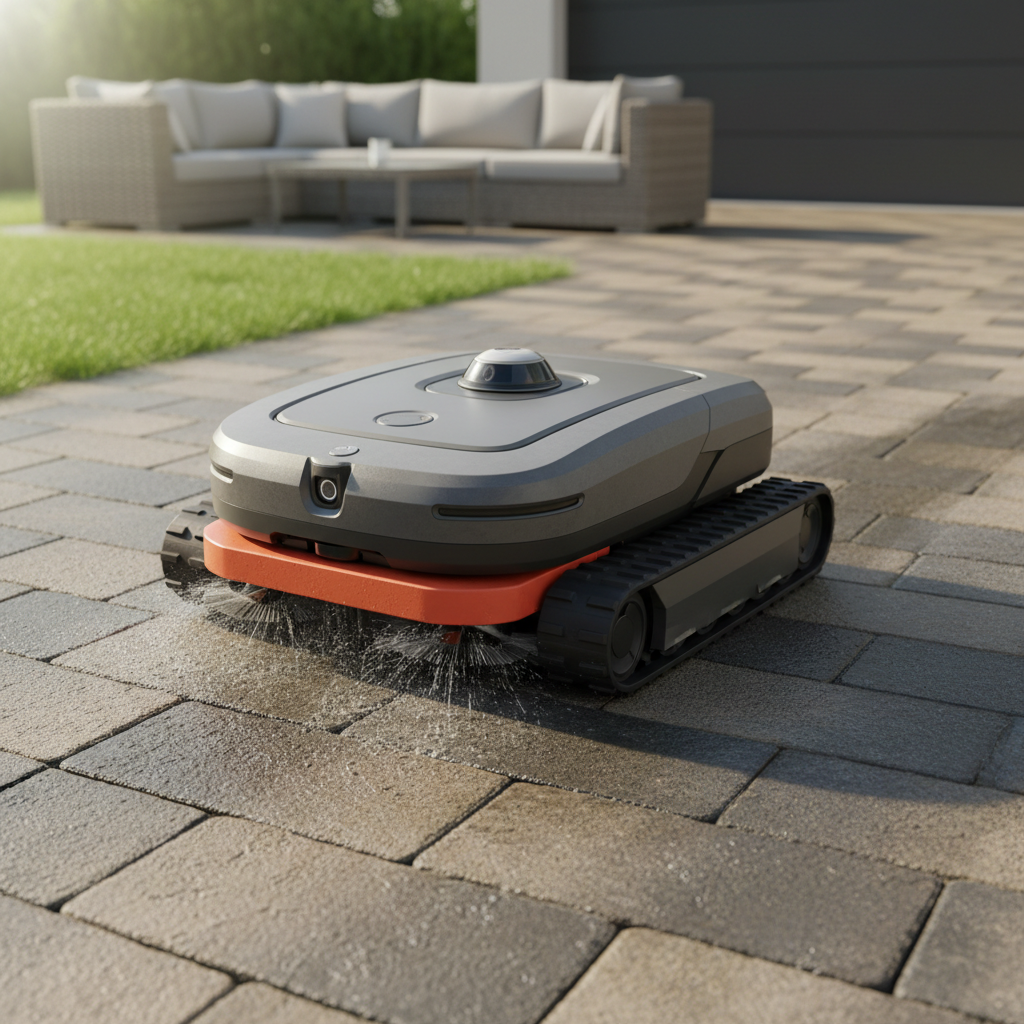
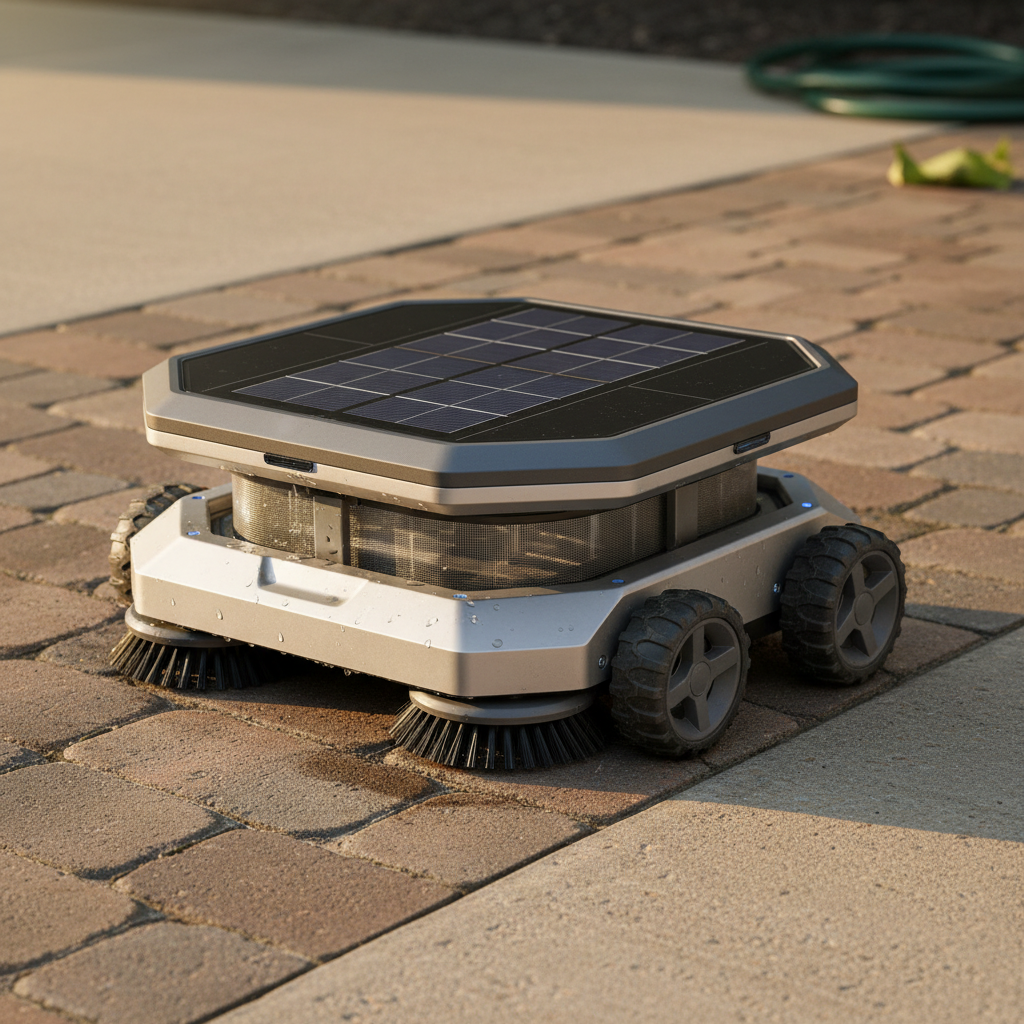
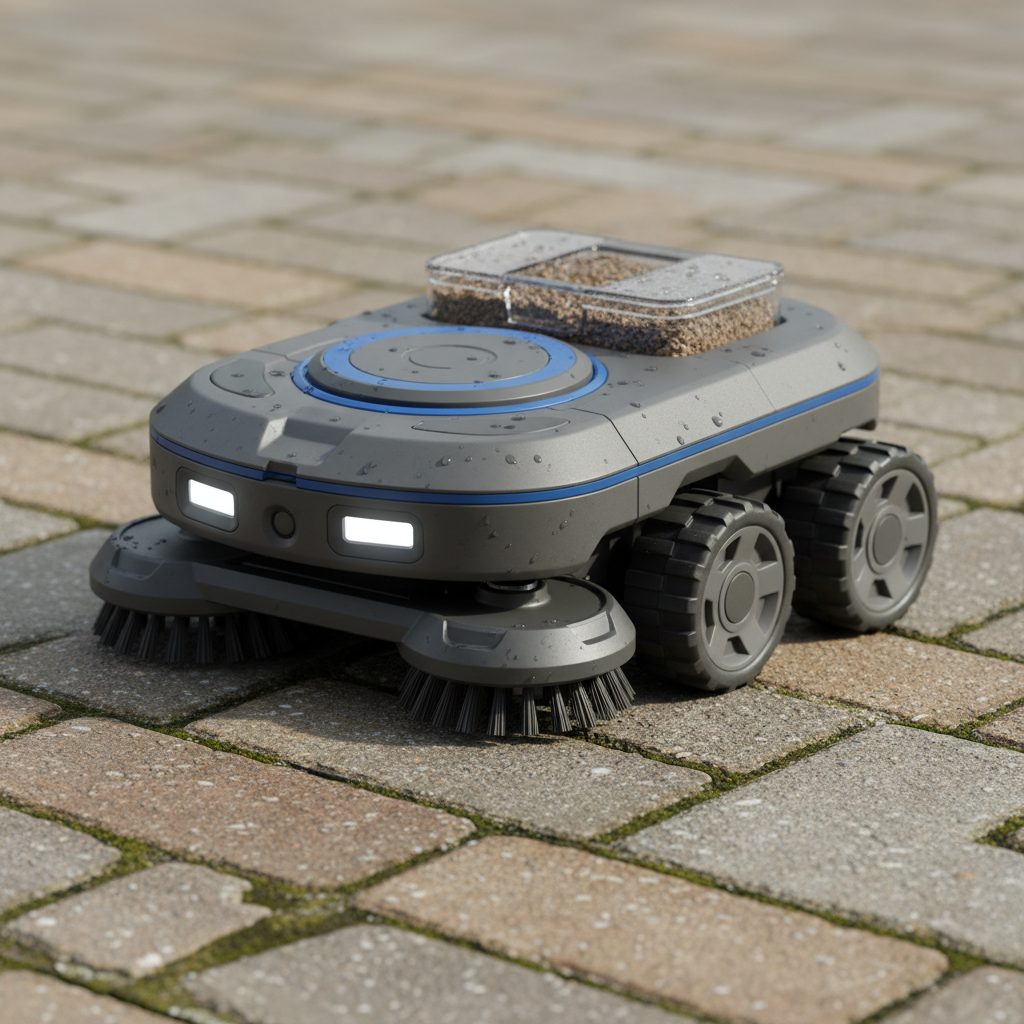
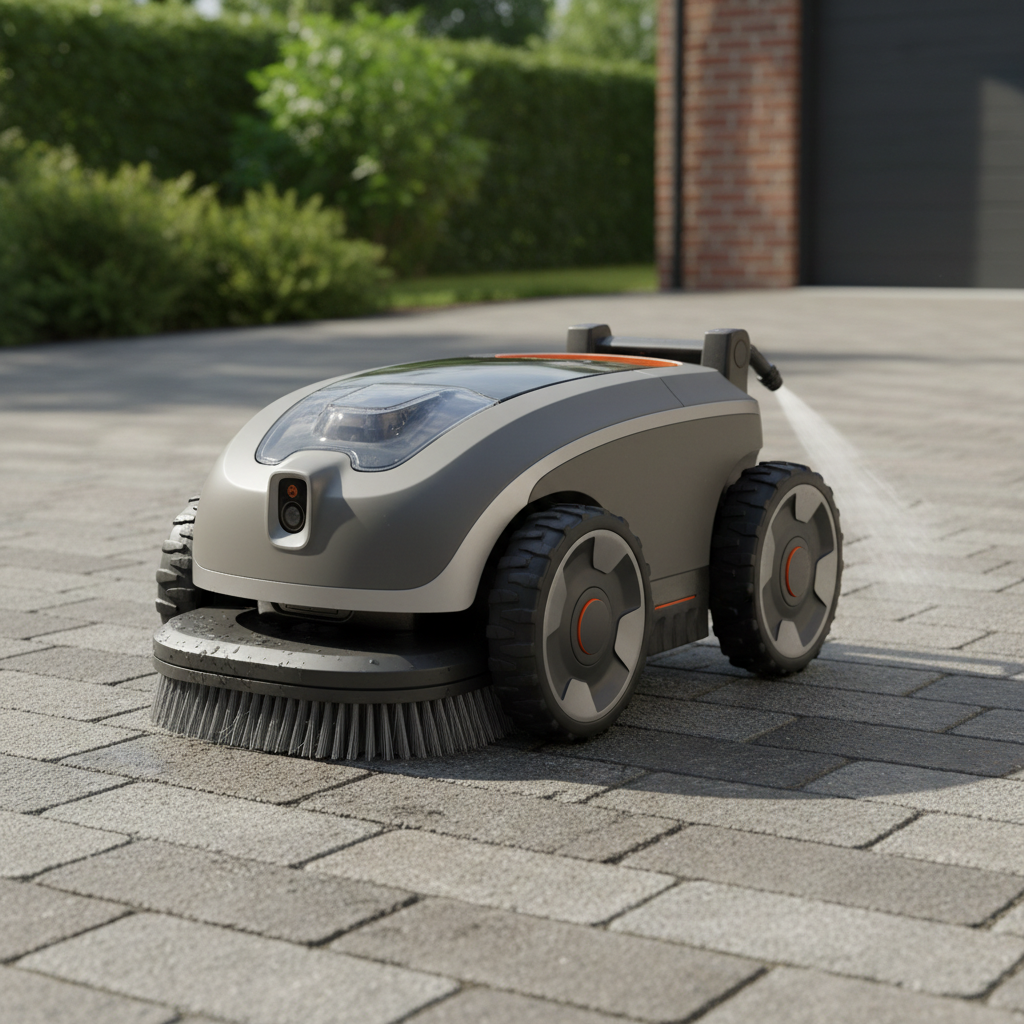
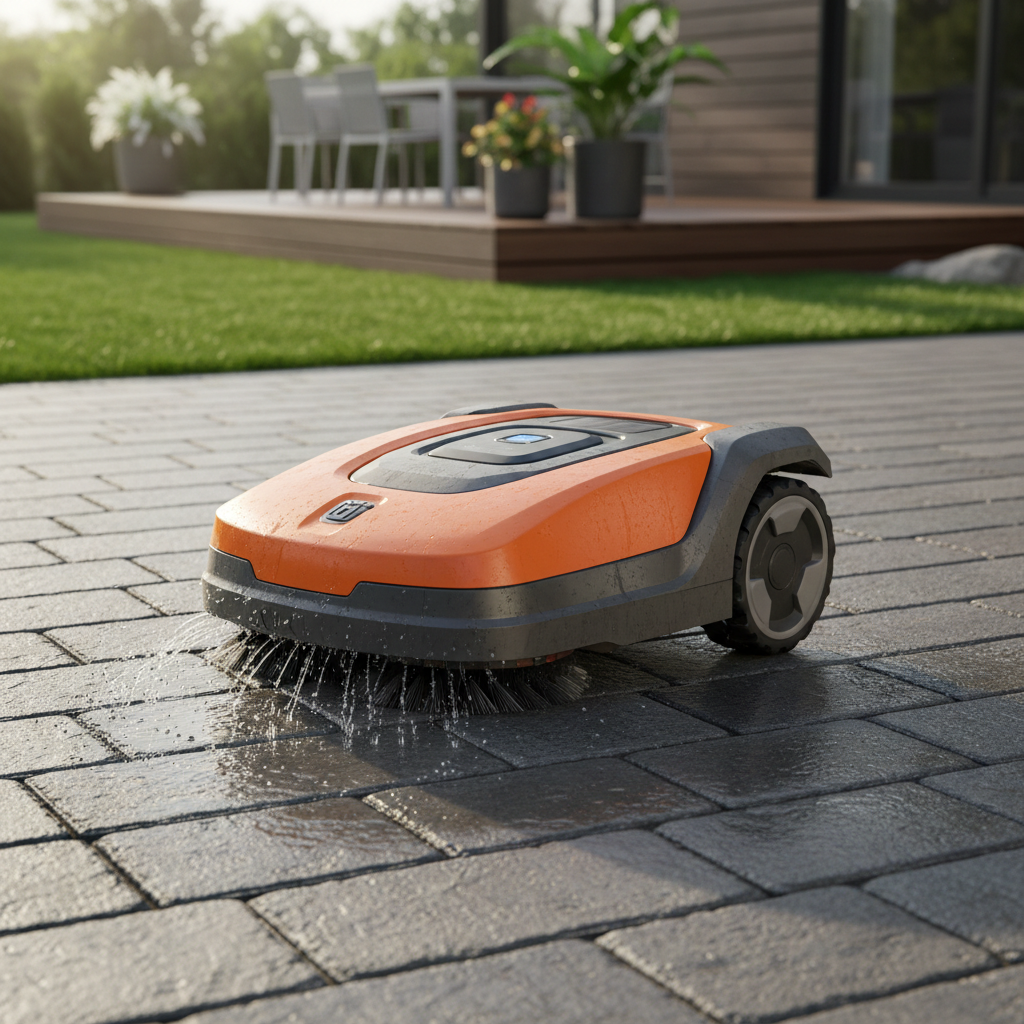
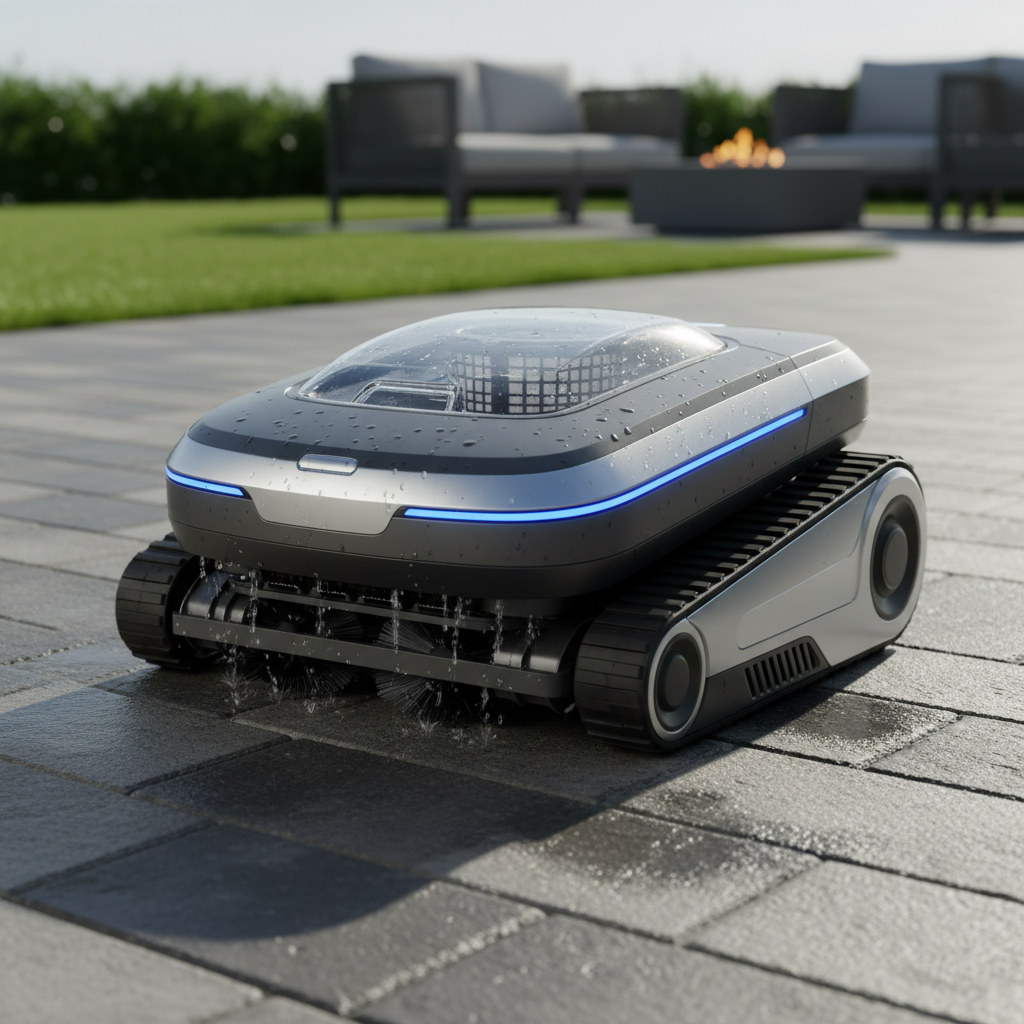
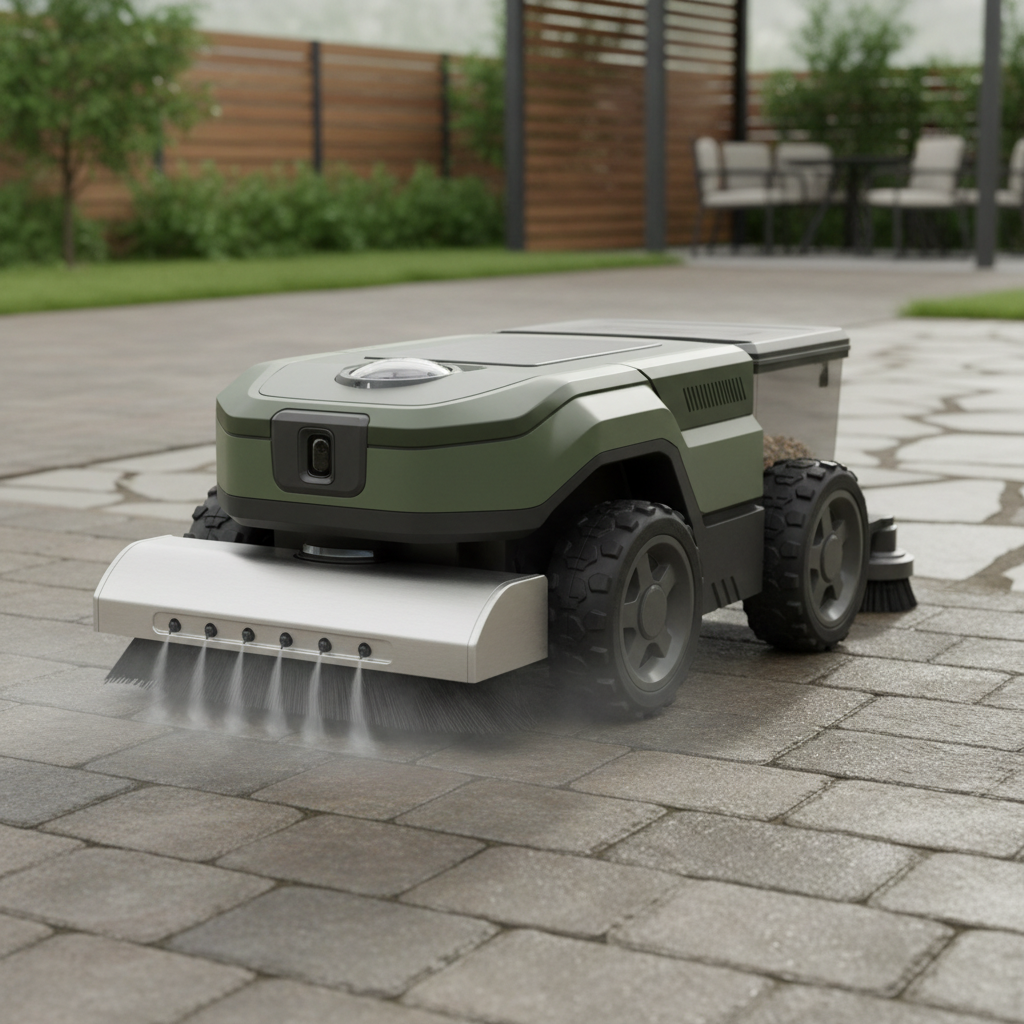
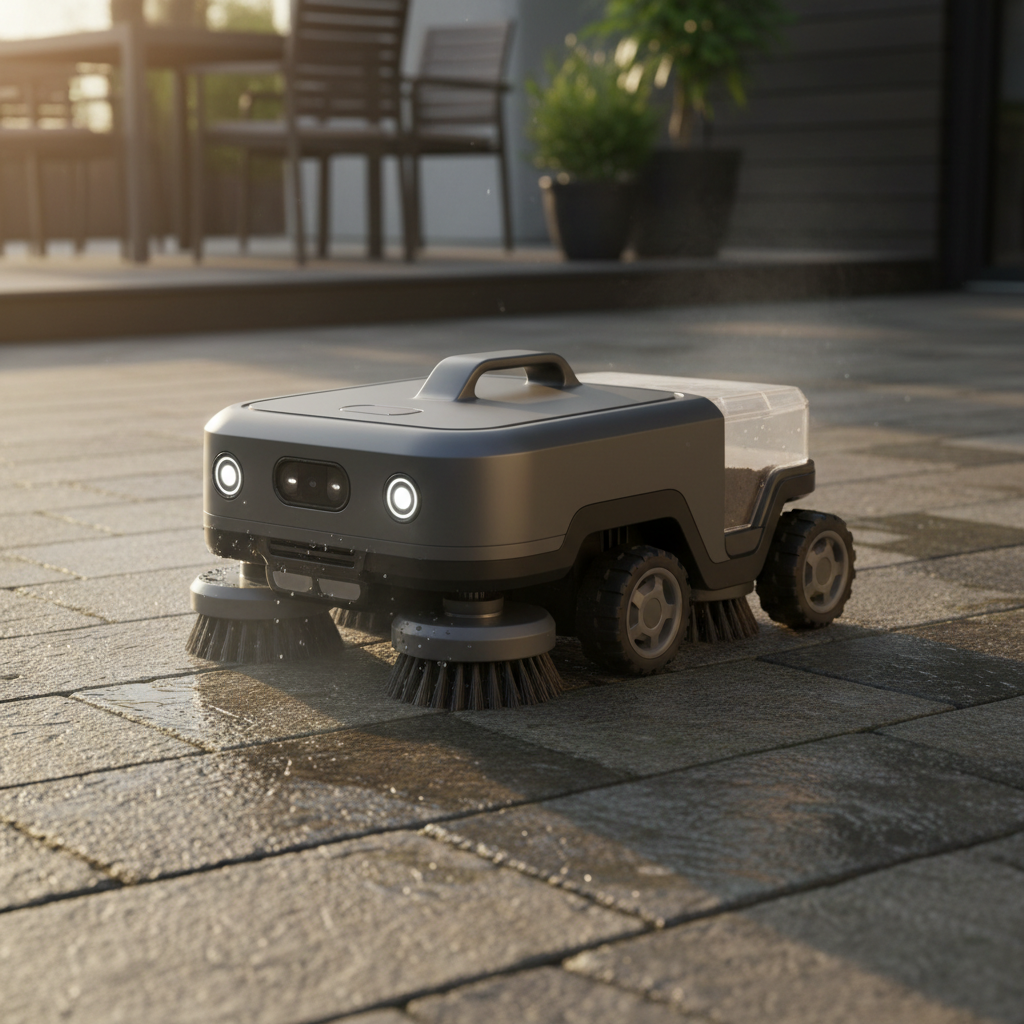
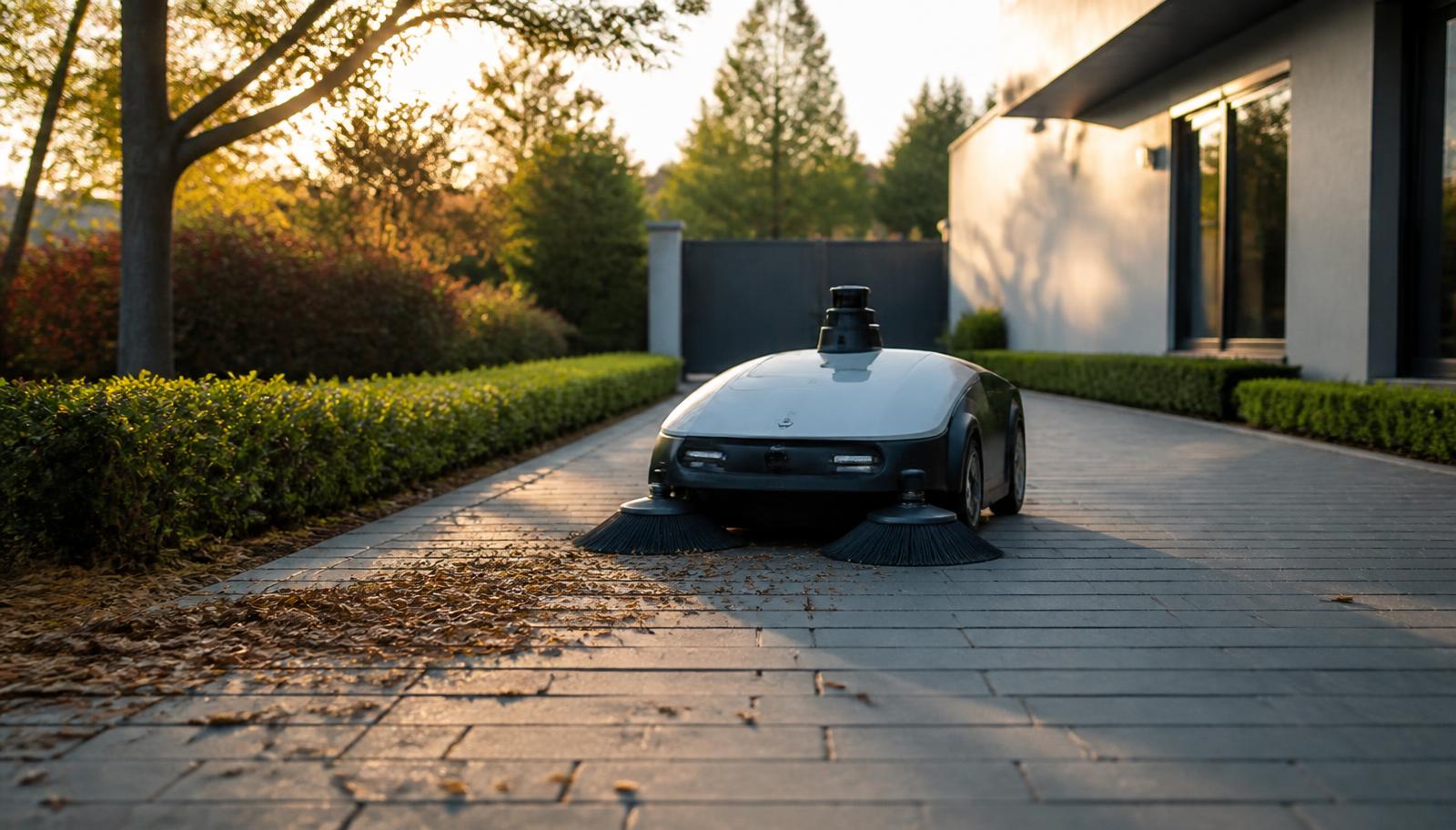
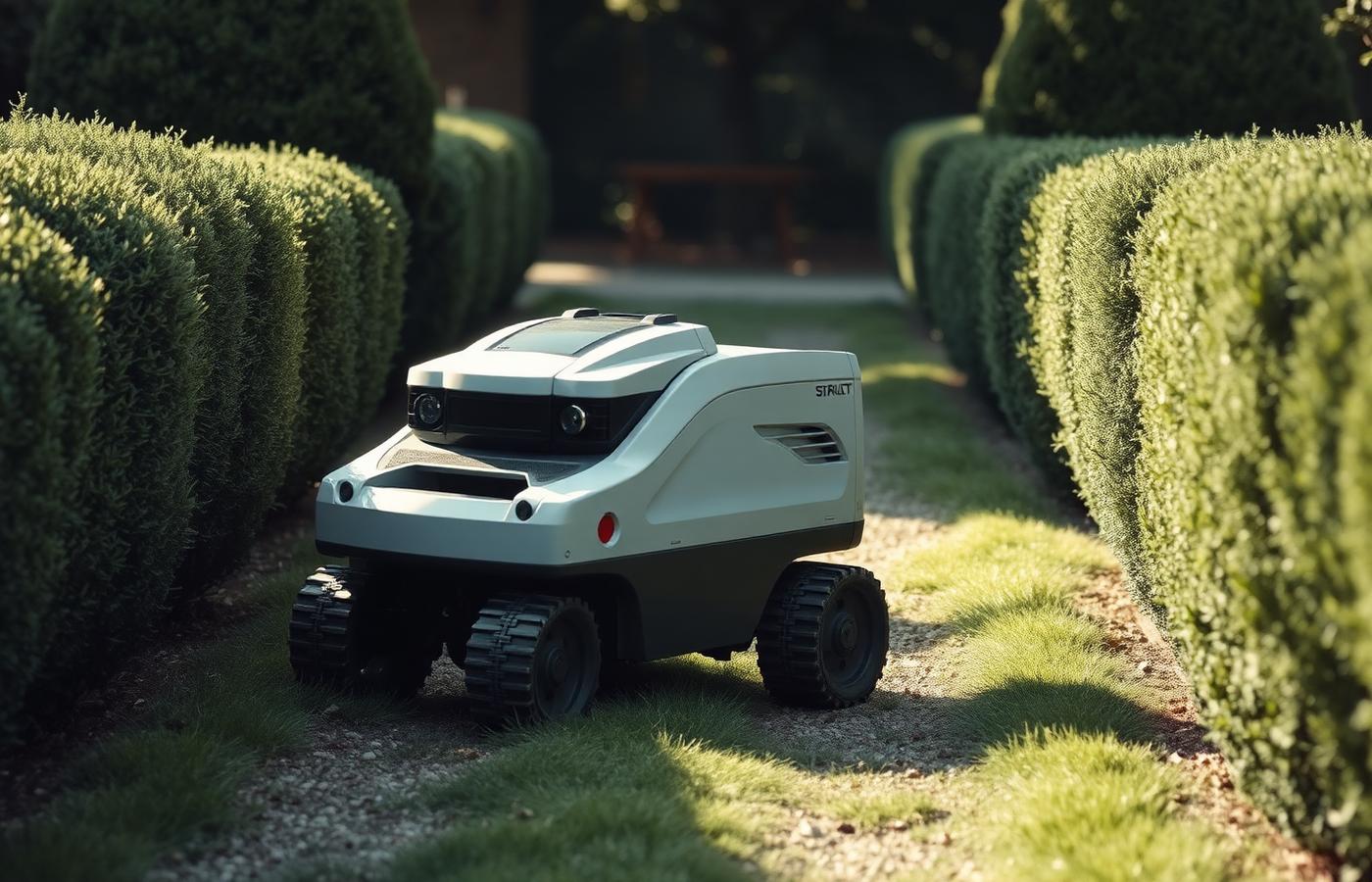
An outdoor sweeper robot is a wheeled unit, generally larger and more ruggedly built than an indoor robot vacuum, designed to sweep hard outdoor surfaces such as concrete driveways, paved paths, courtyards and outdoor entertaining areas. Rotating side brushes push loose debris — leaves, grass clippings, dust, small twigs and dirt — toward a central brush or collection channel, either gathering it in an onboard bin or sweeping it into a pile for manual collection.
Unlike a leaf blower, which scatters debris rather than collecting it, a sweeper robot's brush-and-bin design actually removes material from the surface, which matters for driveways shared with parked cars or paths used by visitors where blown debris would simply resettle elsewhere.
Which surfaces suit a sweeper robot
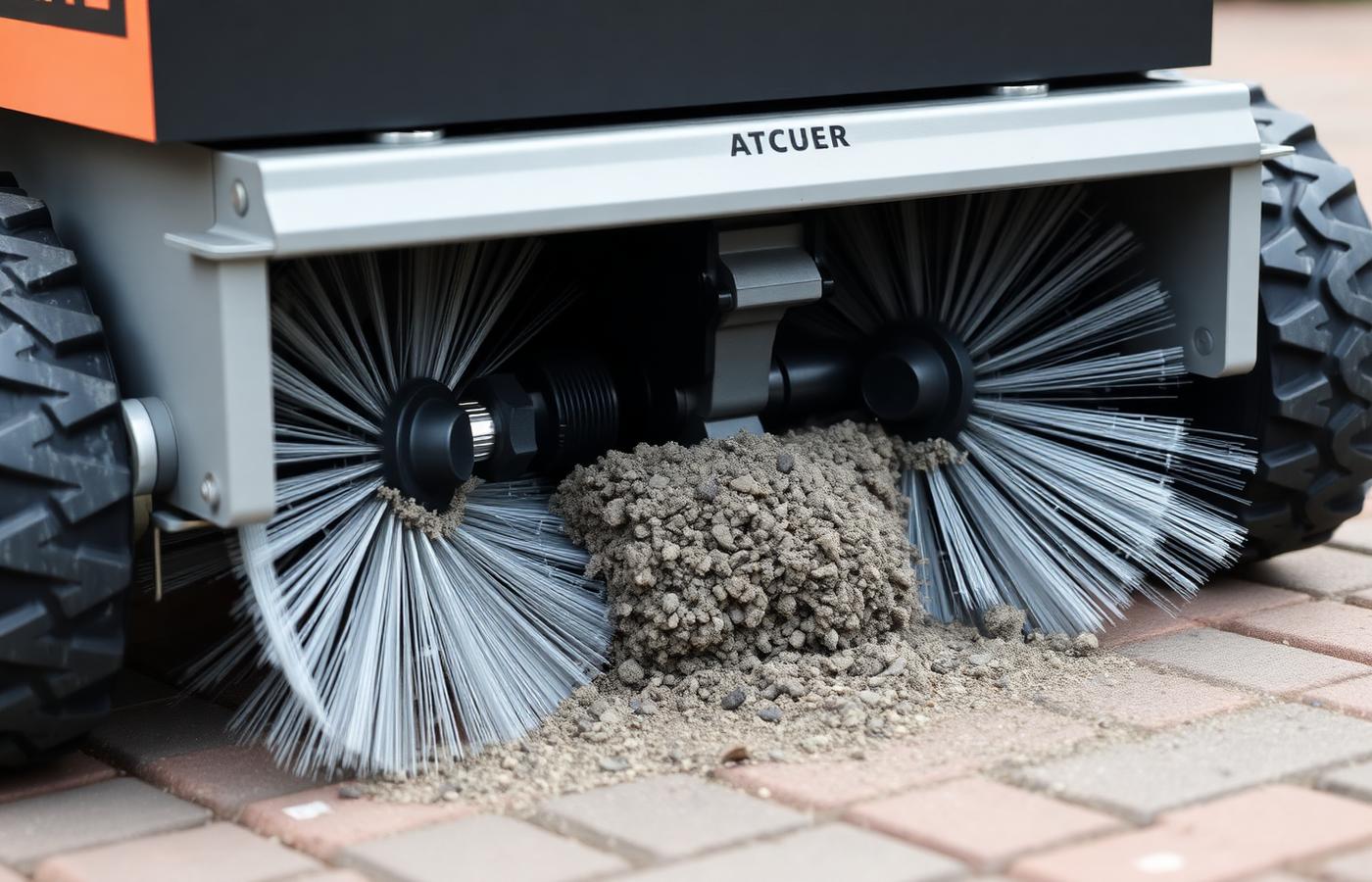
These robots are built for flat, hard, reasonably even surfaces: smooth concrete, sealed pavers, asphalt and compacted brick paving all work well. Loose gravel, exposed aggregate with deep texture, and surfaces with significant cracks or uneven joints are harder going, since brushes can catch on gaps and small wheels can struggle with texture that an indoor robot vacuum would never encounter. Steep driveway gradients are also a limiting factor — most consumer units are rated for mild slopes only, generally under 10–15 degrees, and will struggle or stall on steeper inclines.
Lawn and garden bed areas are explicitly not what these machines are for; that job belongs to a robot lawn mower or manual gardening. Sweeper robots rely on distinct edge lines, such as a paver-to-lawn boundary, to know where hard surface cleaning should stop.
Navigation and scheduling
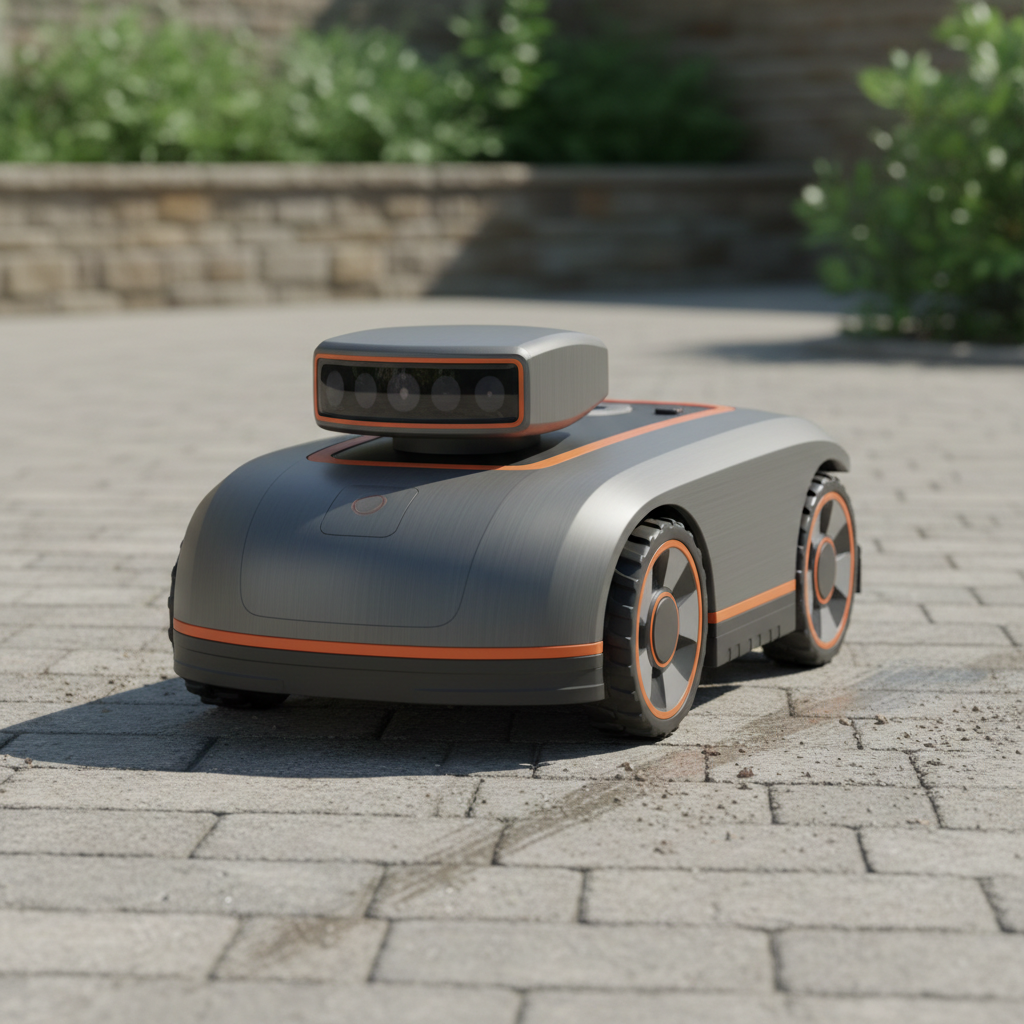
Entry-level outdoor sweeper robots use simple bump-and-turn navigation with basic edge sensors to avoid driving off pavement or into garden beds. More advanced models use mapping technology similar to indoor robot vacuums, building a layout of the driveway or courtyard so cleaning can be scheduled and zoned, for example running the main driveway daily but the side path only weekly.
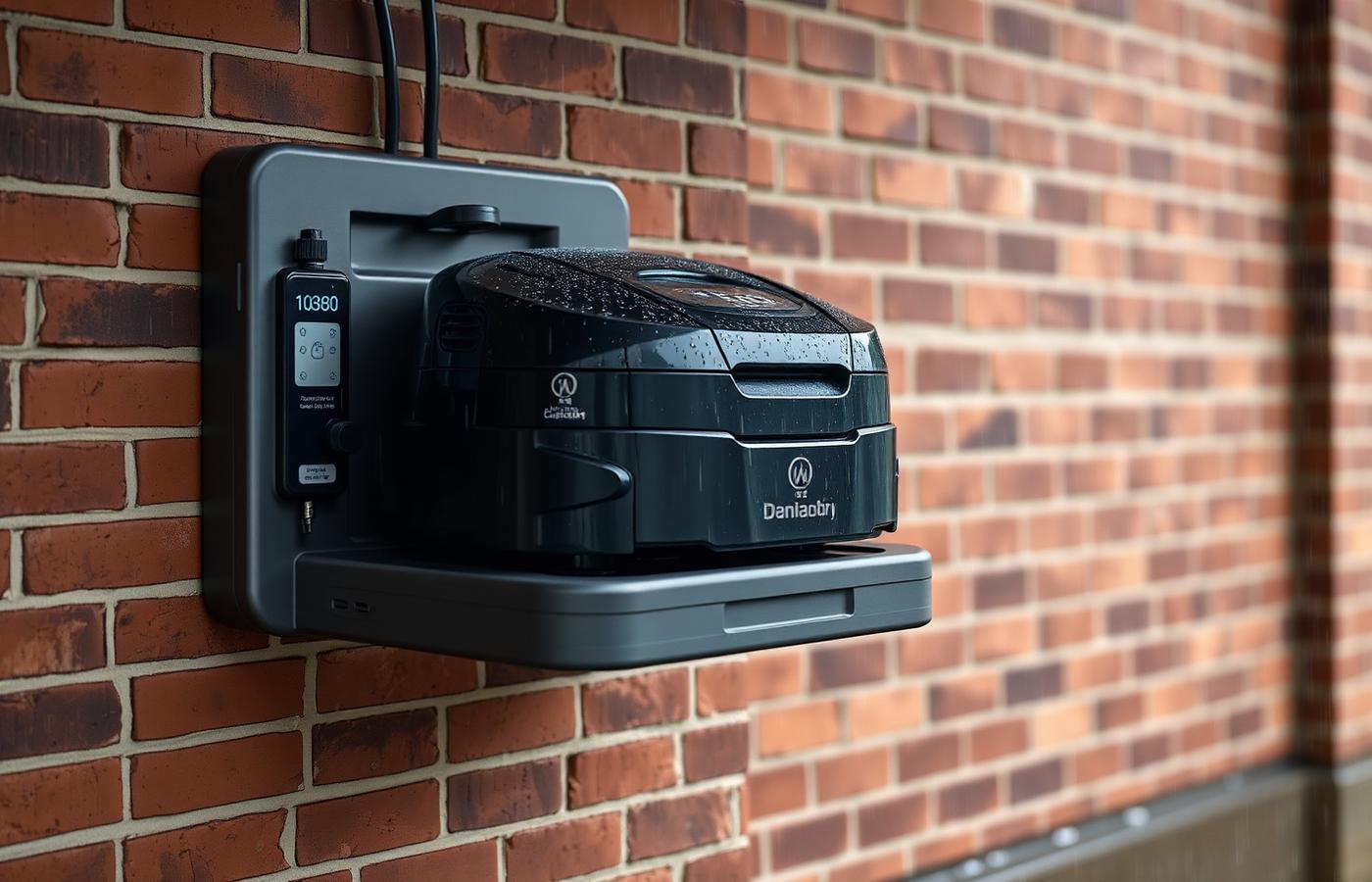
Weatherproofing is essential and varies by model — check the IP rating before buying, since outdoor exposure to rain, dew and dust is constant in a way indoor robots never face. A genuine outdoor-rated unit with a sealed motor housing and weatherproof charging dock will last considerably longer than one adapted loosely from indoor components.
What it will not replace
An outdoor sweeper robot will not pressure-wash oil stains, moss or algae growth off a driveway, and it will not clear heavy debris after storms, such as fallen branches or waterlogged leaf mats. It is a maintenance tool for routine light debris, best suited to daily or every-second-day light passes that prevent build-up, rather than an occasional deep clean tool.
It also has practical limits around parked vehicles, garden furniture and toys left on the driveway, since it cannot navigate around obstacles it wasn't mapped to expect, and will either stop, reroute inefficiently, or in basic bump-sensor models simply nudge against the obstruction repeatedly.
Cost and buying advice
Basic outdoor sweeper robots without mapping or a dock start around $250–$450. Mid-range units with mapping, scheduling and a self-return charging dock run roughly $500–$900. Larger, commercial-adjacent units built for bigger paved areas, such as shared driveways or small commercial courtyards, can exceed $1,200.
Before buying, measure the total paved area to check the unit's rated coverage per charge, confirm the maximum slope rating against your driveway's actual gradient, and check the IP rating for genuine outdoor weatherproofing rather than splash resistance only.