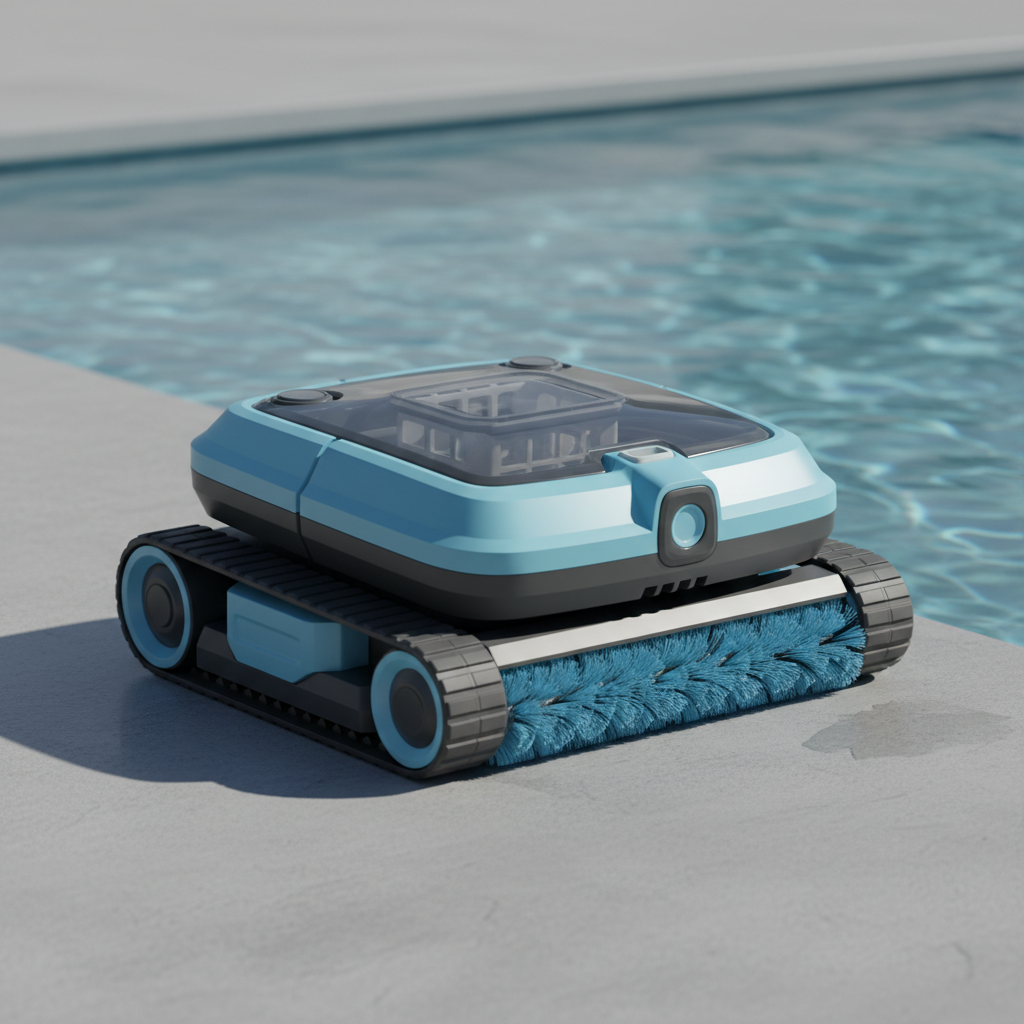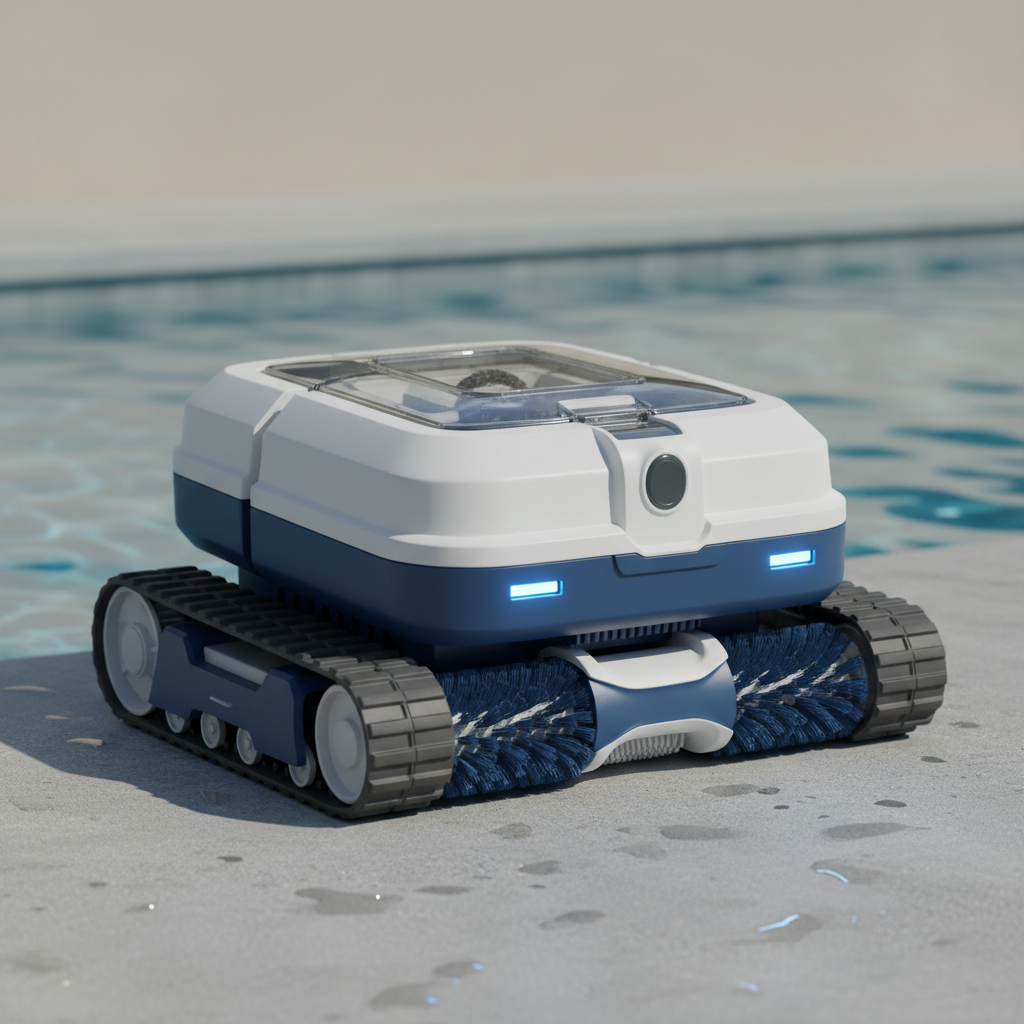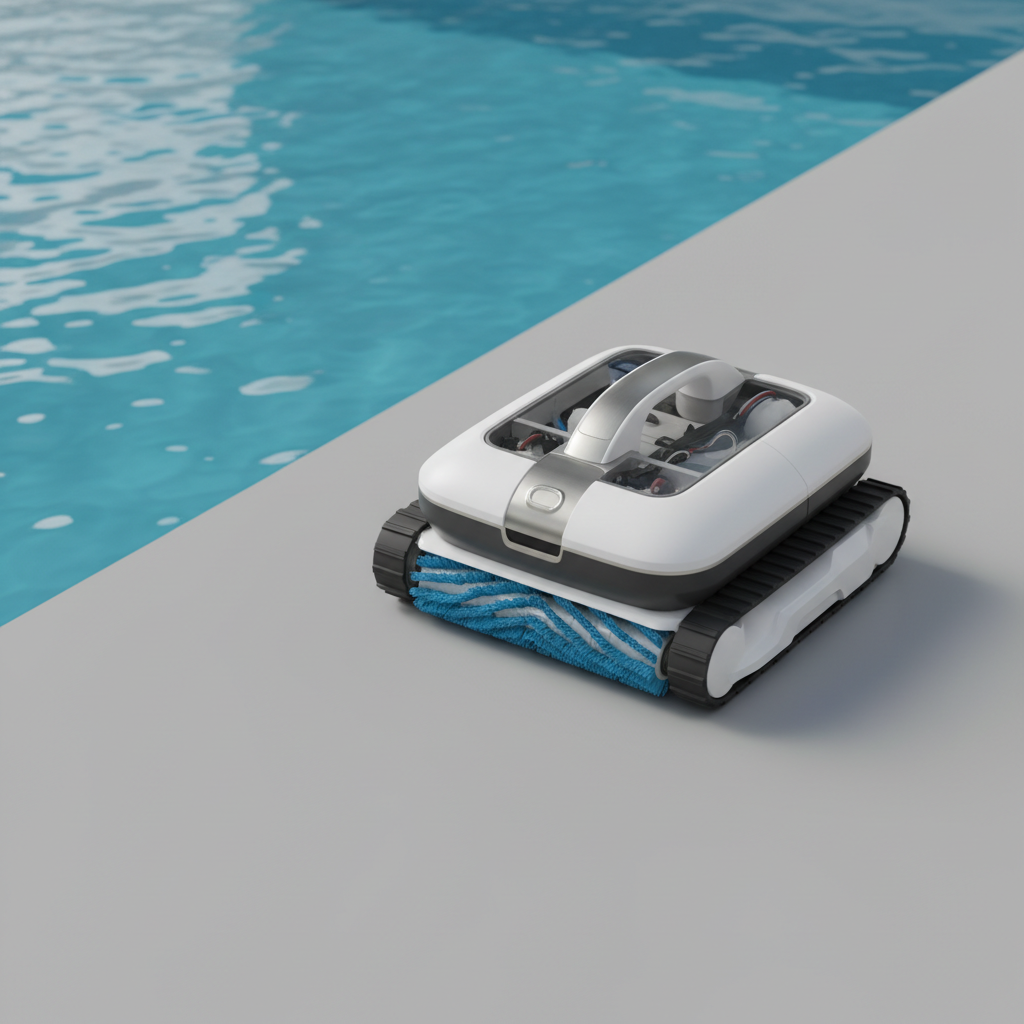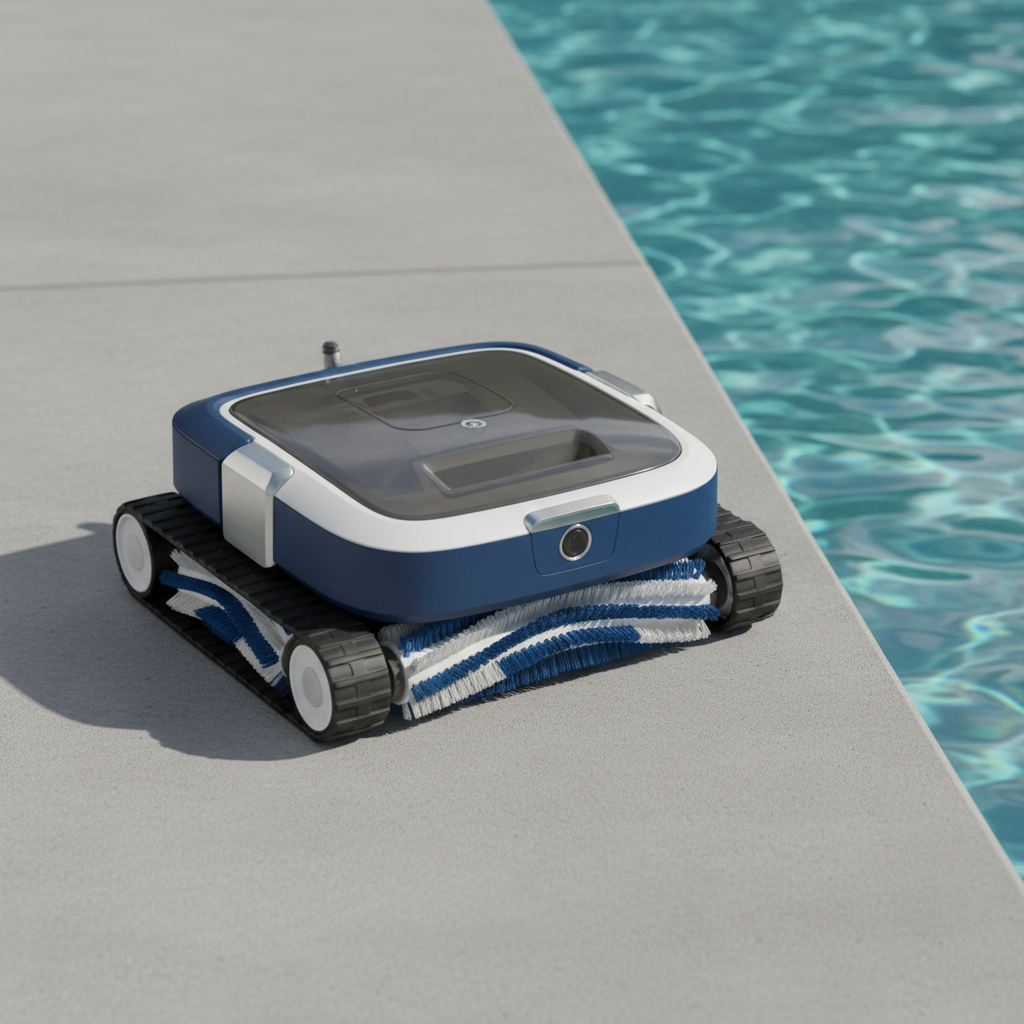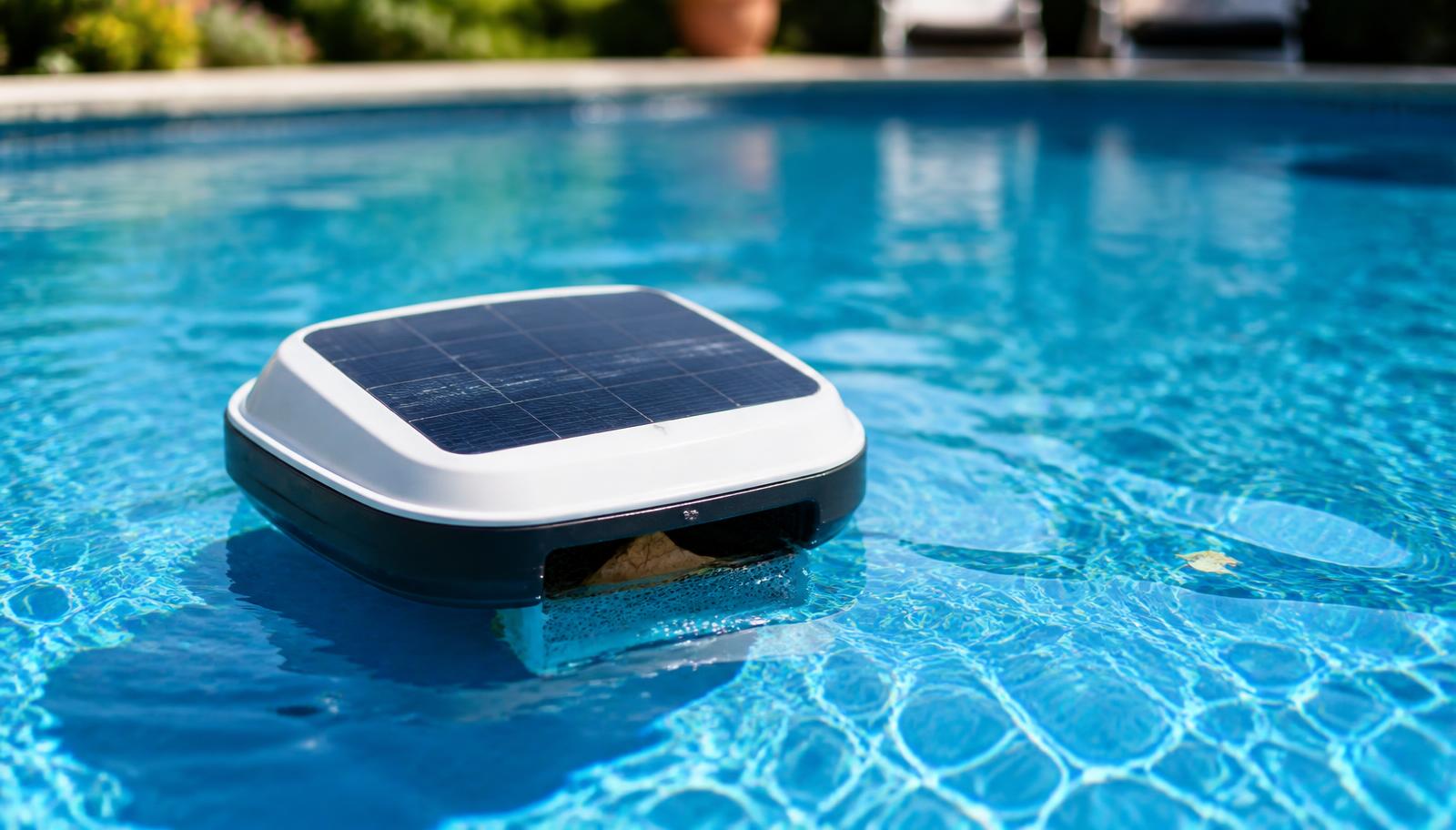
What a solar pool skimmer robot does
A solar pool skimmer robot is a small floating unit that drifts or drives across the pool surface, drawing in floating leaves, pollen, insects and light debris through an intake fan and trapping it in an internal mesh basket. Power comes from a solar panel built into the top of the unit, which charges an internal battery through the day, allowing the skimmer to keep working even during short cloudy spells, though performance drops noticeably on overcast days with limited direct sun.
Because it only operates on the surface, a solar pool skimmer never touches the pool floor or walls, and it is not a substitute for a full robot pool cleaner or the pool's main filtration system. It is best understood as a continuous, low-effort way to reduce the surface debris that would otherwise sink and require floor vacuuming, or that would clog the pool's skimmer box and reduce circulation efficiency.
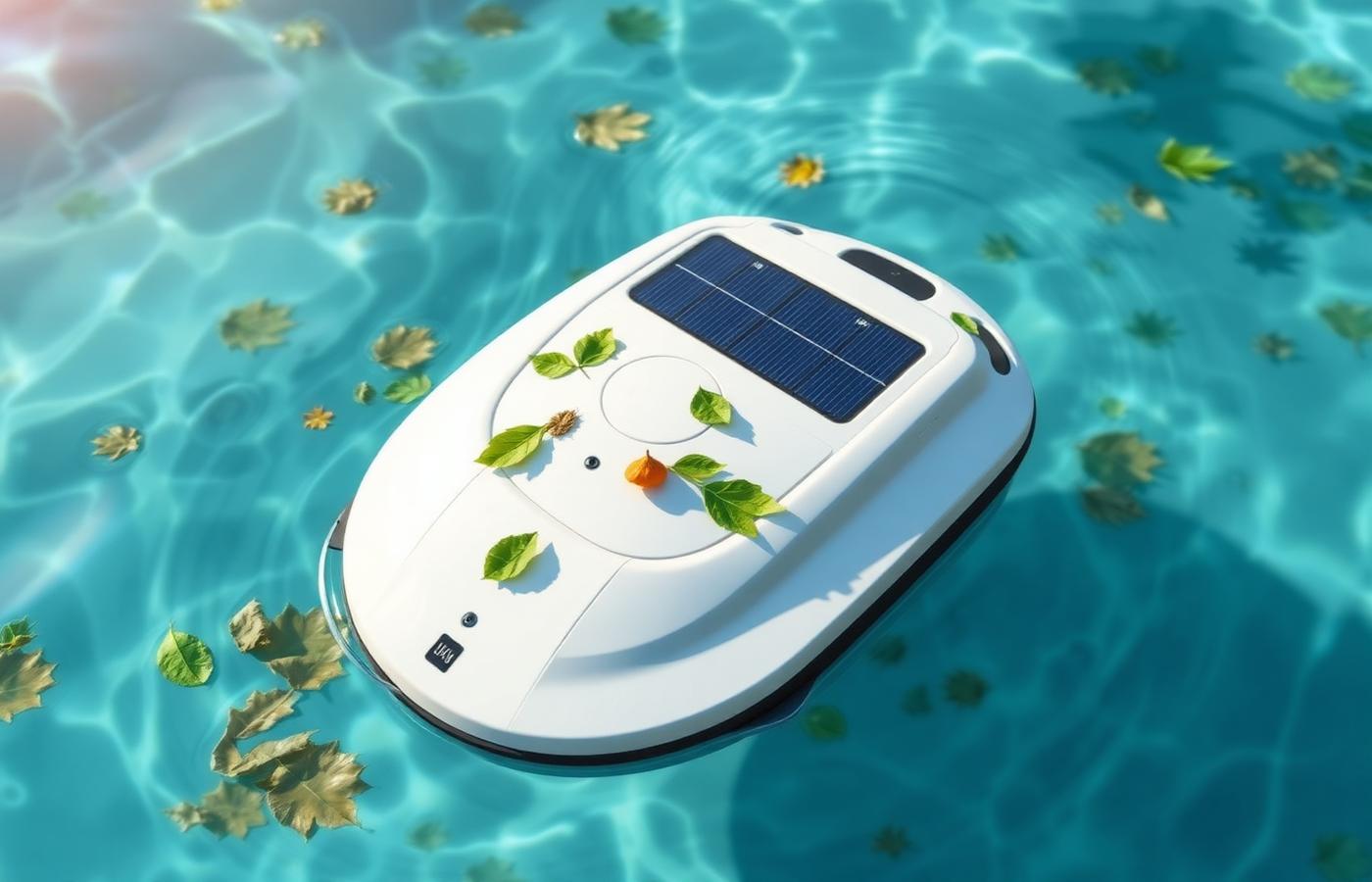
Where it fits alongside other pool equipment
Pools near trees, in windy areas, or with a lot of overhanging foliage benefit most from a solar skimmer, since it continuously removes falling leaves before they sink and decompose, which reduces staining, tannin build-up and the workload on floor-cleaning equipment. In a pool with minimal overhead debris, a solar skimmer offers less obvious benefit and a floor robot cleaner run a few times weekly may be sufficient on its own.
Many pool owners run a solar skimmer for continuous surface maintenance during the day and a robot pool cleaner for scheduled floor and wall cleaning a few times a week, treating the two as complementary rather than substitutes for each other.

Navigation and coverage patterns
Most solar pool skimmers navigate randomly or with simple wind-and-current-assisted drifting, occasionally using a small propeller to redirect their path, rather than following the mapped, systematic patterns seen in premium floor-cleaning robots. This means coverage can be uneven, particularly in larger or irregularly shaped pools, and debris in sheltered corners away from prevailing wind may need a light manual push toward the skimmer's path occasionally.
Some higher-end solar skimmers include boundary sensors to avoid getting stuck against pool walls or steps, while basic models can occasionally become becalmed in a corner until wind or a manual nudge moves them along.
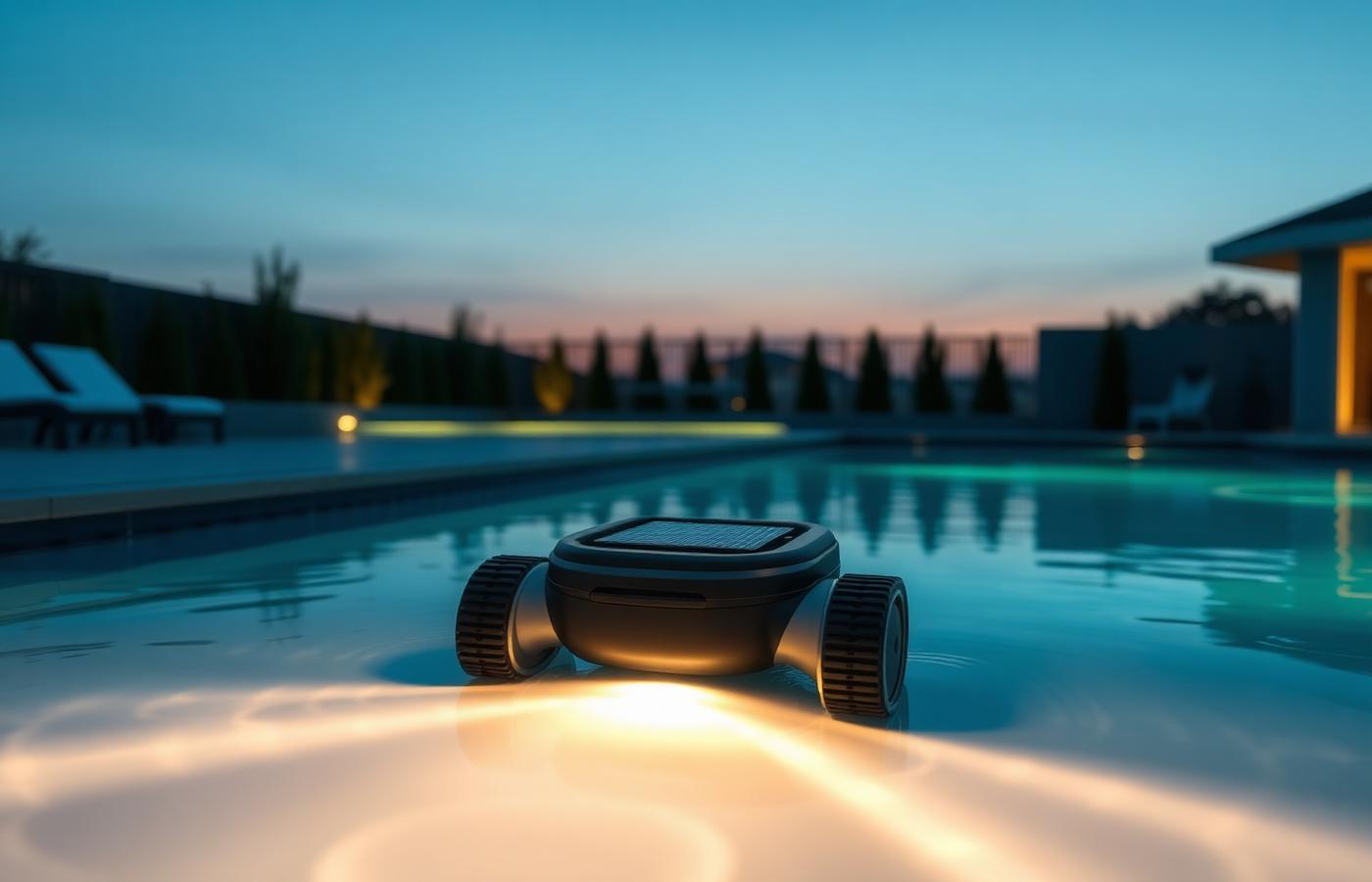
Maintenance and seasonal use
The mesh basket needs regular emptying, generally every 2 to 5 days depending on how many leaves and how much pollen the pool is exposed to, since a full basket blocks further intake and the unit becomes ineffective. The solar panel surface should be wiped clean periodically, as dust, sunscreen film or water spots reduce charging efficiency over time.
In climates with a distinct pool season, many owners store the skimmer over winter when the pool is covered or not in regular use, since there is little surface debris to collect and reduced sunlight limits charging anyway. Battery care during storage — a partial charge rather than fully flat — helps preserve battery lifespan over multiple seasons.
Realistic costs and expectations
Solar pool skimmer robots are considerably cheaper than full robot pool cleaners, typically ranging from around $150 to $450 depending on basket capacity, solar panel size and navigation features. This makes them an accessible entry point for pool owners not ready to invest in a full floor-cleaning robot, or a useful complement for those who already own one.
It is worth setting realistic expectations: a solar skimmer will noticeably reduce surface leaves and the frequency of skimmer-box clogs, but it will not clean algae, sediment or anything below the surface, and heavy debris events such as a storm dropping large amounts of foliage will still need manual netting to catch up.