What counts as an outdoor cleaning robot?
Outdoor cleaning robots are autonomous machines built to maintain the parts of a property that sit beyond the back door: pool water, decking, pavers, driveways, paths, gutters and lawns. Unlike an indoor vacuum, which is a general-purpose platform trying to do everything in one chassis, outdoor units are almost always deliberate single-focus appliances. A solar surface skimmer does one job — remove floating debris — and does it every daylight hour without supervision. A patio scrubber wets, brushes and lifts grime from hard outdoor surfaces. A sweeper clears leaves and grit from paving. The category is defined less by a shared technology than by a shared operating environment: UV exposure, rain, dust, temperature swings and terrain that is never flat.
That environment drives the engineering. Where an indoor robot needs a 0.1 mm drop sensor, an outdoor robot needs IP66 to IP68 sealing, UV-stabilised polymers, corrosion-resistant fasteners and a battery management system that tolerates 45 °C afternoons and near-freezing nights. It is why outdoor robots typically cost more per unit of capability than their indoor cousins, and why cheap unbranded units fail so consistently in their second season.
The four families of outdoor robot — and what each actually does
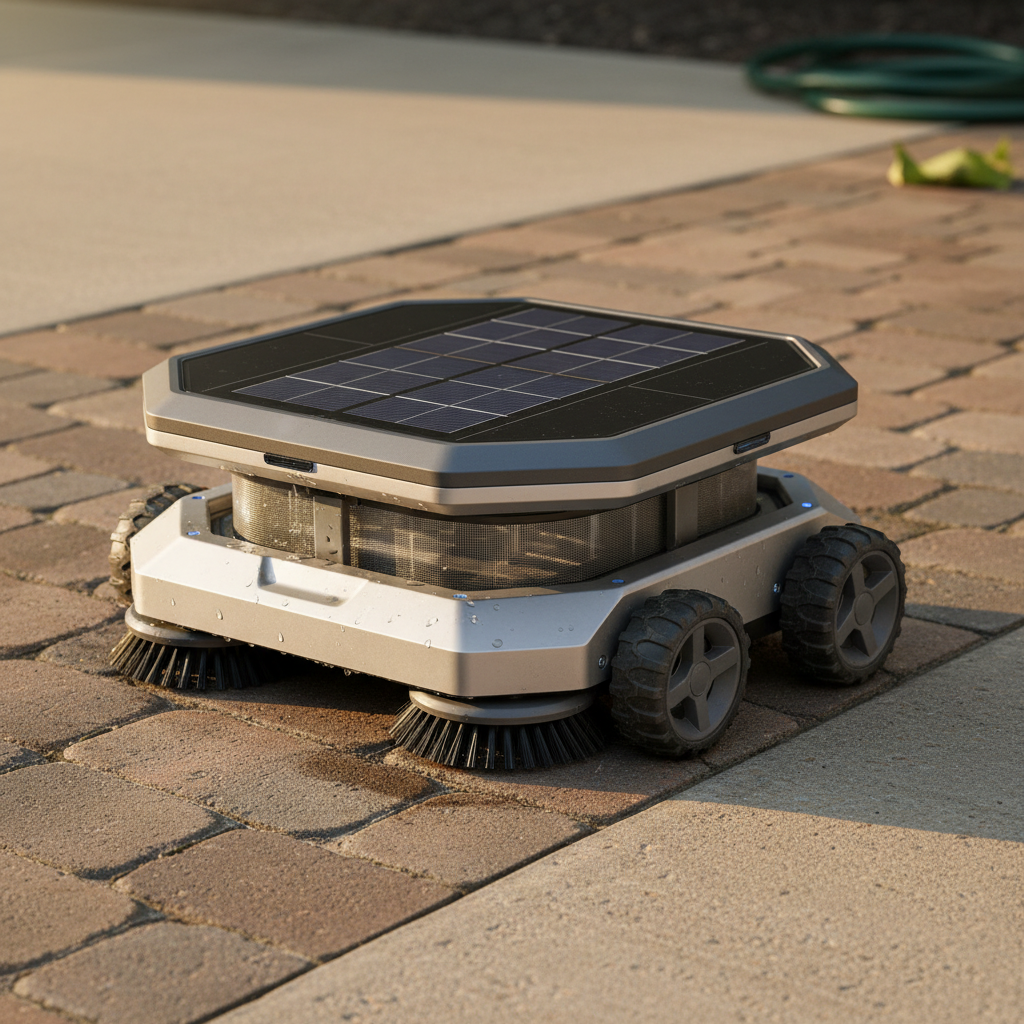
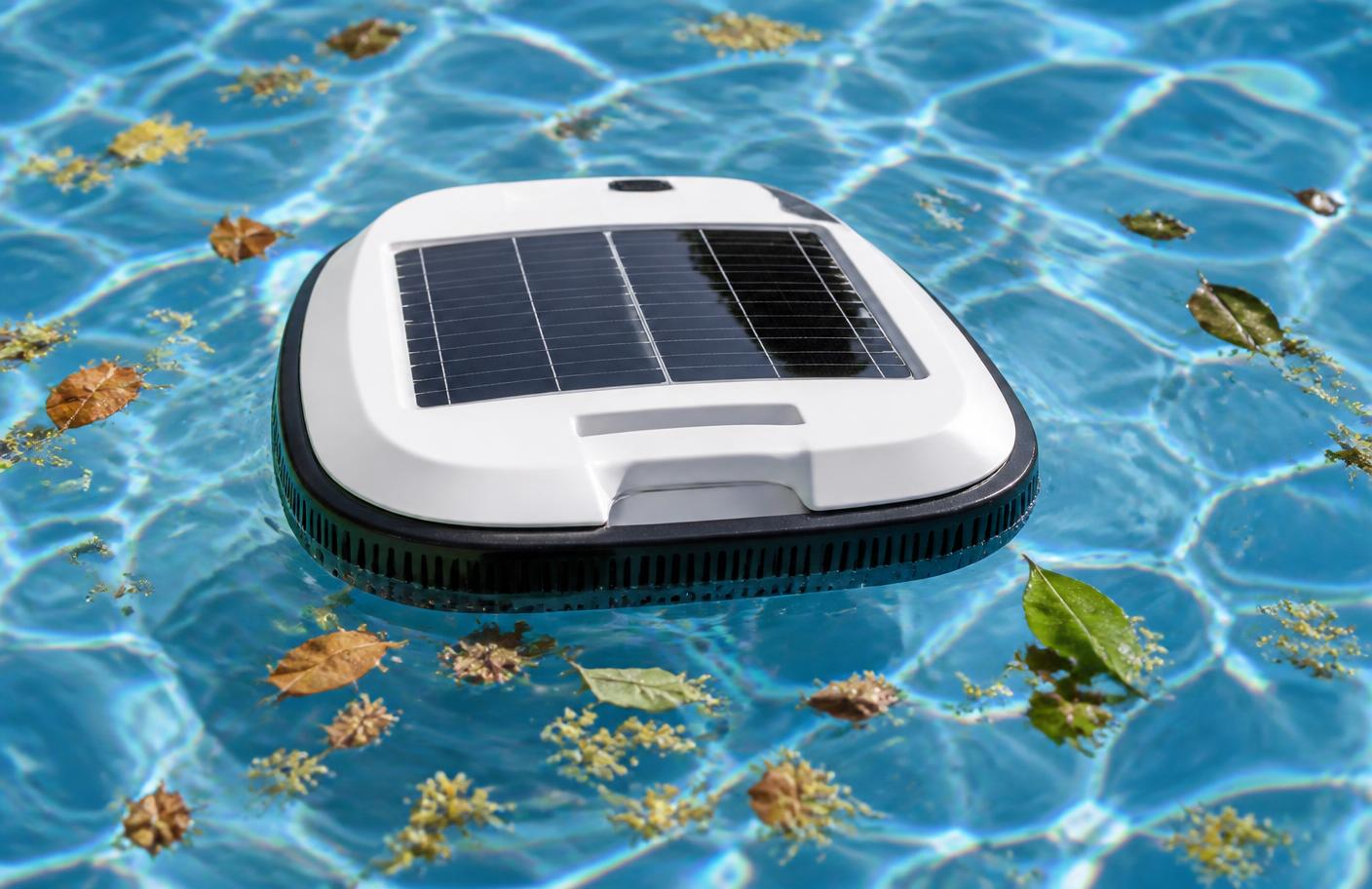
Surface skimmers float on pool water and are the single highest-value outdoor robot most homeowners can buy. They intercept leaves, pollen, insects and blossom while it is still floating, which is the only moment removing it is easy. Once debris sinks it stains plaster, clogs the pump basket and consumes chlorine. A solar skimmer typically runs 8–10 hours unattended on sunlight alone, holds a debris basket sized for a few days of tree fall, and costs between $400 and $900.
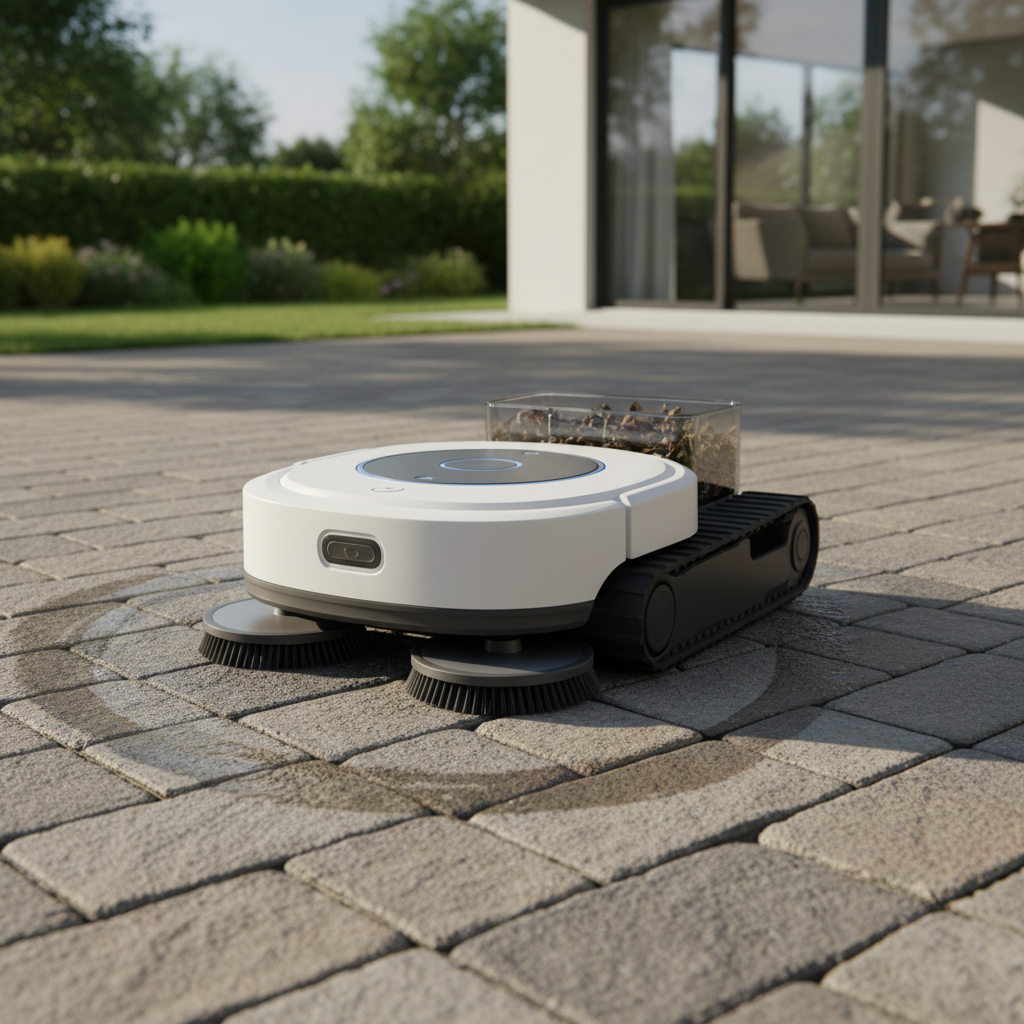
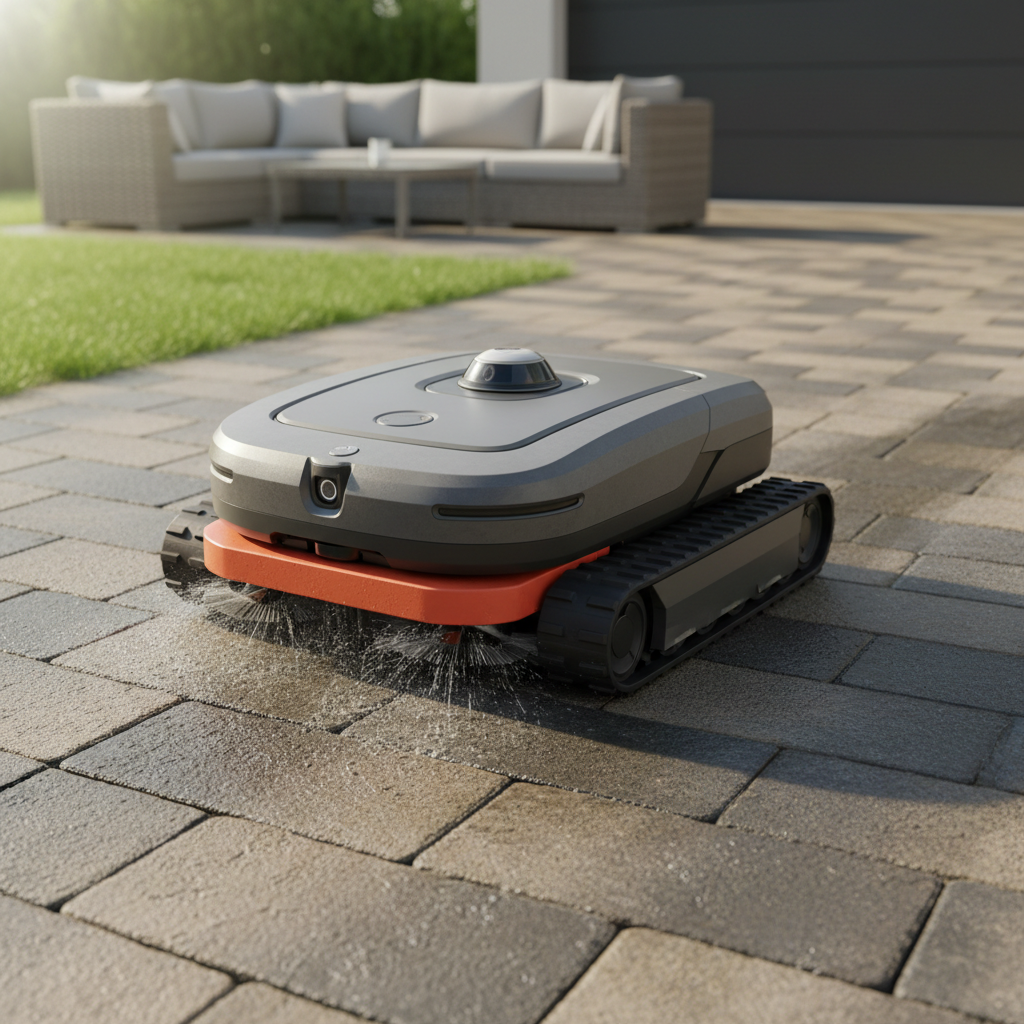
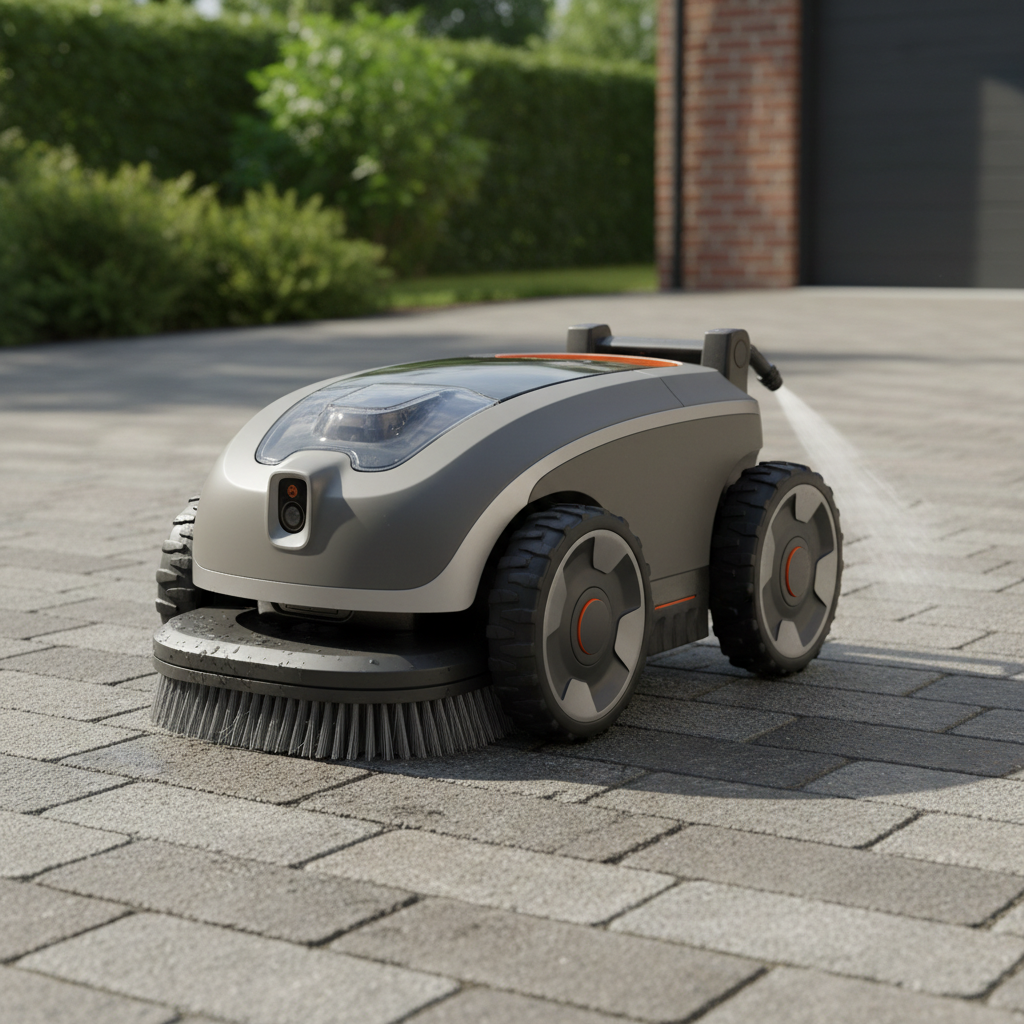
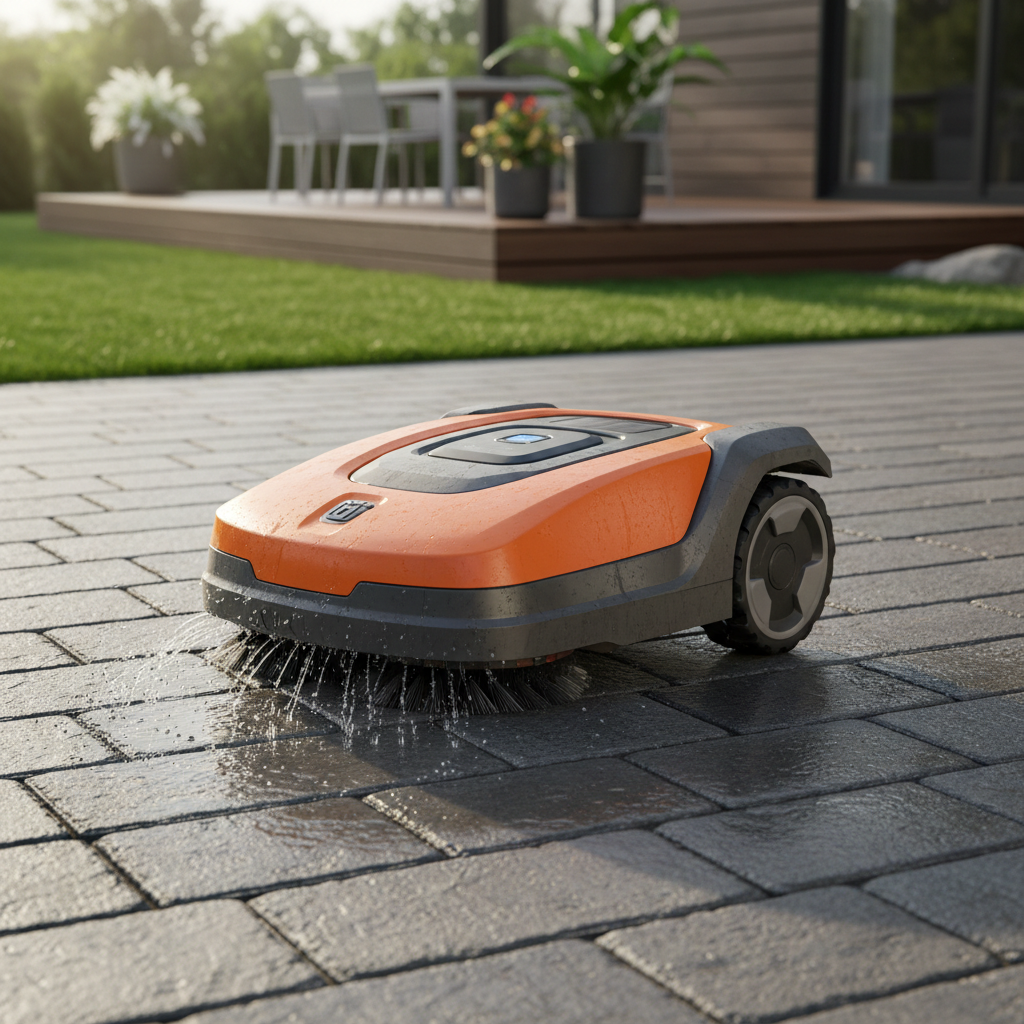
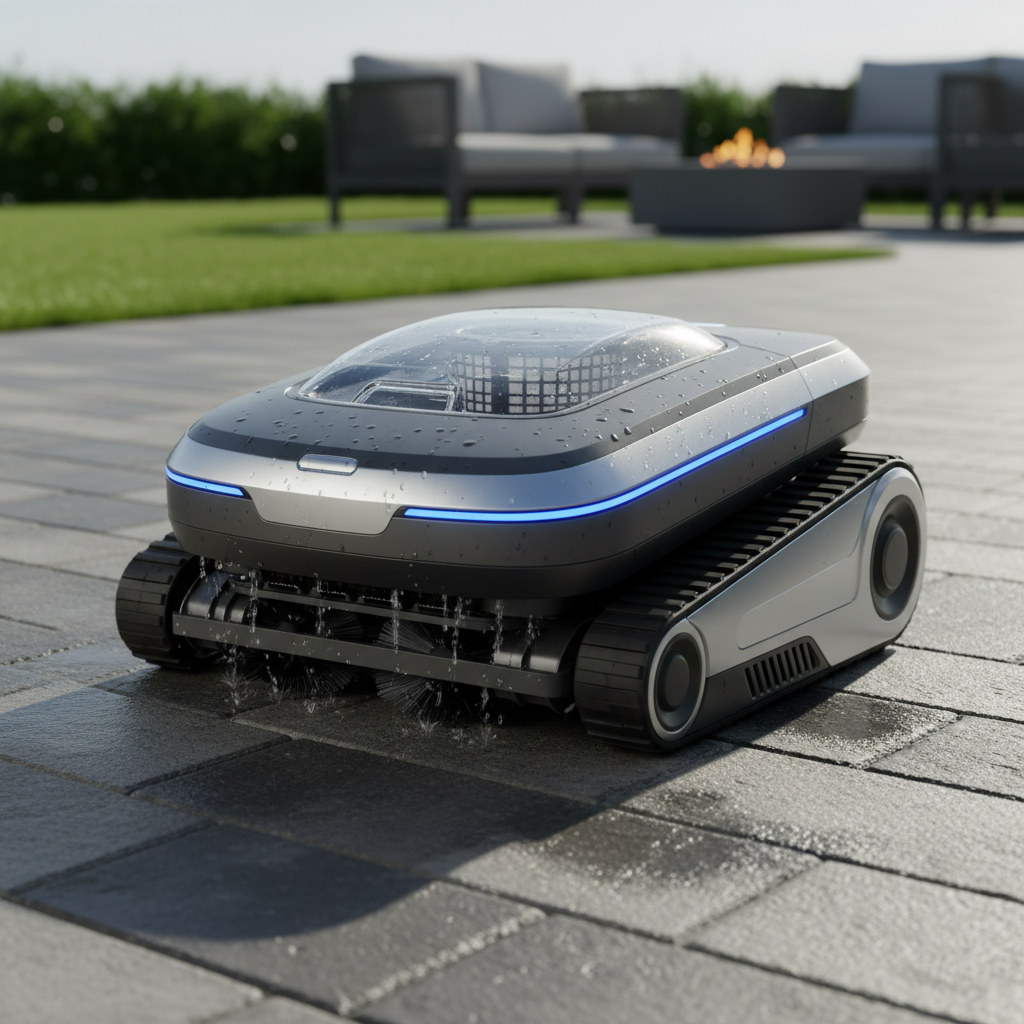
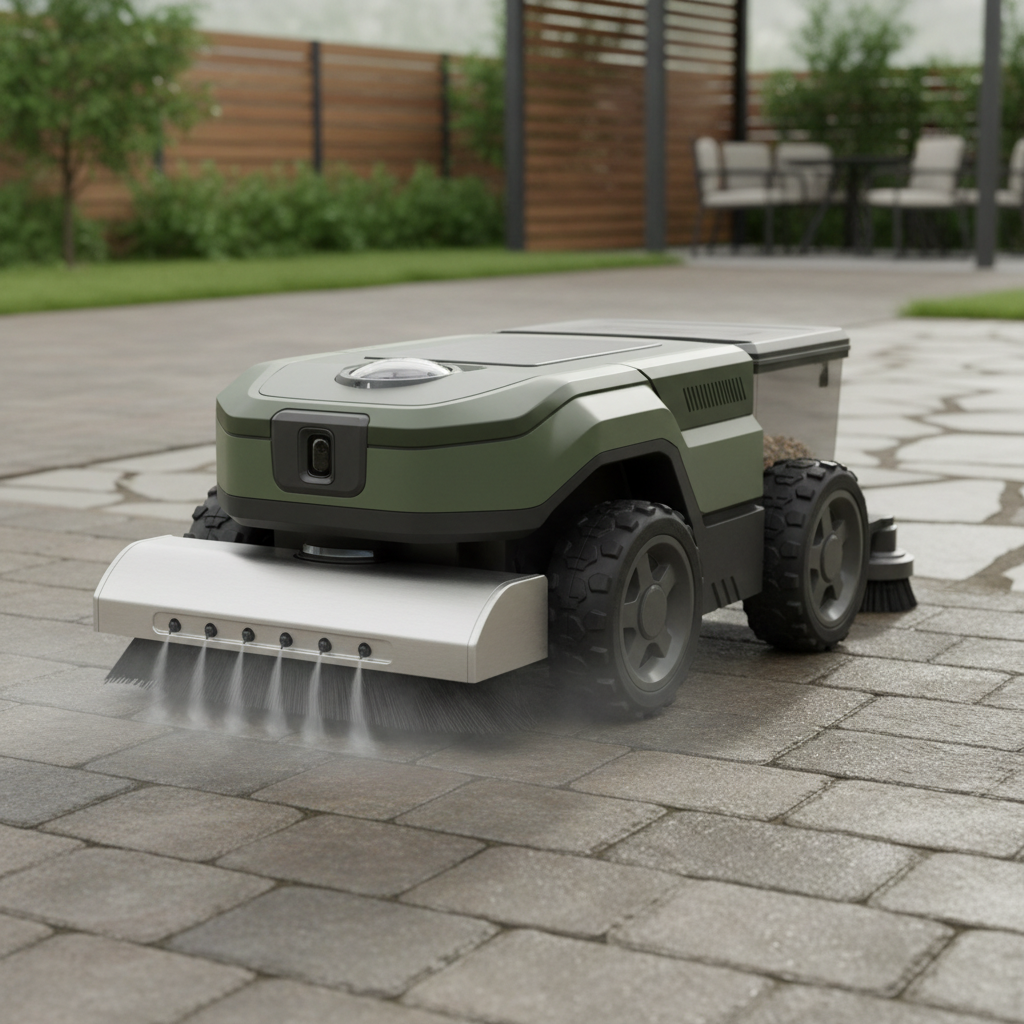
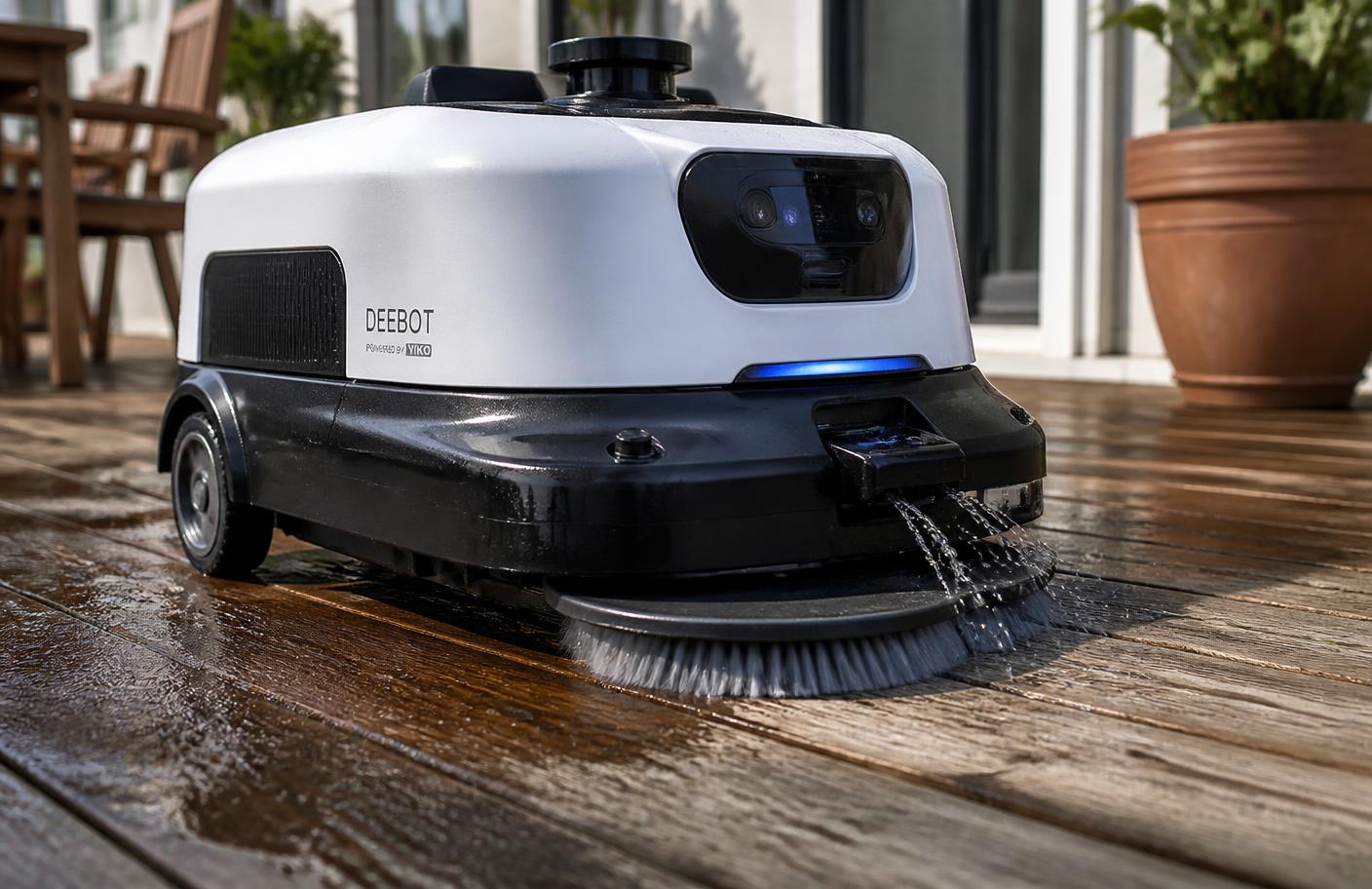
Patio, deck and paver scrubbers are the outdoor equivalent of a robot mop. They combine a water reservoir, a rotating brush and enough weight to generate real down-pressure, then work in overlapping passes across a defined area. They will not strip heavy black lichen the way a 3,000 psi pressure washer does, but run weekly they prevent that build-up from ever forming — which is a better outcome and uses a fraction of the water.
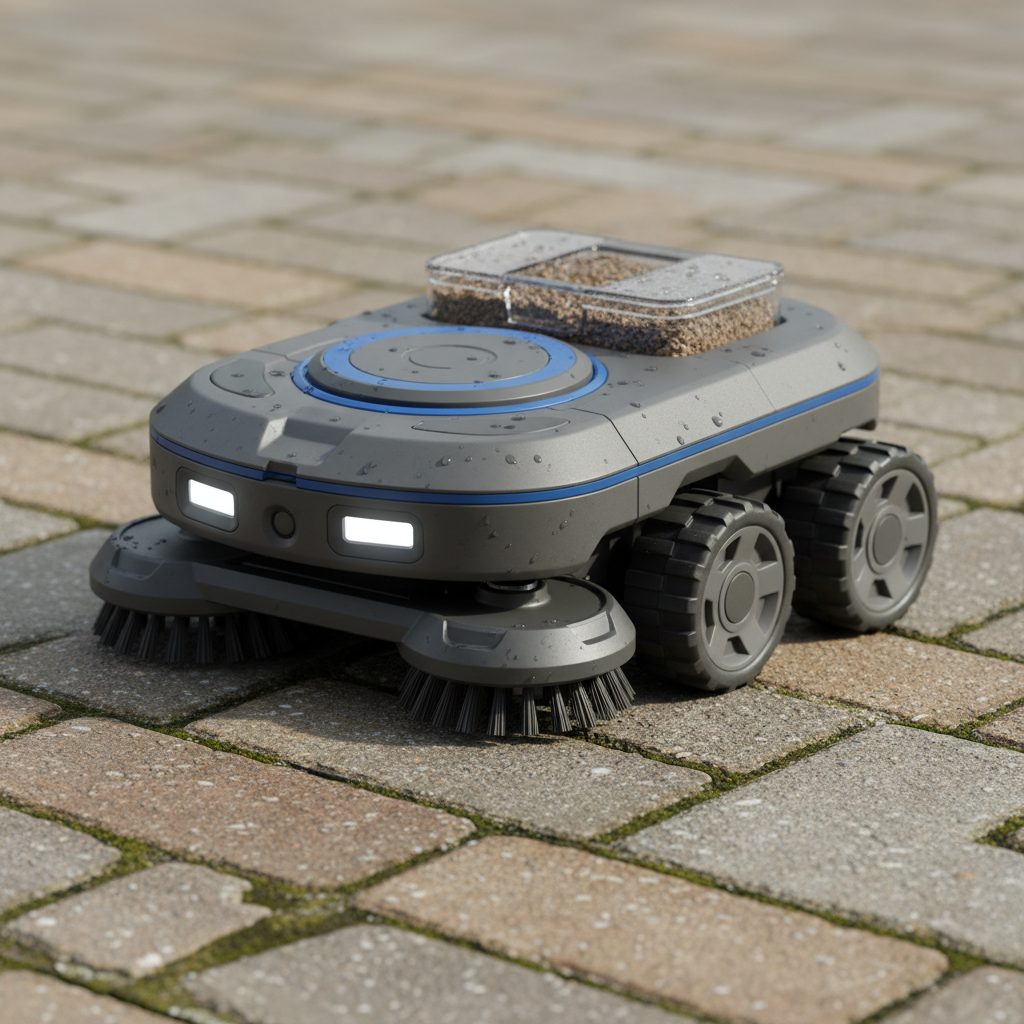
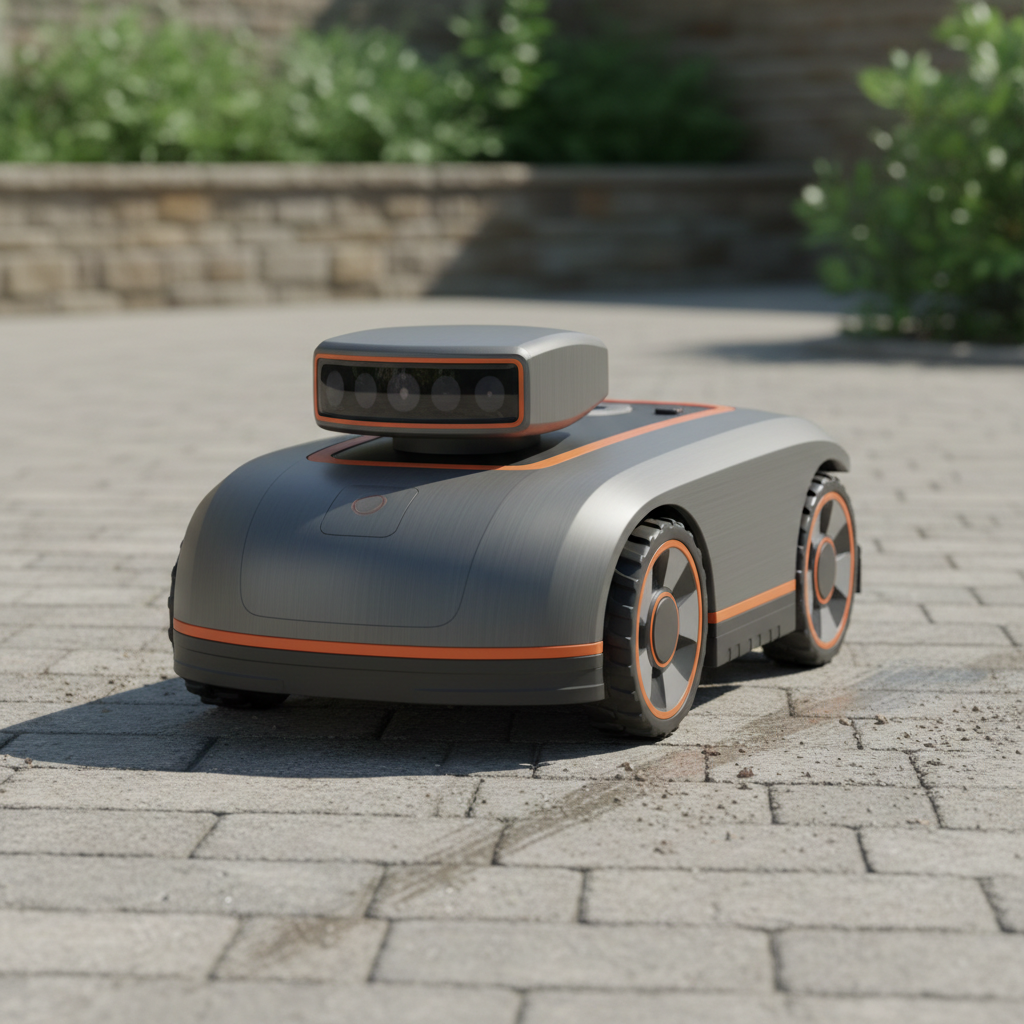
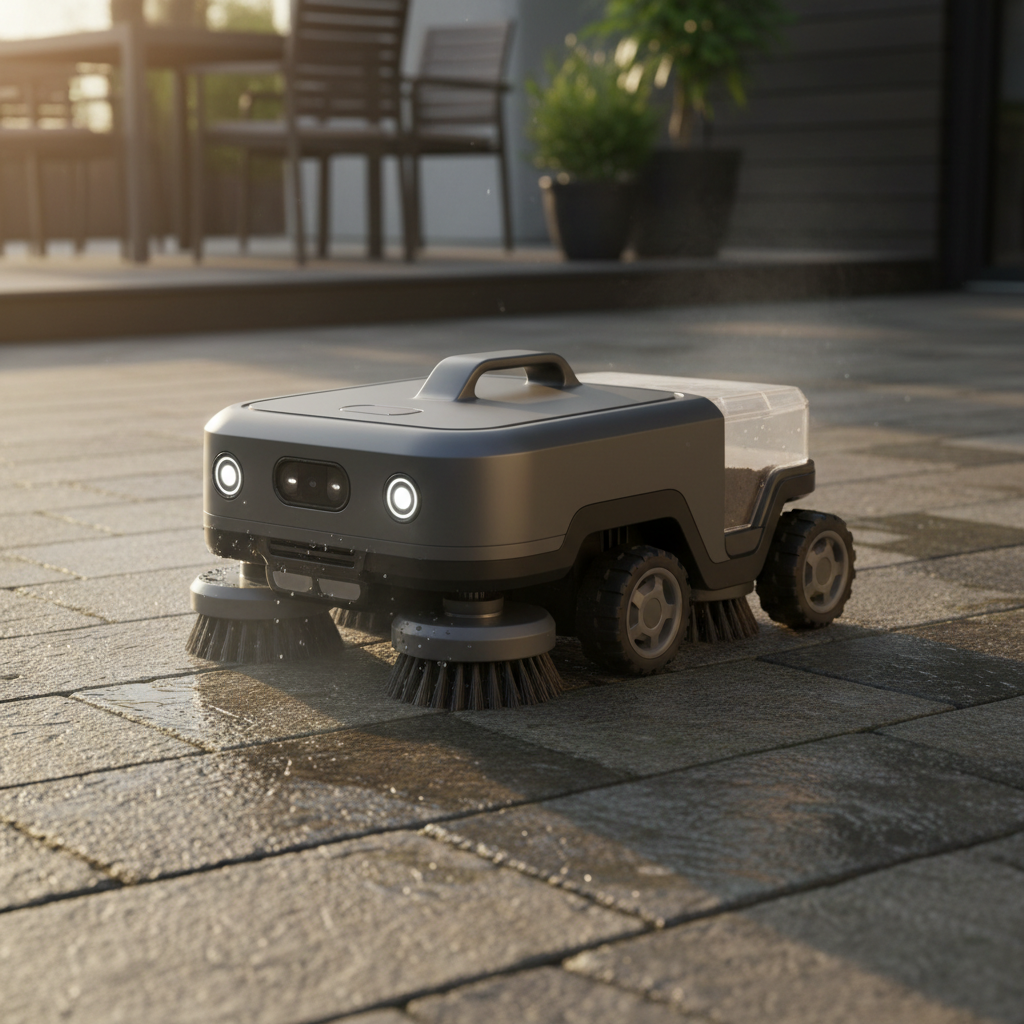
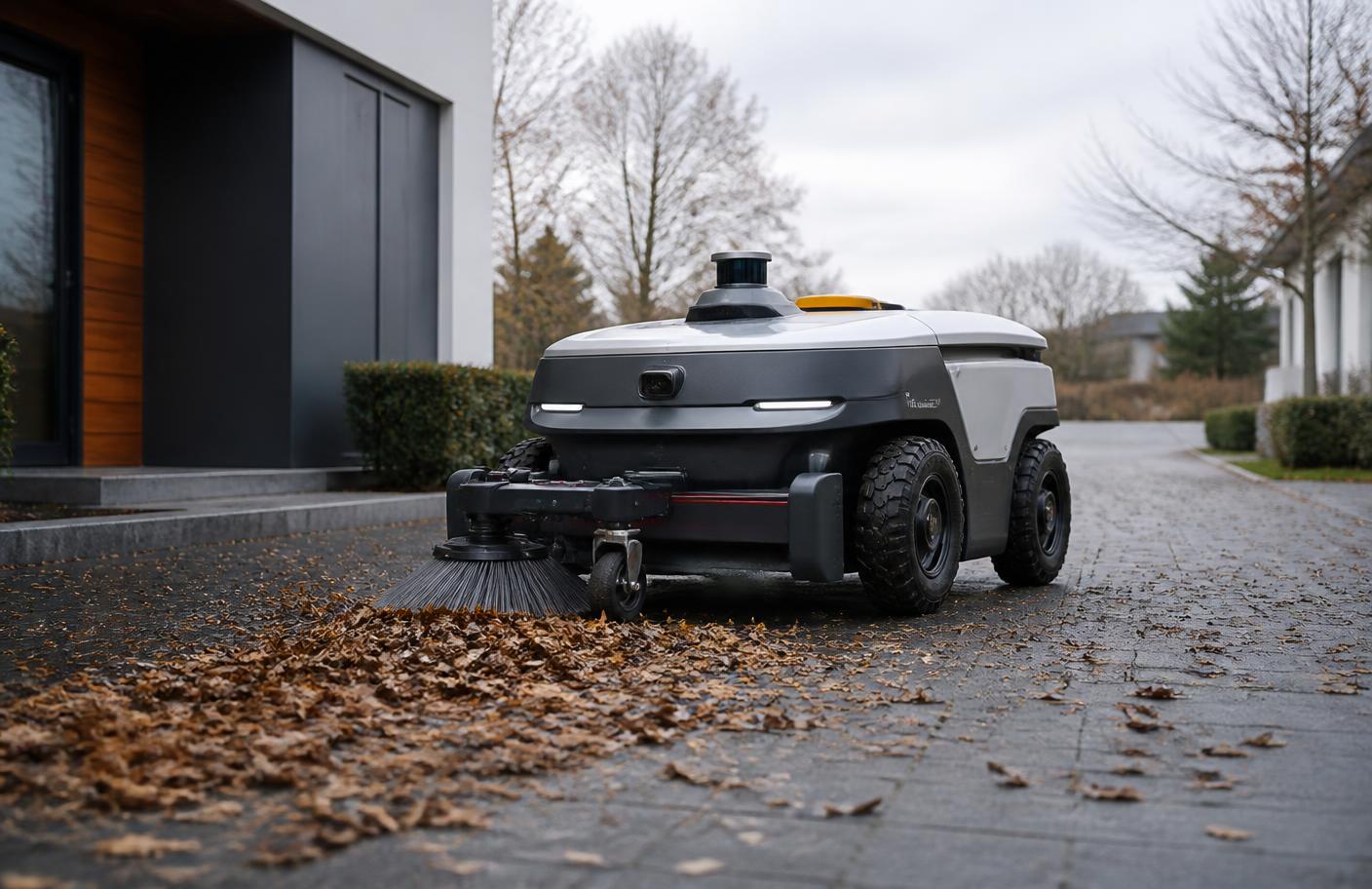
Sweepers and debris collectors are the newest family. Built on rugged, LiDAR-navigated chassis with chunky all-terrain wheels and large hoppers, they clear leaves, seed pods, grit and light litter from driveways, courtyards and long paths. Prices start around $1,200 and climb steeply into light-commercial territory.
Finally there are the specialists: gutter-cleaning robots that crawl the gutter line augering out compacted sludge, and robotic lawn mowers, which are the most mature outdoor robot of all. Boundary-wire mowers are now being displaced by RTK-GNSS and vision systems that need no wire at all.
Buying criteria that actually matter outdoors
Ingress protection is the first filter. IP66 is the practical minimum for anything that lives outdoors and sees rain; anything submersible needs IP68 with a stated depth and duration. Manufacturers who publish a real IP rating with test conditions are telling you they tested it — vague claims like 'weatherproof' are not a specification.
Battery chemistry and thermal behaviour come second. Look for stated operating temperature ranges, not just runtime. A skimmer with a solar top-up circuit will keep working indefinitely in summer but should be brought inside below freezing. Third, check consumables honestly: brushes, filter cartridges and impellers all wear, and a robot whose replacement brush costs $90 and lasts one season has a very different total cost than the sticker price suggests.
Fourth, match the debris capacity to your tree cover. A 3-litre skimmer basket under a mature liquidambar fills in a day. Fifth, look for real app control with scheduling, coverage reporting and firmware updates — outdoor robots benefit enormously from software maturity because their environment changes with every season.
What outdoor robots cost to own
Entry-level solar skimmers start near $400, mid-range models with larger baskets and app control sit at $600–$900, and premium units with debris sensors and dock-and-charge behaviour reach $1,200. Patio scrubbers land between $700 and $1,600. Sweepers run $1,200 to $4,000. Gutter robots are the bargain of the category at $250–$500, largely because they are teleoperated rather than fully autonomous.
Running costs are modest but real. Budget $60–$150 per year in consumables for a mid-range outdoor robot, plus a battery replacement every three to five years on units with non-removable packs. Against that, weigh what you currently pay: a single professional gutter clean is $150–$350, patio pressure-washing $250–$600, and pool servicing $80–$150 a month. Most outdoor robots pay for themselves inside two seasons — which is precisely why the category is growing faster than any other part of home robotics.
Building an automated outdoor routine
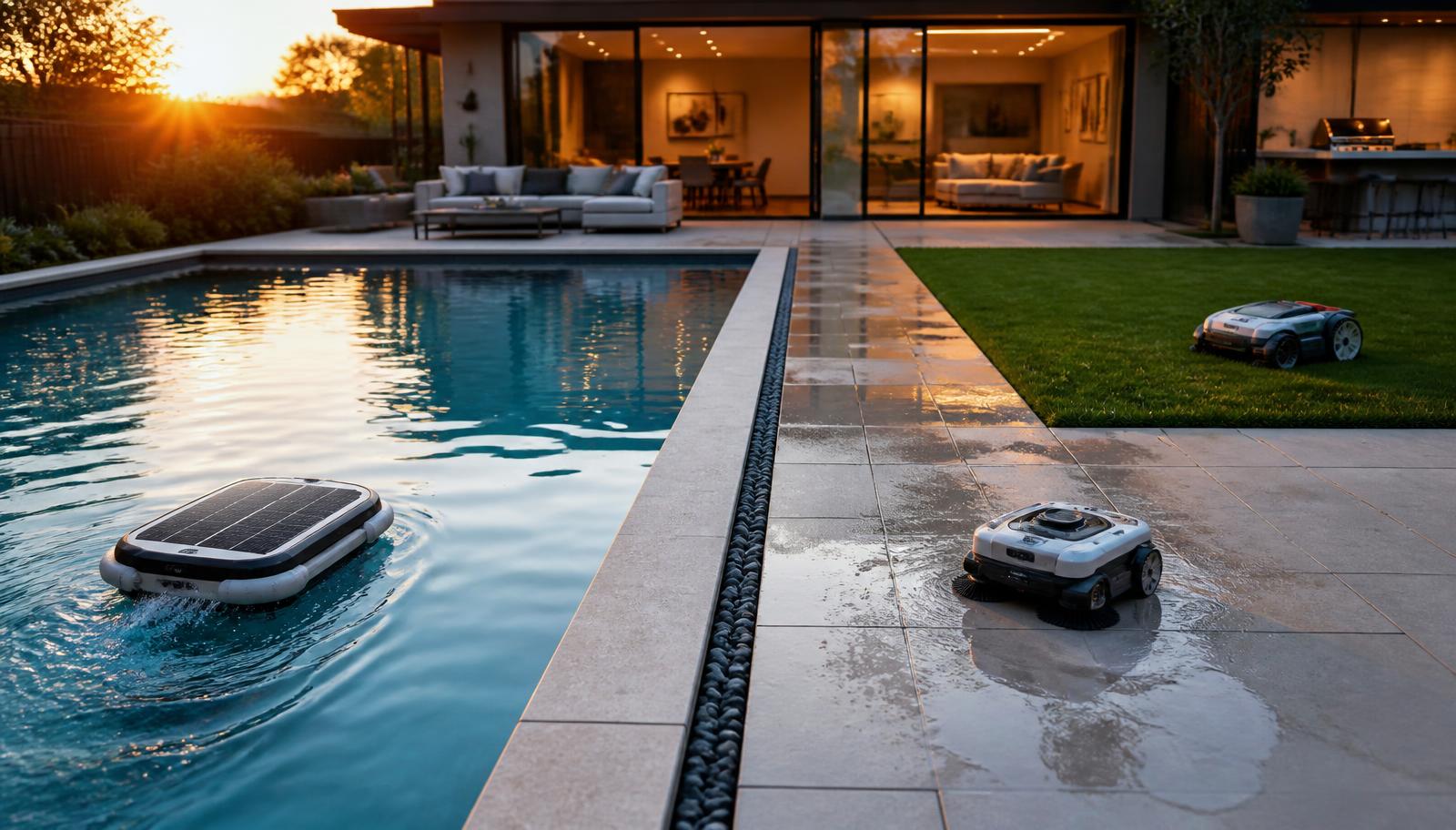
The strongest results come from layering rather than from one do-everything machine. Pair a solar surface skimmer with a submerged pool robot and the pool effectively maintains itself: the skimmer prevents debris from sinking, the pool robot handles floor and waterline. Add a wire-free robotic mower for the lawn and a scheduled patio scrubber for the hard surfaces, and the weekly outdoor maintenance list collapses to emptying baskets and checking brushes.
Set schedules seasonally, not once. Run the skimmer daily through spring pollen and autumn leaf-fall, and every second day mid-summer. Scrub patios weekly in humid months when algae establishes, fortnightly in dry ones. Store lithium-battery units indoors over winter. Do that, and an outdoor robot fleet will run for years with almost no attention — which is exactly the promise the category was built on.