Robot Lawn Mowers

Choosing a Robot Mower for Slopes and Large Lawns

Most entry-level robot mowers are built and marketed for flat, modest suburban lawns, which leaves owners of sloped or large properties unsure whether a robot mower can cope at all. It can, but only if you match the incline rating, navigation system and battery capacity to your specific terrain rather than buying on brand name alone.

Published 9 August 2026 ยท Cleaning Robots editorial team

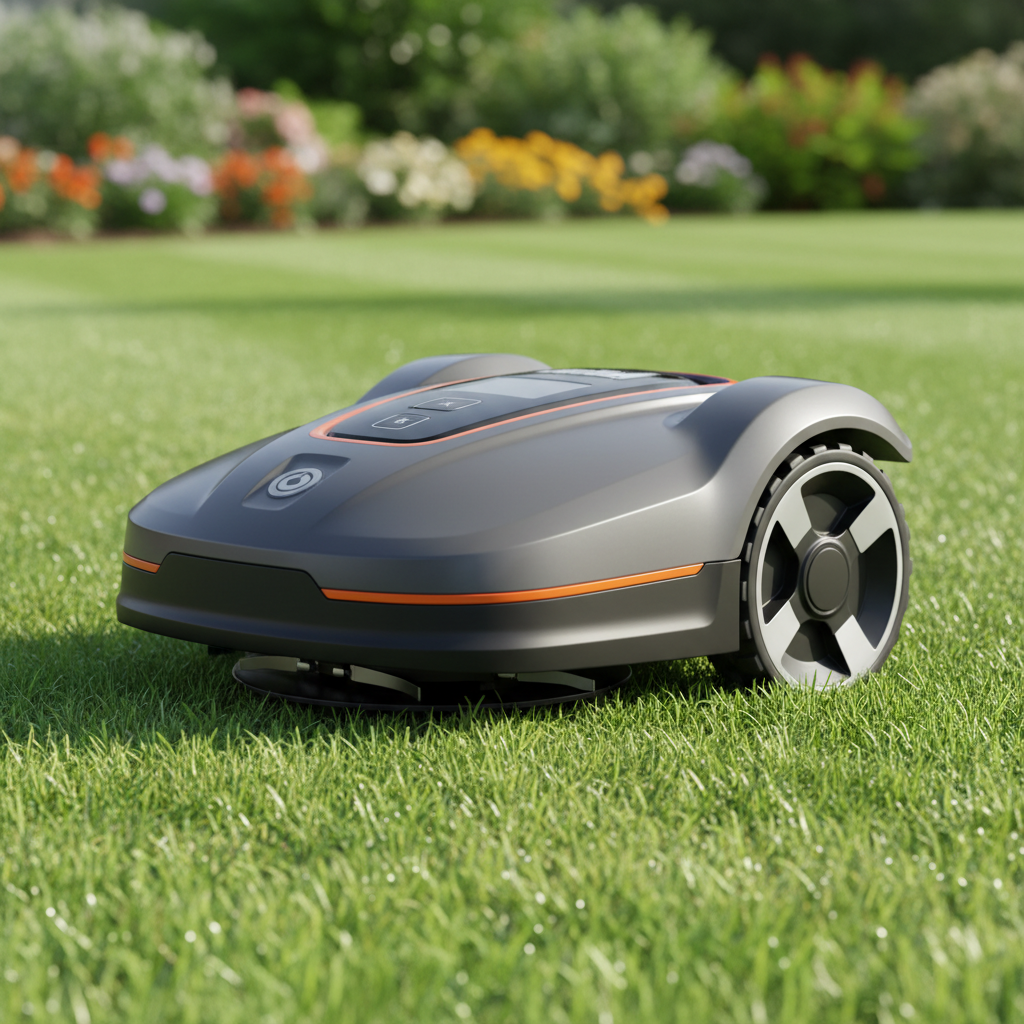
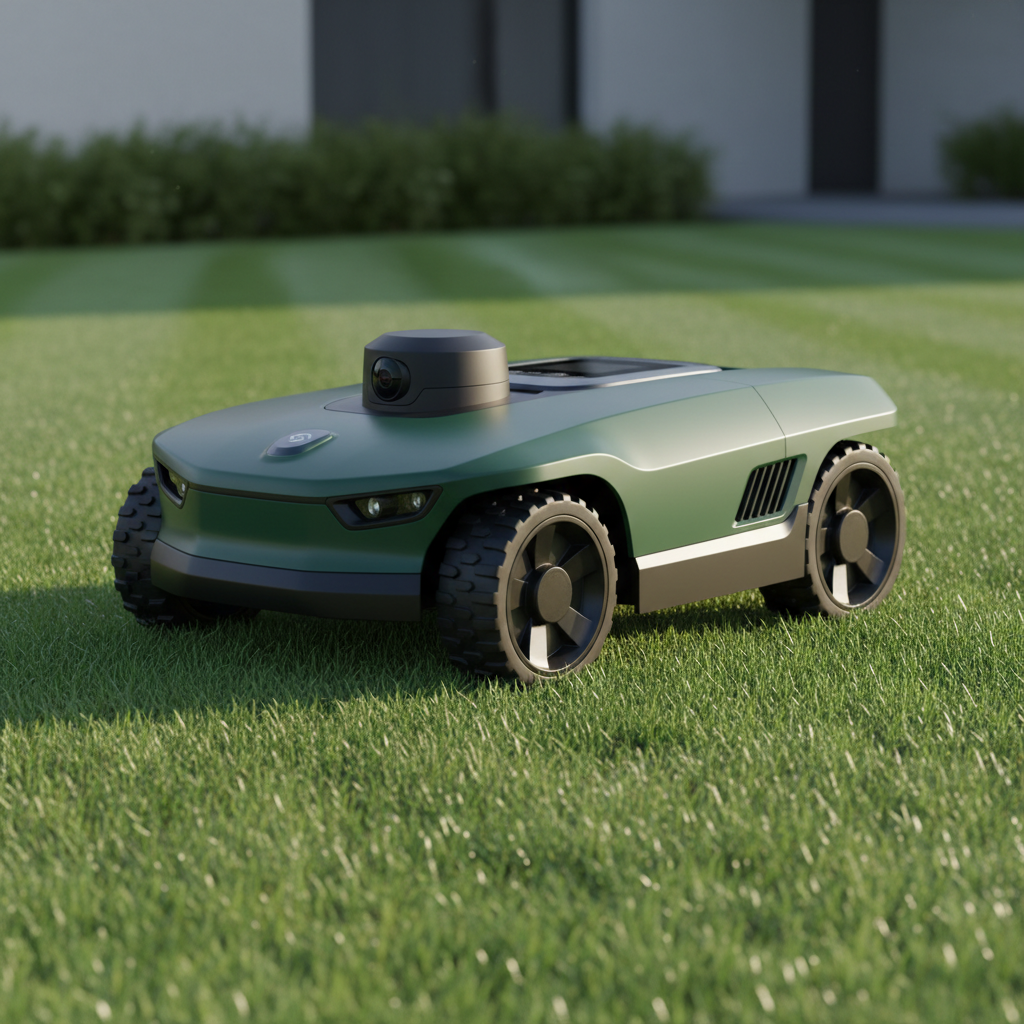
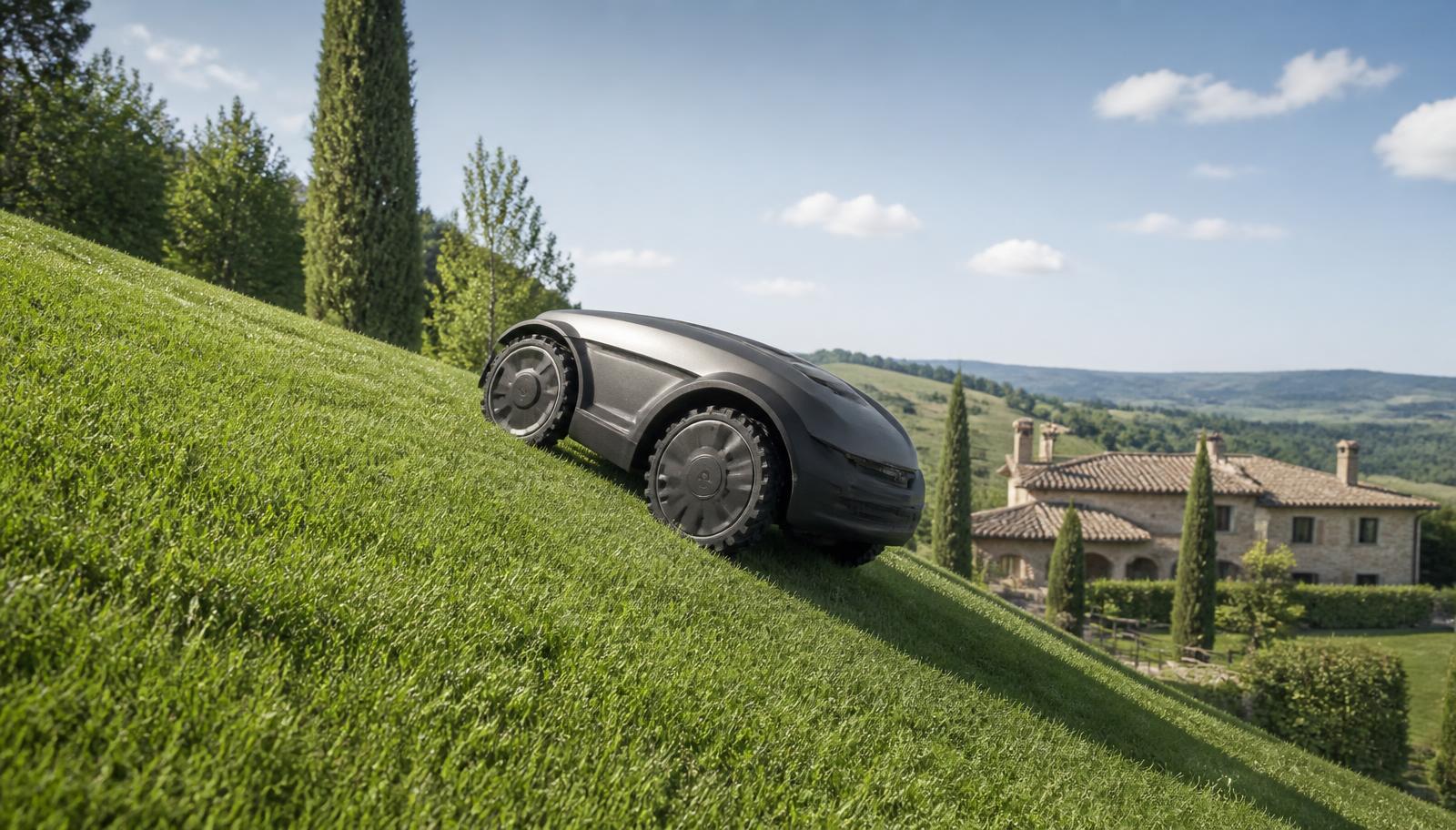
A robot lawn mower climbing a grassy slope in a large backyard. Image by www.CleaningRobots.Online.
Incline-rated robot mowers use wider wheelbases and higher-traction tyres to hold a line on slopes.
Advertisement

Understanding incline ratings

Every robot mower has a maximum stated incline rating, usually expressed as a percentage grade or degrees, and this figure is the single most important spec for sloped lawns. Entry-level mowers are typically rated for slopes up to 20โ€“25%, which suits gentle undulation but not a genuine hill. Mid-range and premium models built for challenging terrain often handle 35โ€“45% grades, with a small number of specialist mowers rated higher again for steep banks.

These ratings assume dry grass and good tyre contact; wet grass, loose soil or a slope combined with a tight turn can all reduce effective traction below the rated maximum. When a slope is close to the limit of a mower's rating, it is worth choosing a model with meaningful headroom above your steepest measured section rather than one that only just meets it on paper.
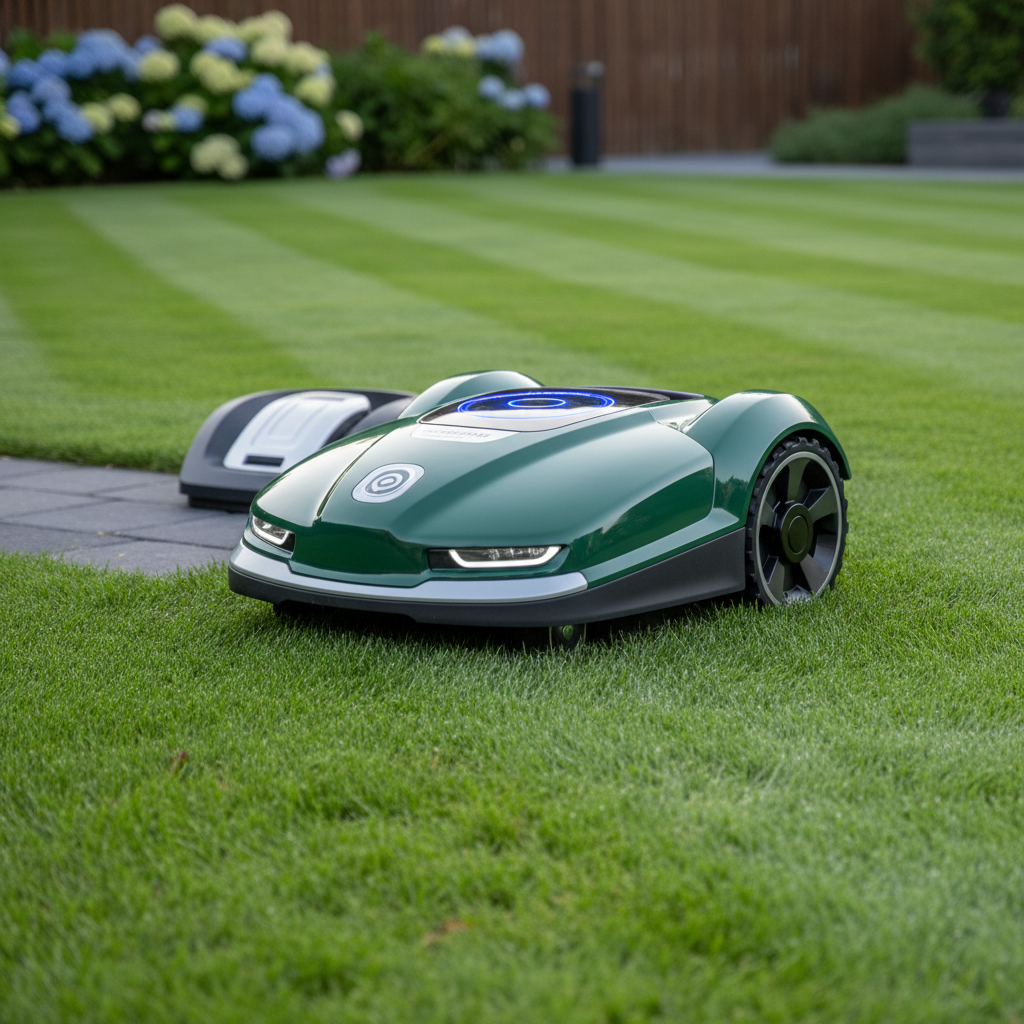
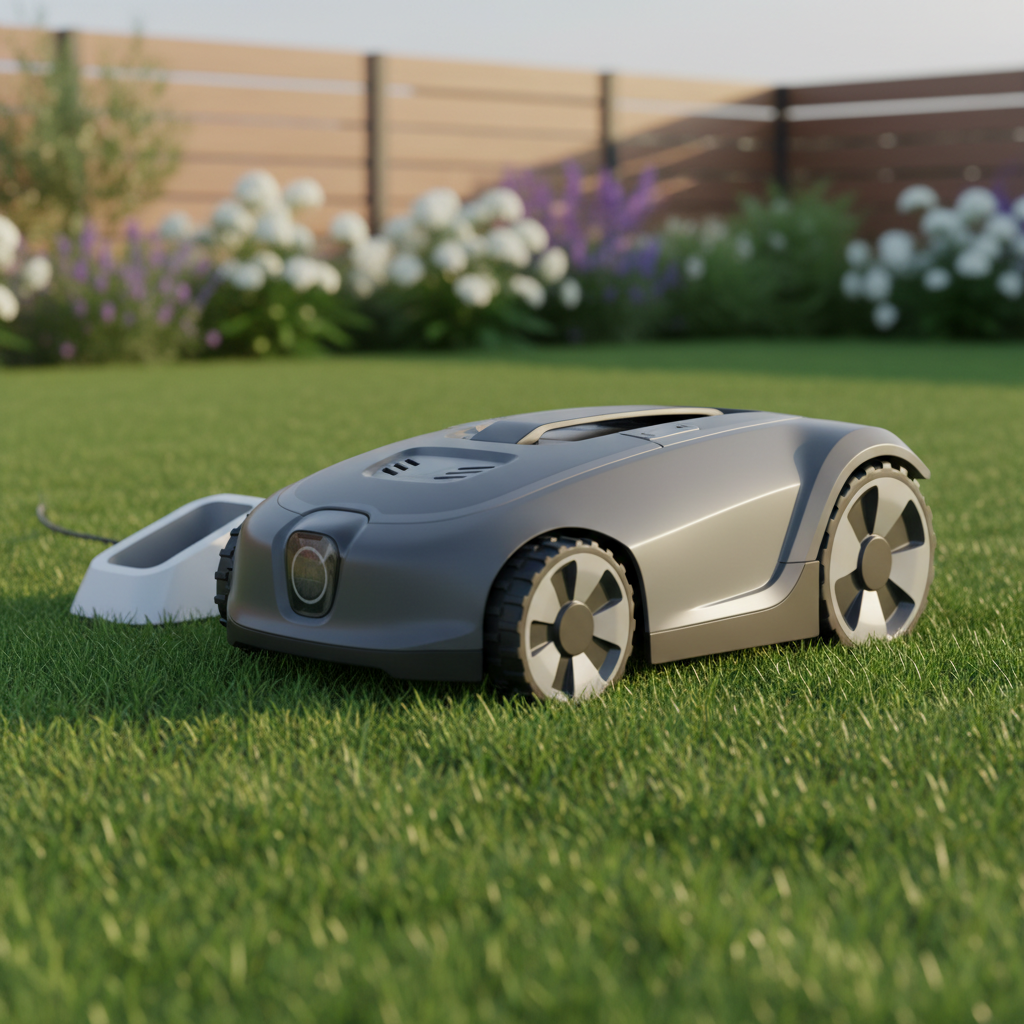
A robot mower's charging station positioned at the edge of a sprawling lawn. Image by www.CleaningRobots.Online.
Large properties often need multiple charging stations or extended-range batteries to cover the full lawn.

Traction, weight distribution and wheel design

Mowers designed for slopes typically carry a lower centre of gravity, wider wheelbase and more aggressive tyre tread than flat-lawn models, all of which reduce the chance of sliding sideways on an incline. Some premium models add all-wheel drive, driving both front and rear wheels rather than just the rear pair, which noticeably improves climbing ability and reduces wheel spin on damp or uneven grass.

Ground clearance also matters on undulating lawns with dips, ruts or garden bed edges, since a mower with low clearance can bottom out or lose wheel contact momentarily at the transition between a slope and flat ground.

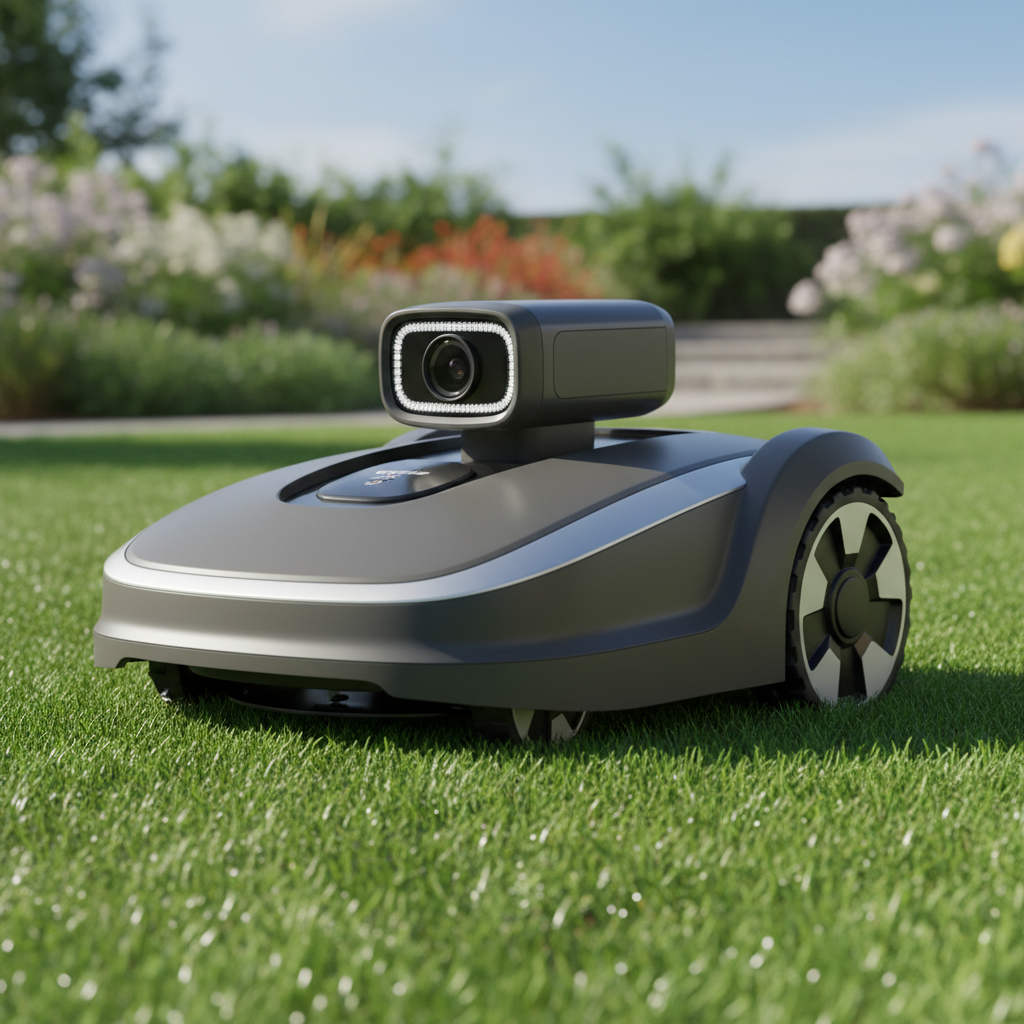
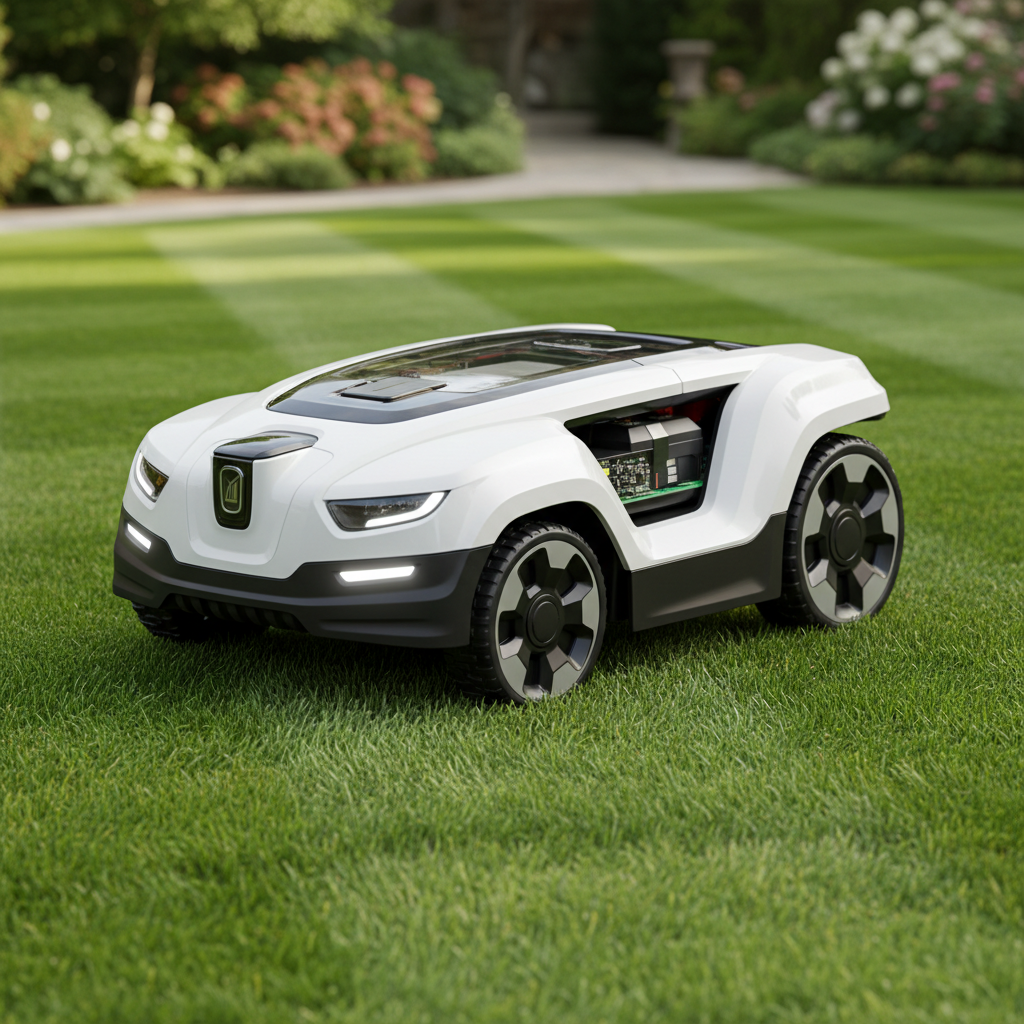
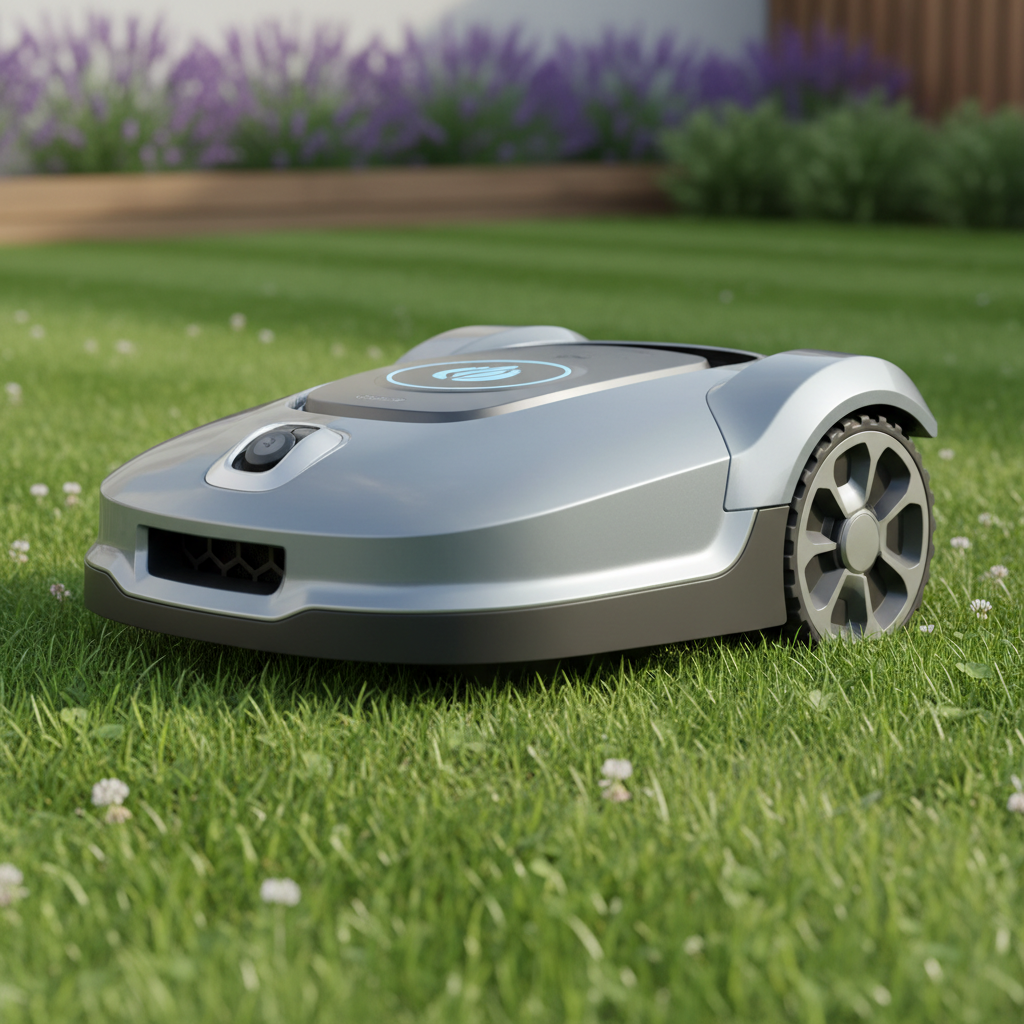
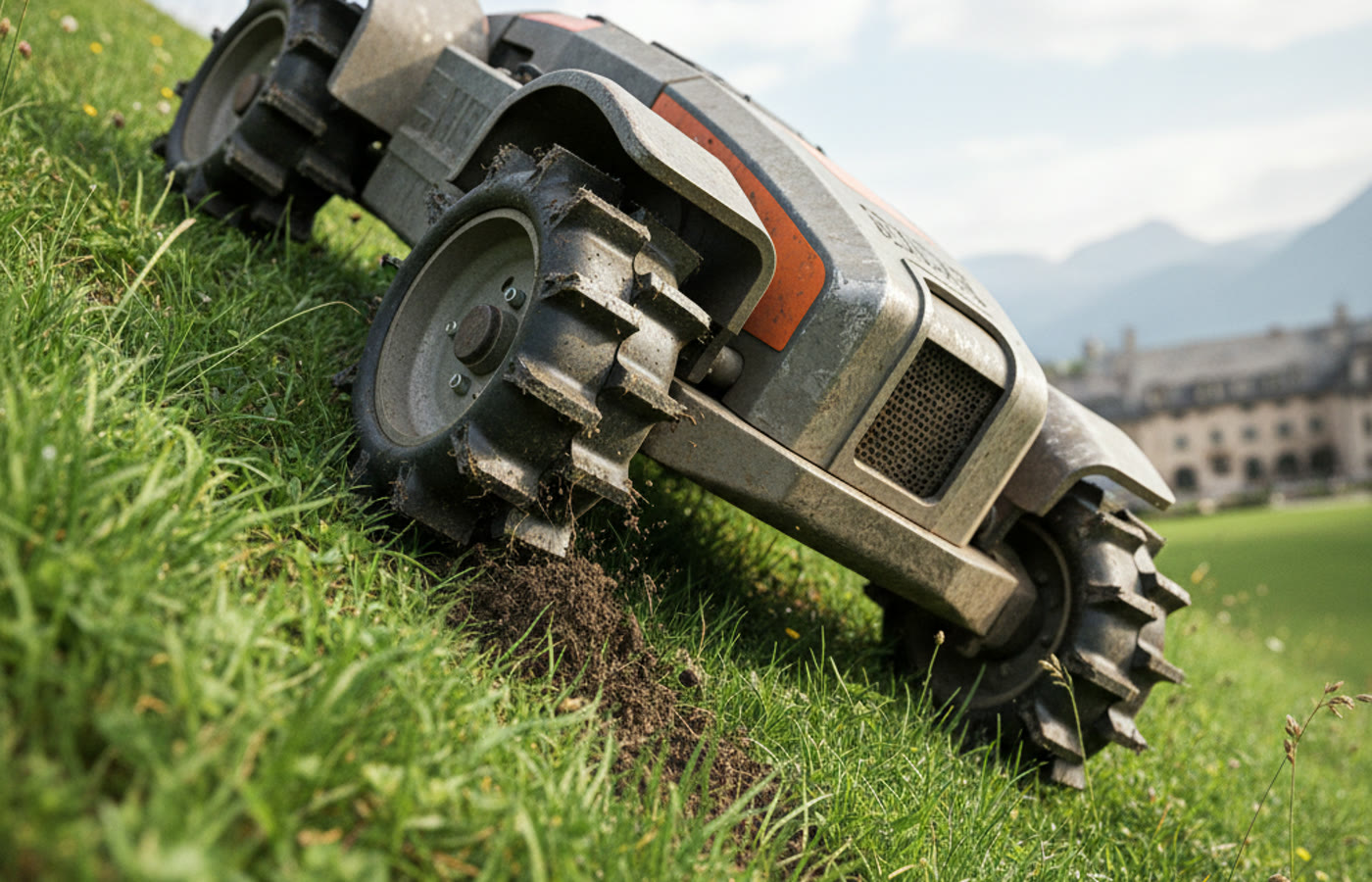
Close-up of a robot mower's wheels and undercarriage on uneven terrain. Image by www.CleaningRobots.Online.
Wheel grip and ground clearance determine whether a mower slips or stalls on wet or steep grass.

Navigation for large or complex lawns

Small robot mowers often rely on a perimeter wire buried around the lawn edge, which works well for straightforward single-zone lawns but becomes labour-intensive to install across a large or irregularly shaped property. Larger and more capable mowers increasingly use GPS-RTK positioning combined with onboard sensors, allowing wire-free boundary setup via an app and the ability to divide a property into multiple defined zones that the mower schedules and mows separately.

For properties over roughly 2,000โ€“3,000 square metres, or those with several distinct lawn areas separated by paths or garden beds, GPS-based navigation with zone management saves significant setup time and lets the mower prioritise different areas on different days.
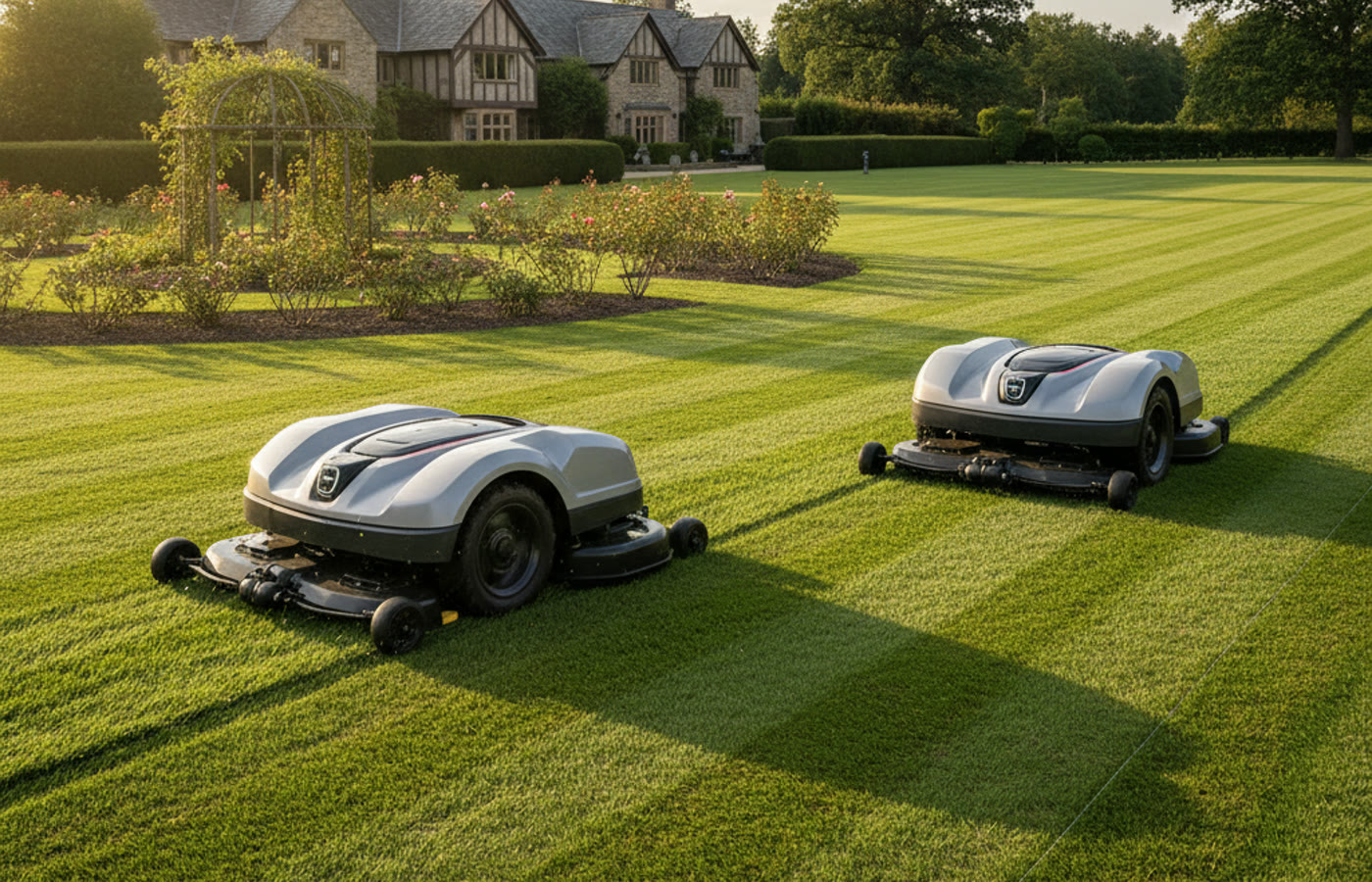
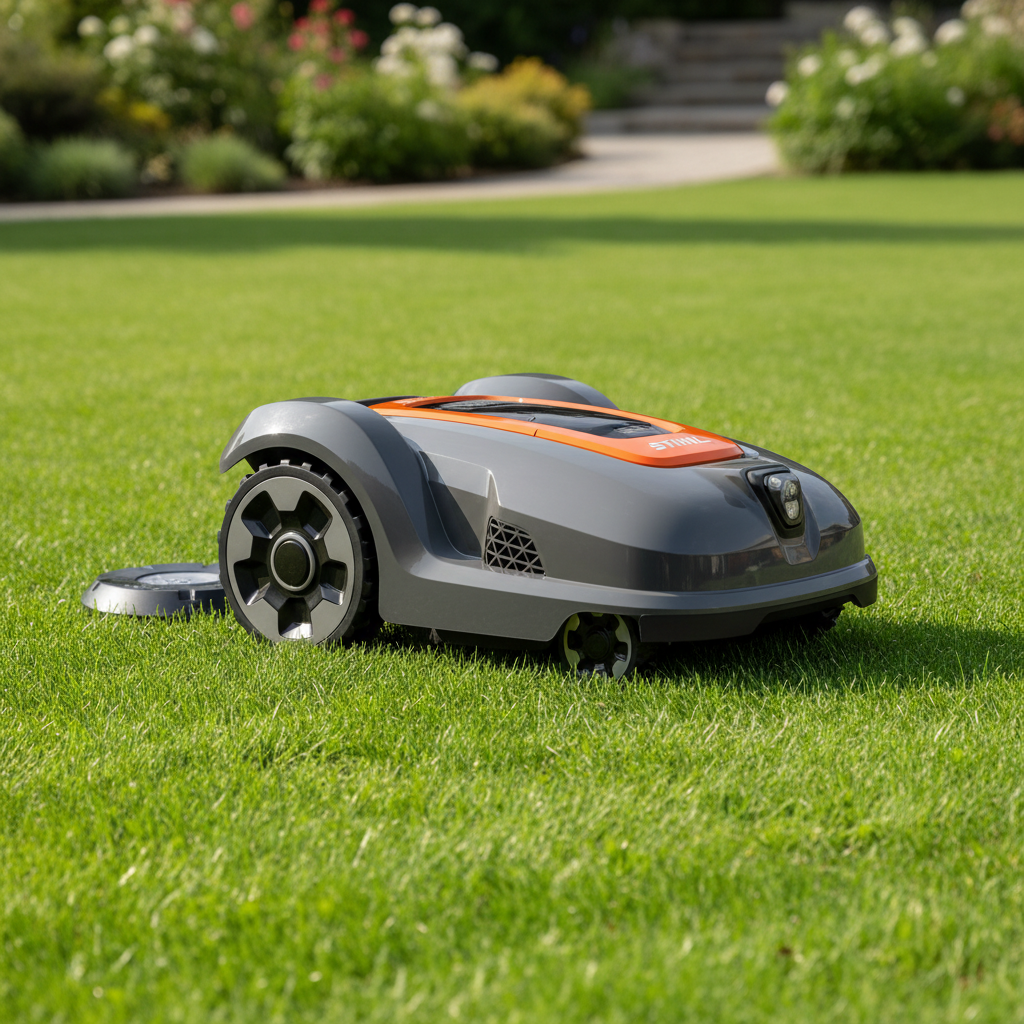
An aerial view of a large mowed lawn with defined mowing stripe patterns. Image by www.CleaningRobots.Online.
GPS-assisted navigation lets larger mowers plan efficient routes across multiple lawn zones.

Battery range and multiple charging stations

Larger lawns push battery range and charging logistics to the forefront. A mower rated for up to 1,000 square metres on a single charge will need several recharge cycles to cover a much larger property in one session, so check the manufacturer's stated coverage-per-charge figure against your actual lawn area rather than the maximum theoretical rating, which is often measured under ideal flat conditions.

Some large-lawn systems support multiple charging stations positioned around the property, letting the mower dock at whichever station is closest when its battery runs low, which reduces unproductive travel time compared with a single central dock.

Realistic pricing for slope and large-lawn models

Basic wire-guided mowers for flat lawns under 500 square metres start around $600โ€“$1,200 AUD. Mid-range models rated for moderate slopes and lawns up to 1,500 square metres typically run $1,500โ€“$2,500. Premium GPS-based mowers built for steep terrain, multiple zones and lawns above 3,000 square metres generally cost $3,000โ€“$6,000 or more, particularly once additional charging stations are added. These figures are approximate and vary by retailer and installation requirements.
Frequently asked questions

What incline rating do I need for a hilly backyard?
Measure your steepest section and choose a mower rated comfortably above that figure, since wet grass and turns reduce effective traction below the manufacturer's maximum stated rating.
Does a robot mower need a buried wire on a large property?
Not necessarily. Many mowers built for large or complex lawns use GPS-RTK navigation with app-based virtual boundaries instead, which is faster to set up across big or irregular areas.
Can one robot mower cover a very large lawn?
Yes, if its stated coverage-per-charge and recharge cycle time suit your lawn size, though very large properties often benefit from multiple charging stations to reduce travel time between mowing sessions.
Do slope-rated mowers cost significantly more?
Generally yes, since they include reinforced traction systems, wider wheelbases and sometimes all-wheel drive, all of which add to manufacturing cost compared with flat-lawn models.
Is all-wheel drive necessary for moderate slopes?
Not always, but it meaningfully improves climbing ability and reduces wheel spin on damp or uneven grass, so it is worth prioritising for anything beyond gentle undulation.
Advertisement

All our Robot Lawn Mowers โ€” 10 models reviewed

Every model we cover in this category, ranked with specs, pricing and honest pros and cons.

See the full Robot Lawn Mowers category

Related robot categories

Read our other Full Feature Articles

Outdoor Cleaning RobotsThe Robot Pool Cleaner Buying Guide: What Actually MattersCordless vs Corded Robot Pool Cleaners: Which Suits Your PoolSolar Pool Skimmer Robots: What They Do and Their LimitsLiDAR vs vSLAMRobot Lawn Mowers Without Boundary Wire: How They NavigateSelf-emptying robot vacuum systems explainedRobot mops for hard floorsThe Robot Vacuum Buying Guide: What Actually Matters in 2026Are Vacuum Mop Combo Robots Worth It in 2026?Self Cleaning Litter BoxThe Best Robot Vacuum for Pet Hair in a Shedding HouseholdThe Robot Window Cleaner Guide: How They Work and Who Needs OneThe Grill Cleaning Robot Guide: How They Work and What They CostHome Assistant Robots for Elder Care: A Practical GuideSecurity Patrol Robots for Home and Business: What to KnowHow a flying delivery drone actually gets a parcel to your doorDrone Delivery Regulations Worldwide: A Country-by-Country OverviewHow a Food Delivery Robot Gets Your Order to Your DoorCommercial Floor Scrubbing Robots: What They Cost and How They WorkWarehouse Lifting Robots: Cutting Manual Handling Injuries on the FloorWorkplace Safety RobotsThe Complete Robot Vacuum Maintenance ChecklistSmart Home Cleaning Robot Integration, ExplainedThe Real Cost of Cleaning Robots, Beyond the Sticker PriceGutter Cleaning Robots Explained: How They Work, What They CostThe Best Gutter Cleaning Robot for 2026: A Buyer's ShortlistiRobot Looj Alternatives: What to Use Now for Gutter CleaningOutdoor Sweeper Robots: Keeping Driveways and Paths Clear Automatically

30 full feature articles published ยท browse them all