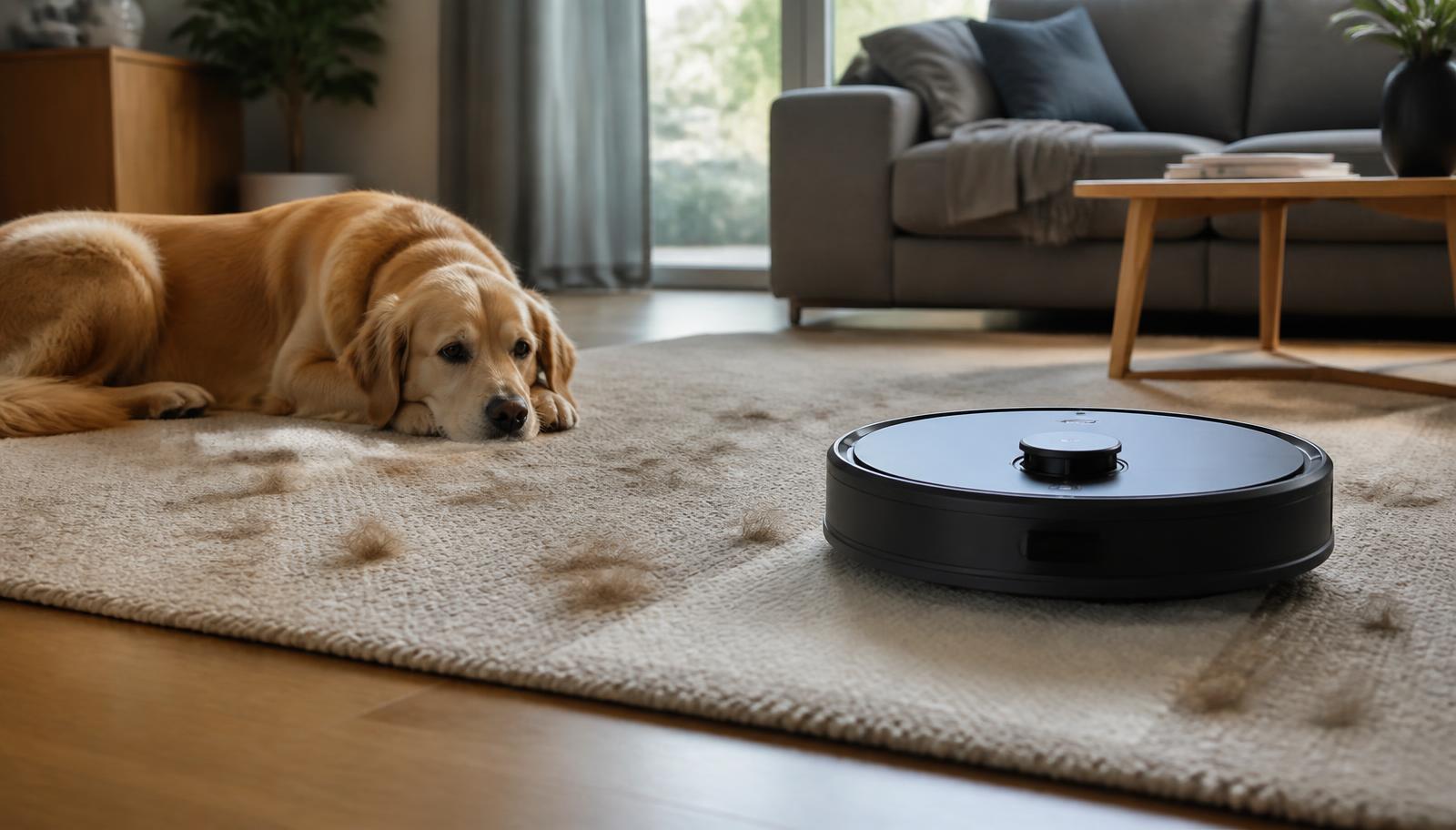
Why ordinary robot vacuums struggle with pet hair
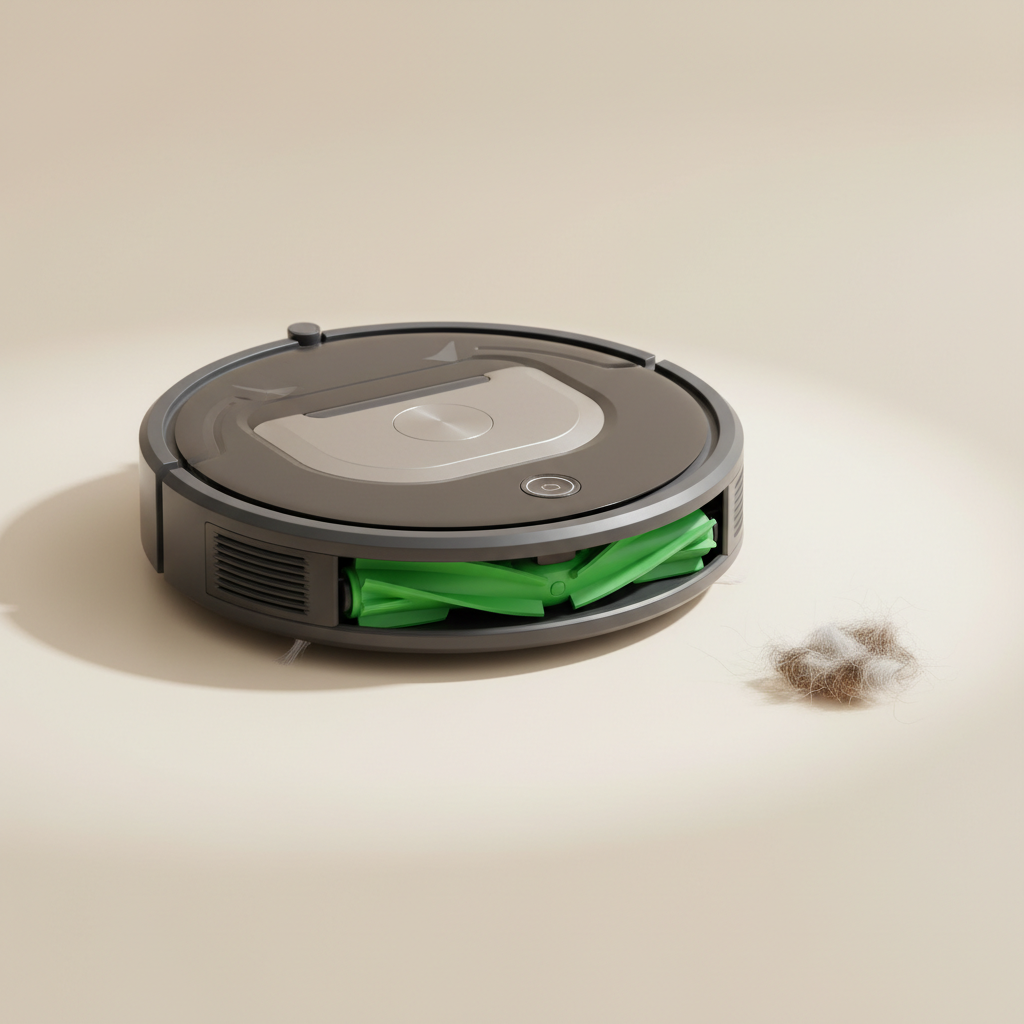
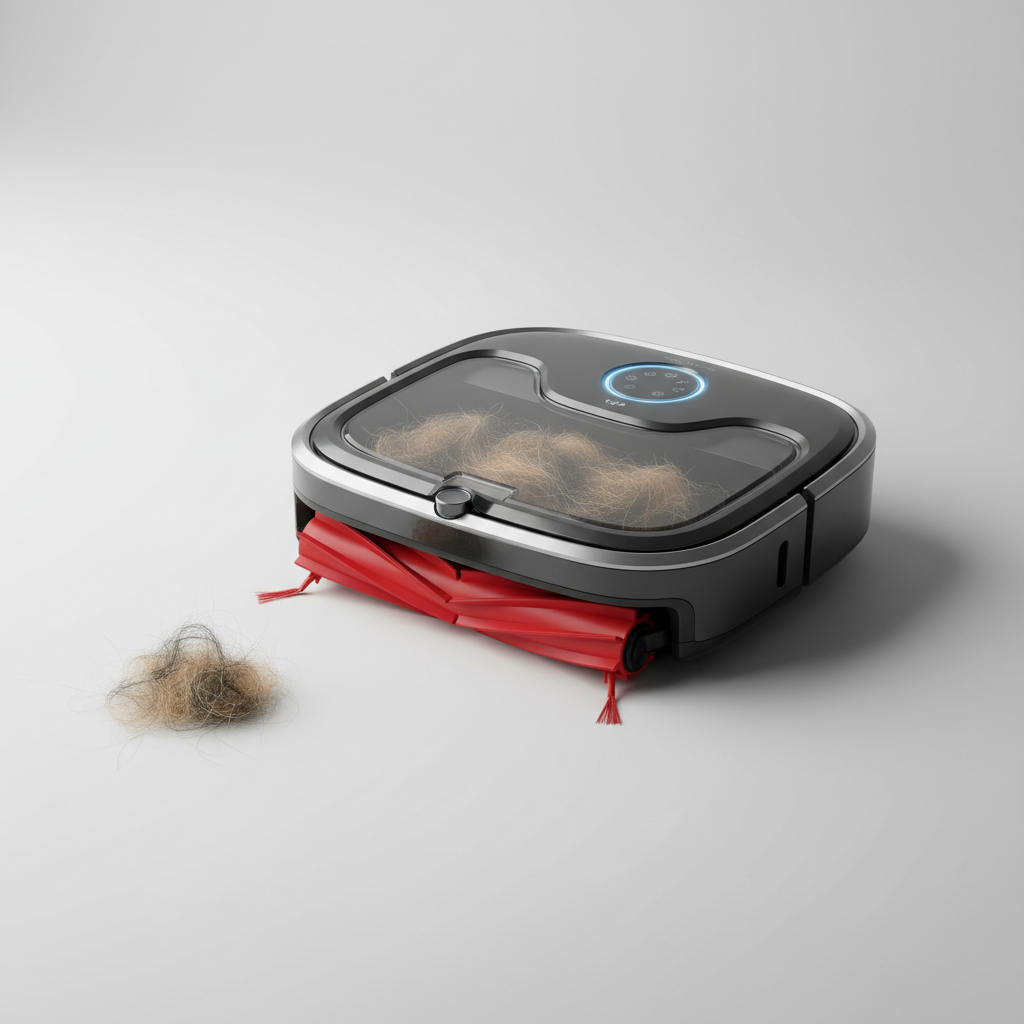
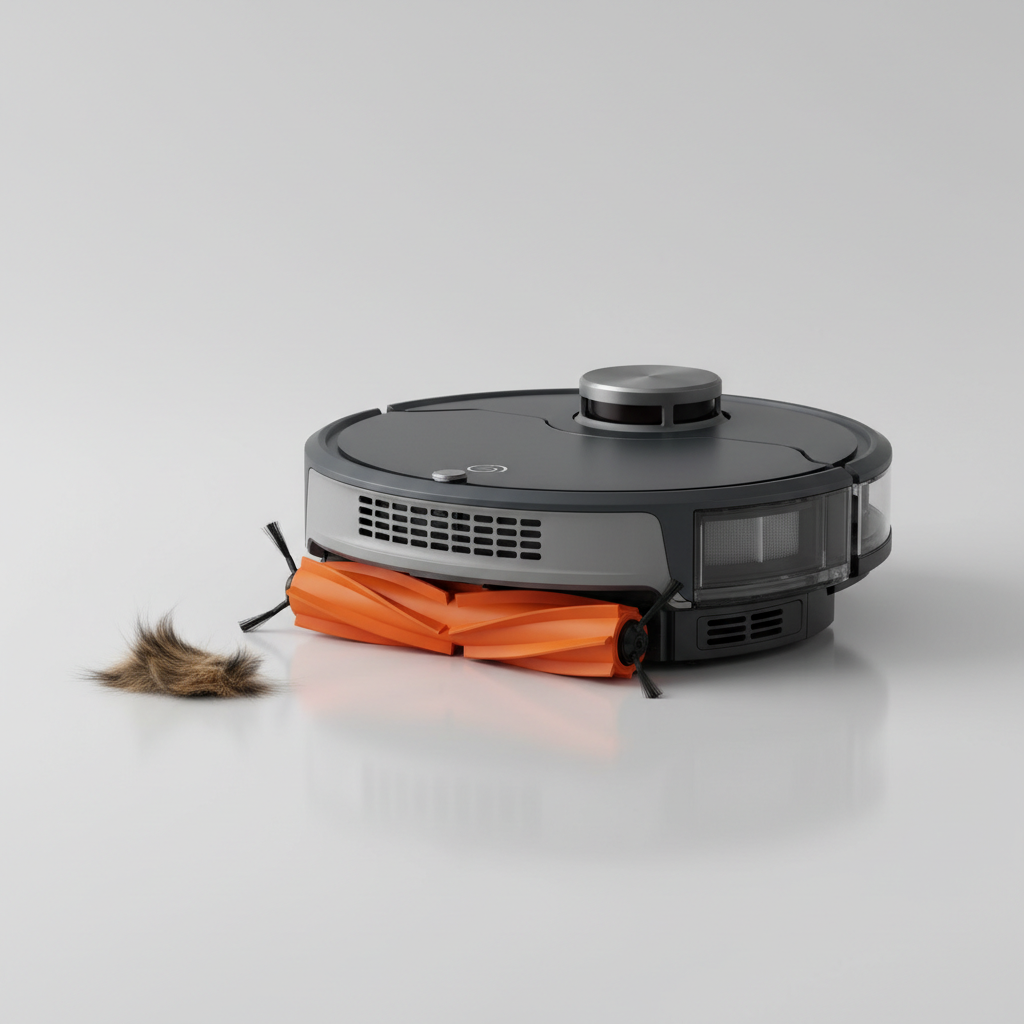
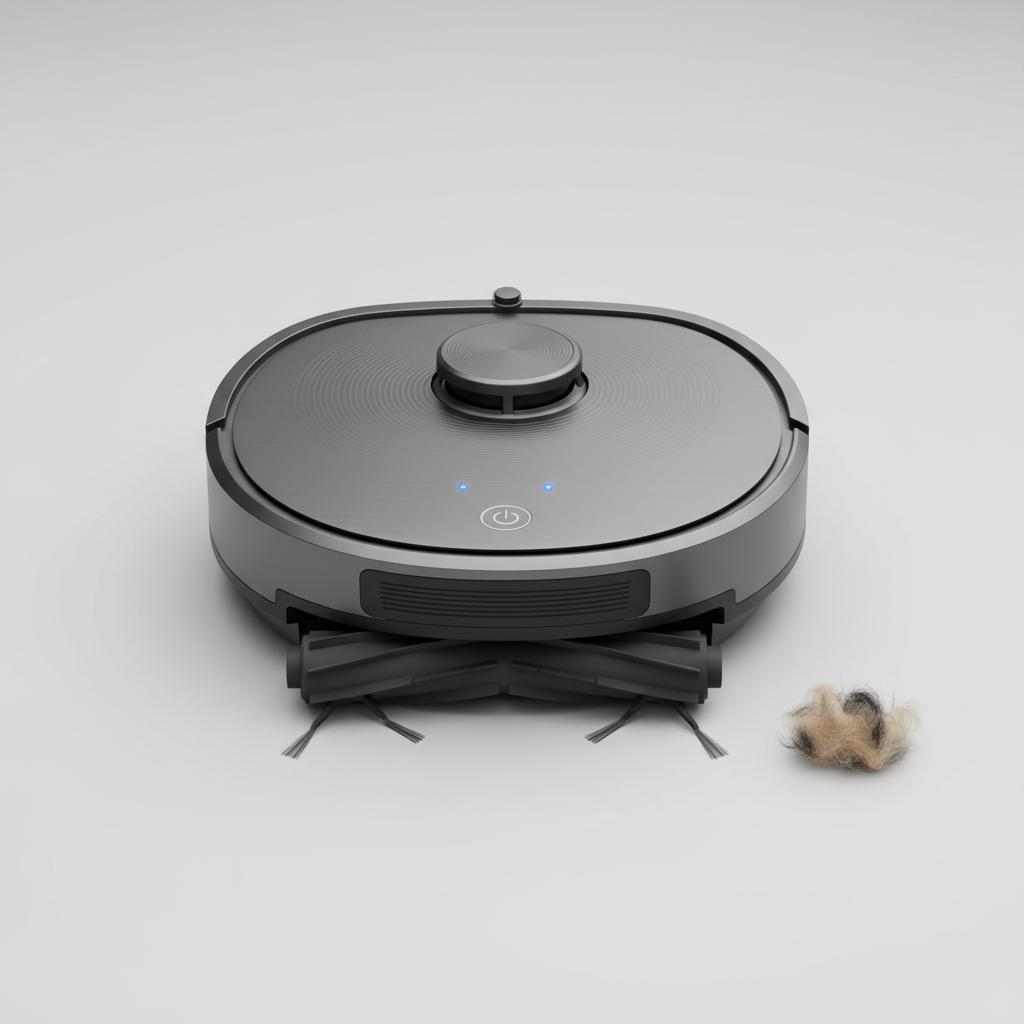
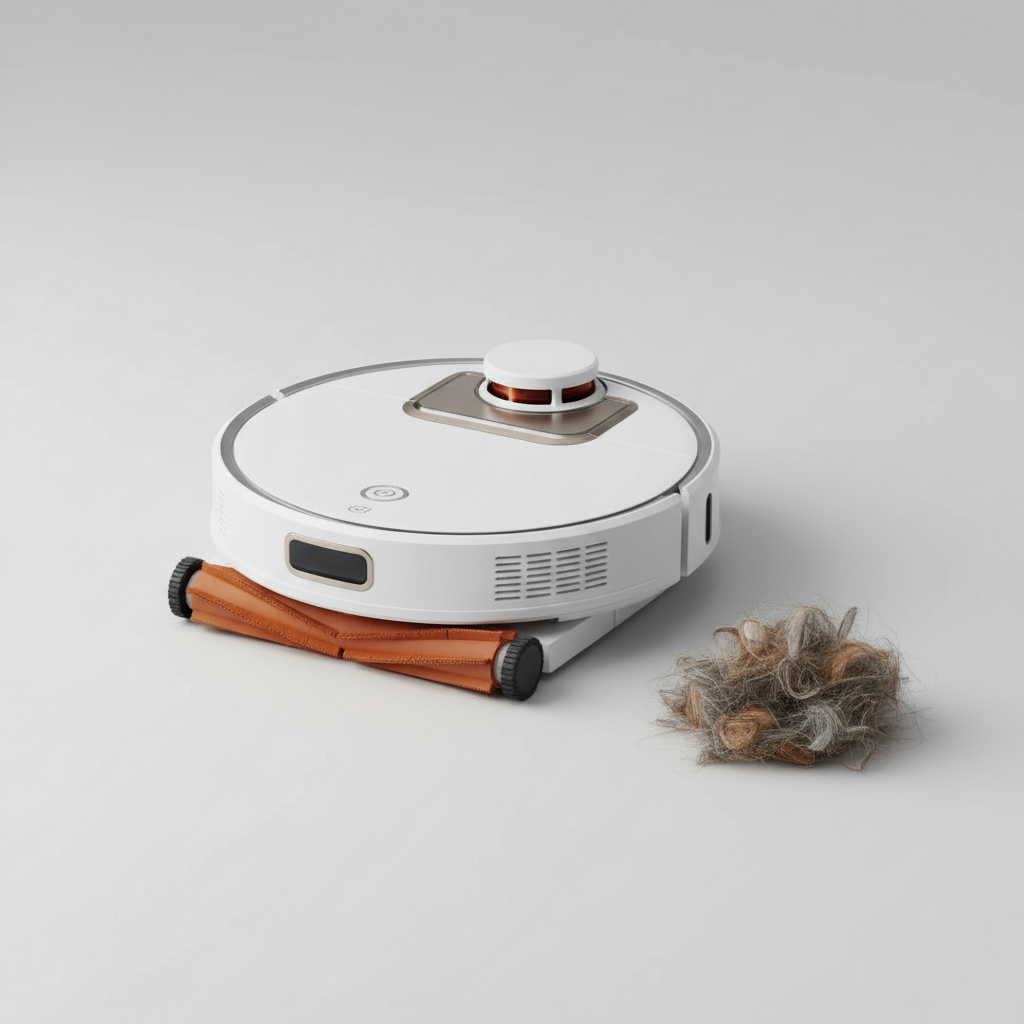
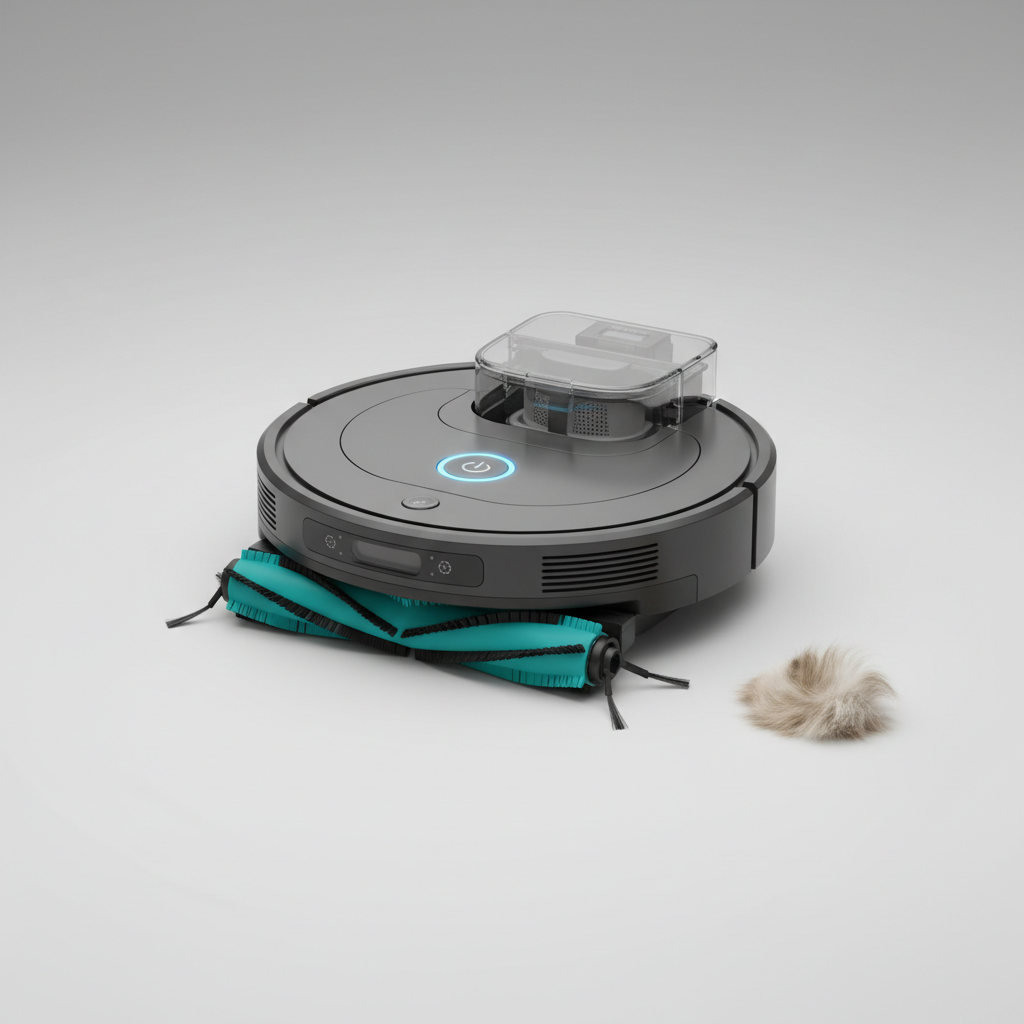
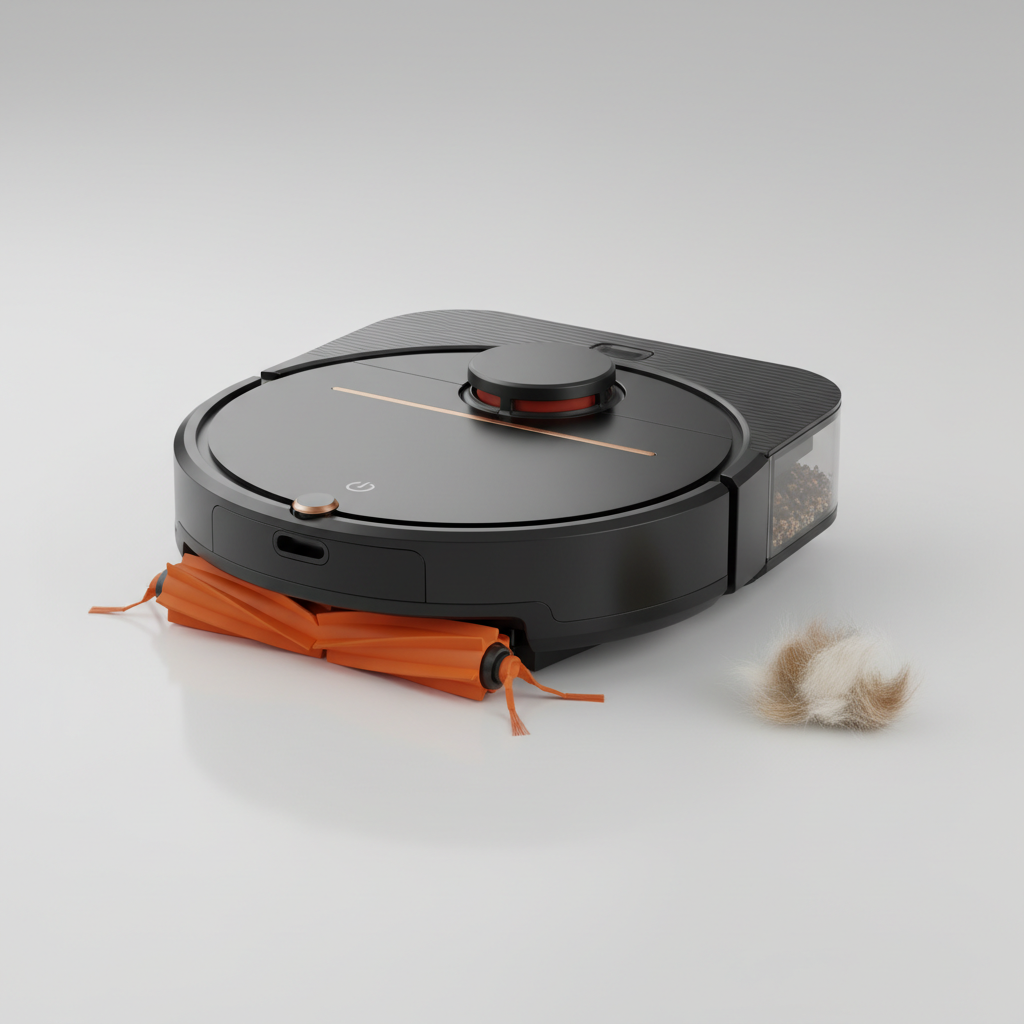
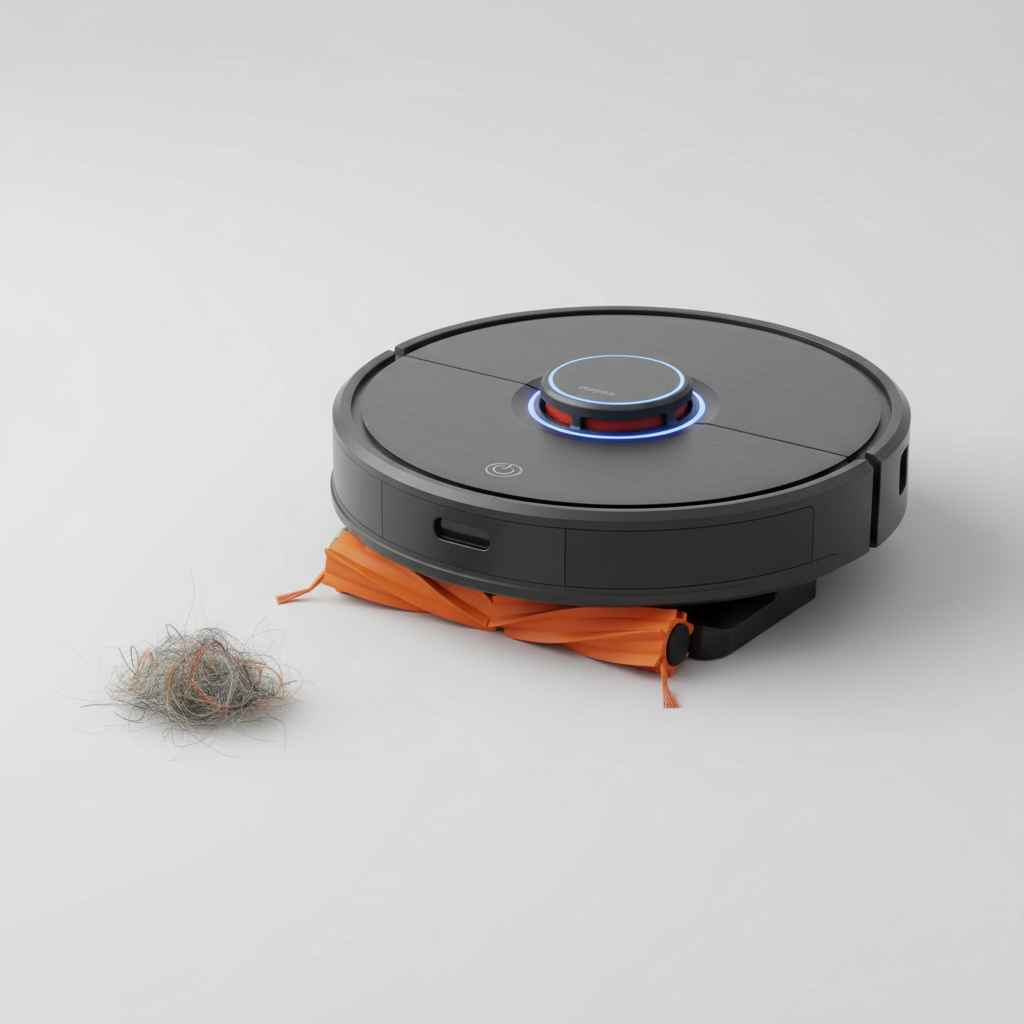
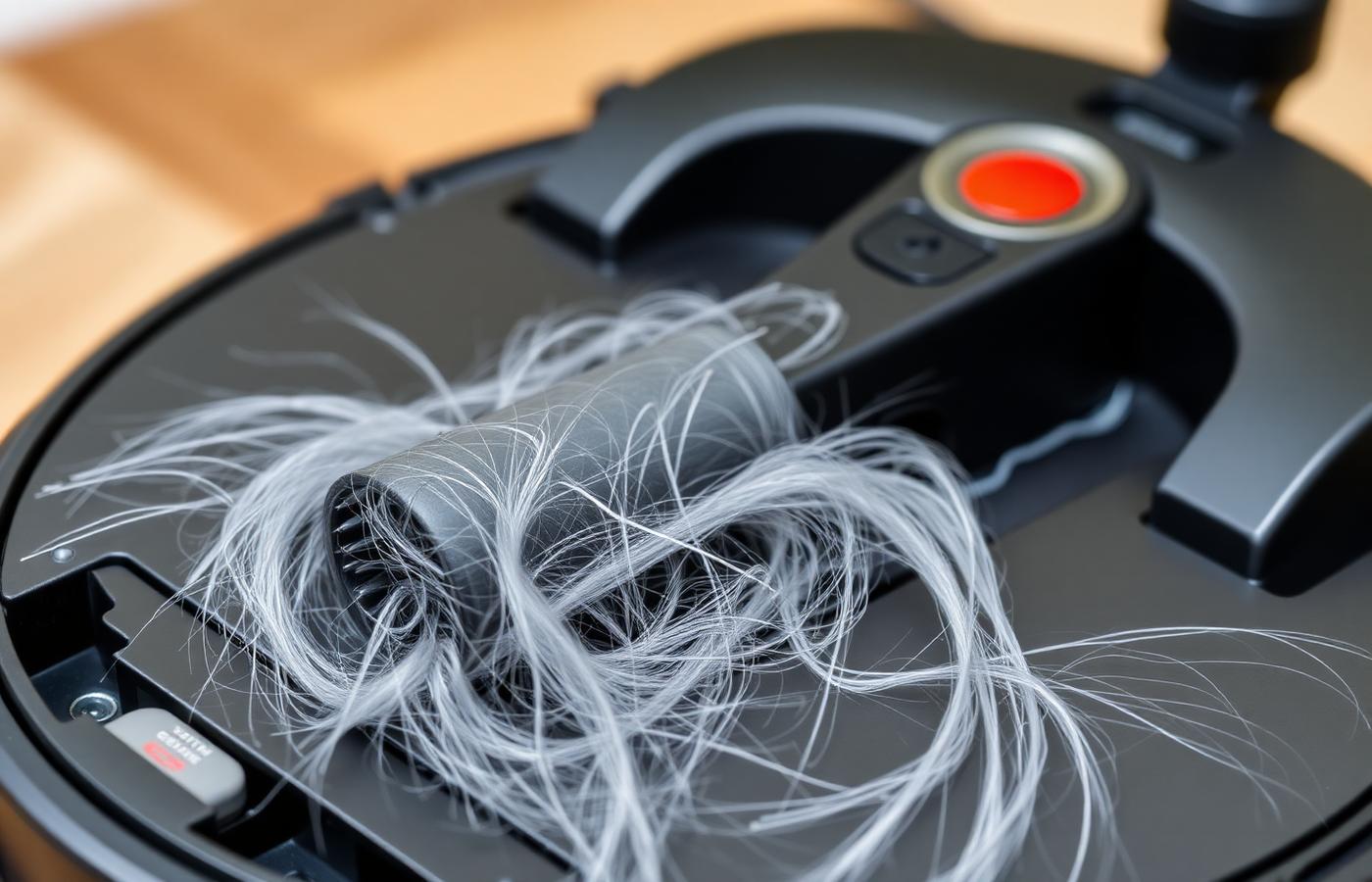
A robot vacuum for pet hair is fighting a specific physical problem: fine hair wraps around a spinning bristle brush faster than it gets lifted into the dustbin, and long hair in particular winds around the roller's end bearings until the motor stalls or the roller stops spinning altogether. Standard bristled brush rolls, common on budget vacuums under $250, are the worst offenders. Rubber or hybrid rubber-and-bristle rollers shed hair far more readily because there is no bristle gap for strands to anchor into, and several premium models now add a small cutting comb built into the roller housing that slices wound hair automatically during operation.
Suction matters too, but less than brush design for hair specifically — hair is light and long, not dense like grit, so it needs airflow across the full width of the intake more than raw peak power. Look for stated suction of at least 4,000 Pa for carpeted homes with medium-to-heavy shedding, and closer to 6,000–8,000 Pa if you have thick pile carpet where hair burrows deep into fibres.
The self-empty question
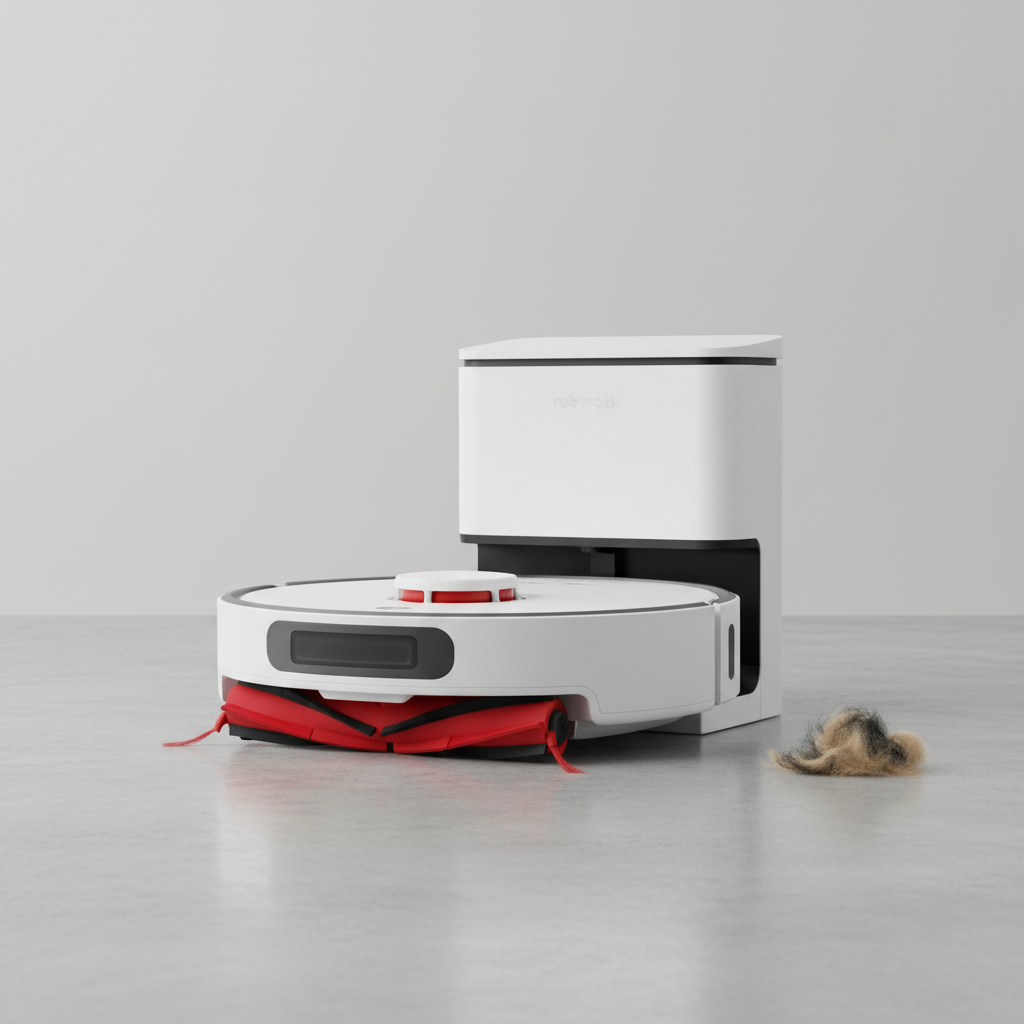
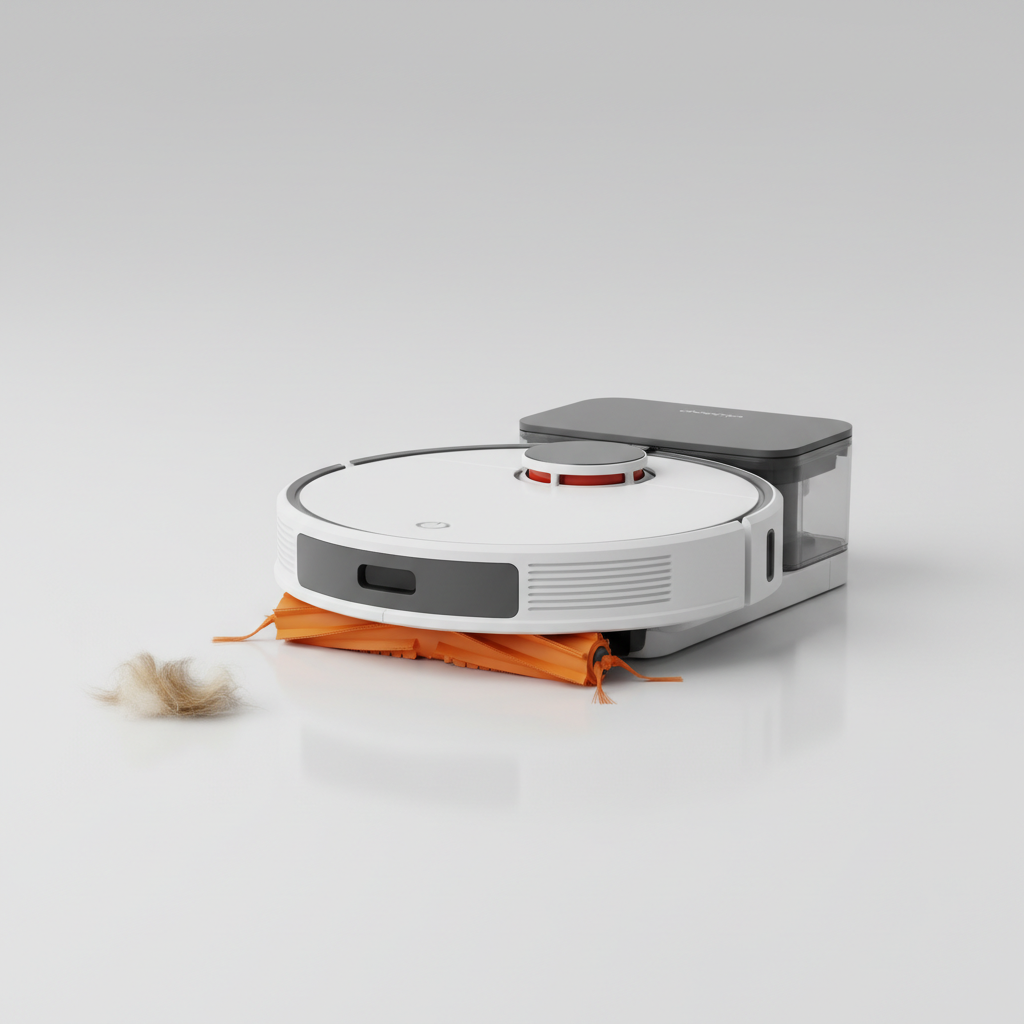
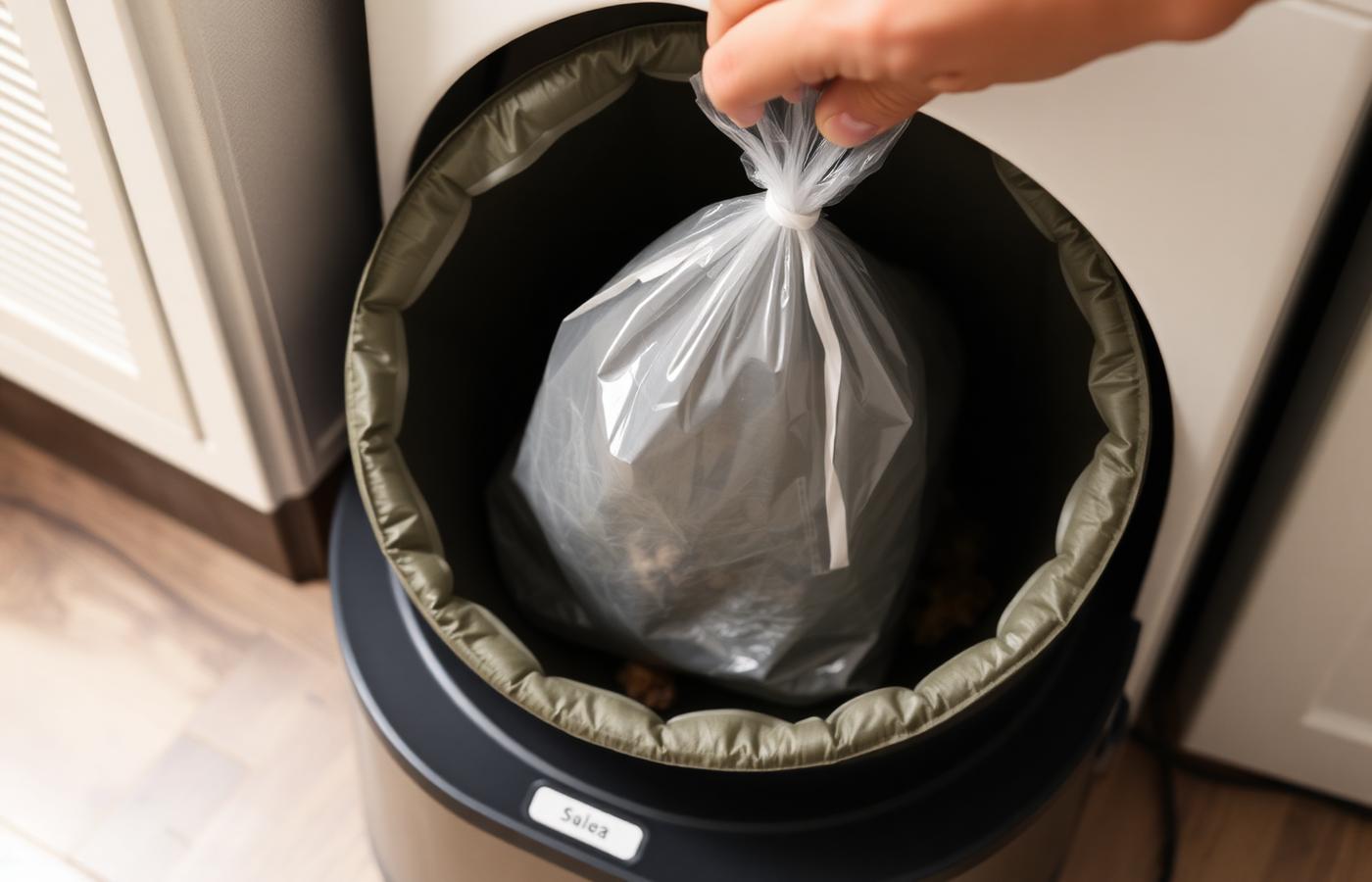
For any household with a shedding pet, a self-emptying dock is close to essential rather than a luxury. A standard 400–600 ml onboard dustbin fills with pet hair in one or two sessions in a heavy-shedding home, well before it would fill with ordinary dust. A self-empty dock with a 2.5–3.5 litre sealed bag typically holds 60 to 75 days of debris from a two-pet household, cutting manual bin maintenance from several times a week to roughly monthly.
The trade-off is cost and noise: self-empty docks add $150–$300 to the purchase price and produce a loud 10–15 second suction burst each time the robot docks, which some owners schedule around rather than tolerate at night.
Filtration and allergy considerations
Pet dander, not hair itself, is the bigger issue for allergy sufferers, since dander particles are small enough to stay airborne and settle deep in carpets and soft furnishings. A HEPA-grade or HEPA-rated filter, capturing at least 99.5% of particles down to 0.3 microns, keeps that dander in the vacuum rather than recirculating it through the exhaust. Cheaper foam or mesh filters do capture visible hair well but let a meaningful share of fine dander straight back into the room air, which matters if anyone in the household has asthma or pet allergies.
Replace HEPA filters every 2–3 months in a heavy-shedding home rather than the 4–6 months manufacturers quote for average use — the extra particulate load shortens their effective life noticeably.
Navigation, mapping and multi-floor homes
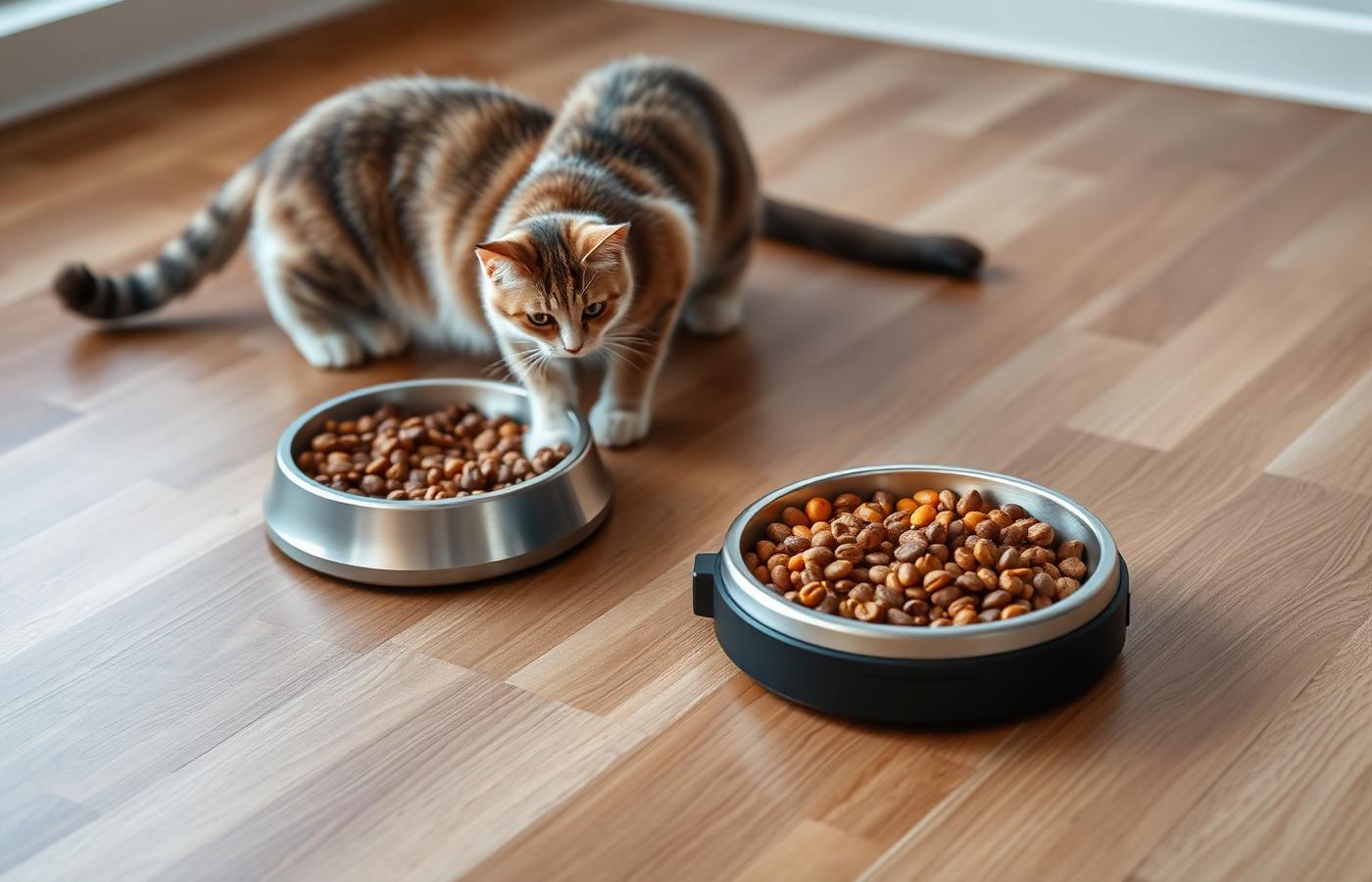
LiDAR or structured-light navigation is worth prioritising over basic camera-and-bump (vSLAM) systems in pet households, mainly because it maps consistently even in low light and handles multi-room, multi-floor cleaning schedules without repeated re-learning. Set no-go zones around litter trays and food bowls, since a robot vacuum dragging a wet paw print or scattering kibble across a room is a common early frustration. Object avoidance using onboard cameras or infrared, now standard on models above roughly $500, meaningfully cuts the odds of the robot smearing a fresh accident across the floor rather than driving around it.
What to budget
A genuinely capable robot vacuum for pet hair — tangle-resistant roller, 4,000+ Pa suction, HEPA filtration, LiDAR mapping — starts around $400–$550 without self-empty, or $600–$900 with a self-empty dock included. Flagship combo units adding mopping and obstacle avoidance run $900–$1,400. Running costs are modest: $30–$60 a year in filters and $8–$15 in dock bags every couple of months, plus the occasional replacement roller at $20–$40 once a year in heavy-use homes.